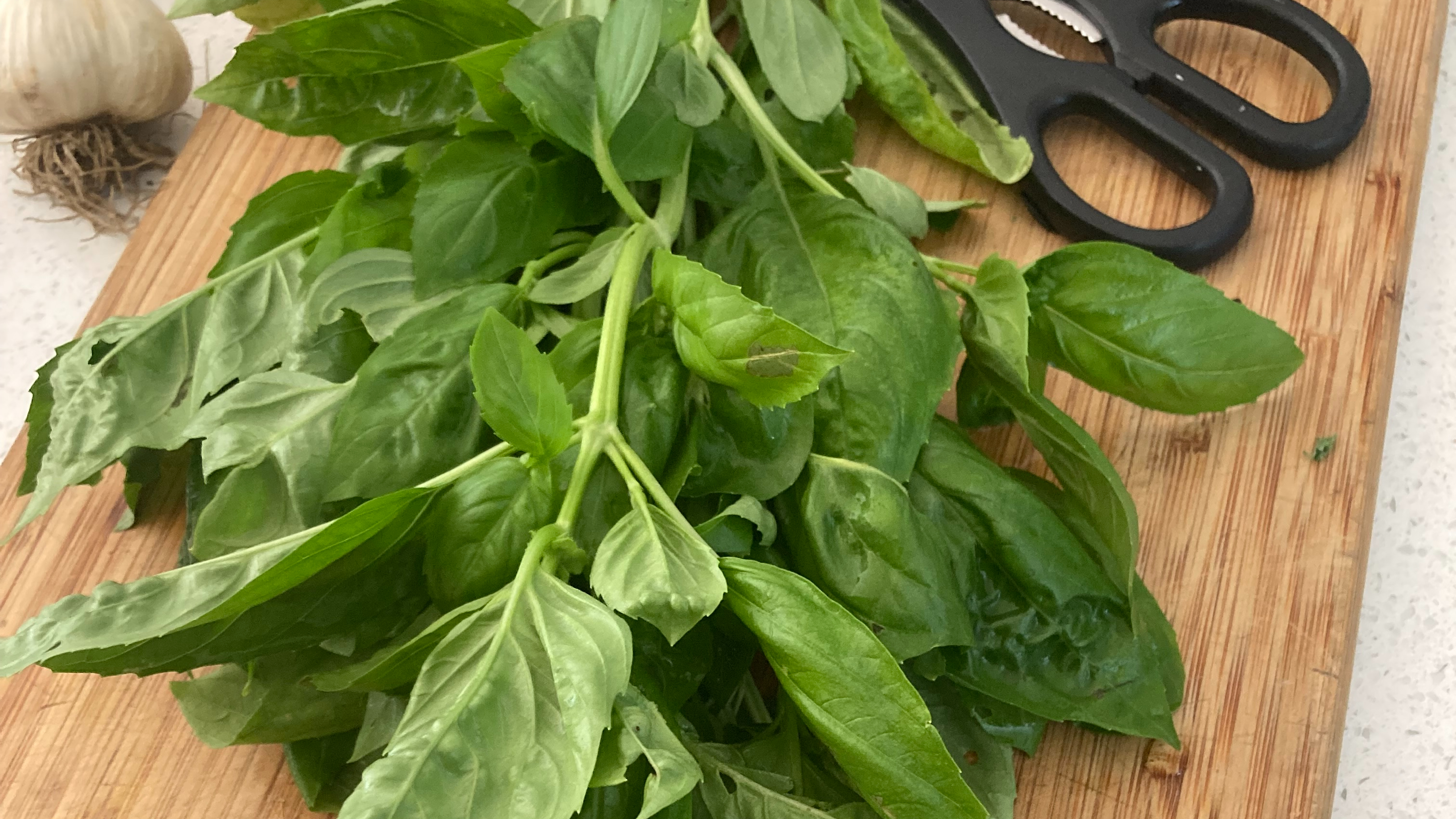
basil just cut from the garden or bought in the produce section of the grocery makes delicious pesto
Basil is easy to grow. The secret is watering with some seaweed emulsion fertilizer. If you don’t garden you can pick up fresh basil or even a plant at the grocery store and make pesto fresh at home. It’s *so* much better than jarred pesto.
As to basil’s health benefits: it’s soothing to the digestive and nervous systems. It can ease gas, stomach cramps, and nausea. It can be helpful for fatigue, depression, and nervous irritability. Full of antioxidants, it’s been shown to support healthy blood sugar, heart and vascular health, immunity, and cognitive ability. A delicious food that’s great for your health – truly food as medicine.
It’s easy to make Pesto with or without nuts. For that matter, the french make something very similar, Pistou, that omits the cheese and the nuts and focuses on the garlic and the basil. So you can make this sauce in whatever way you please. Here’s a variation recipe:
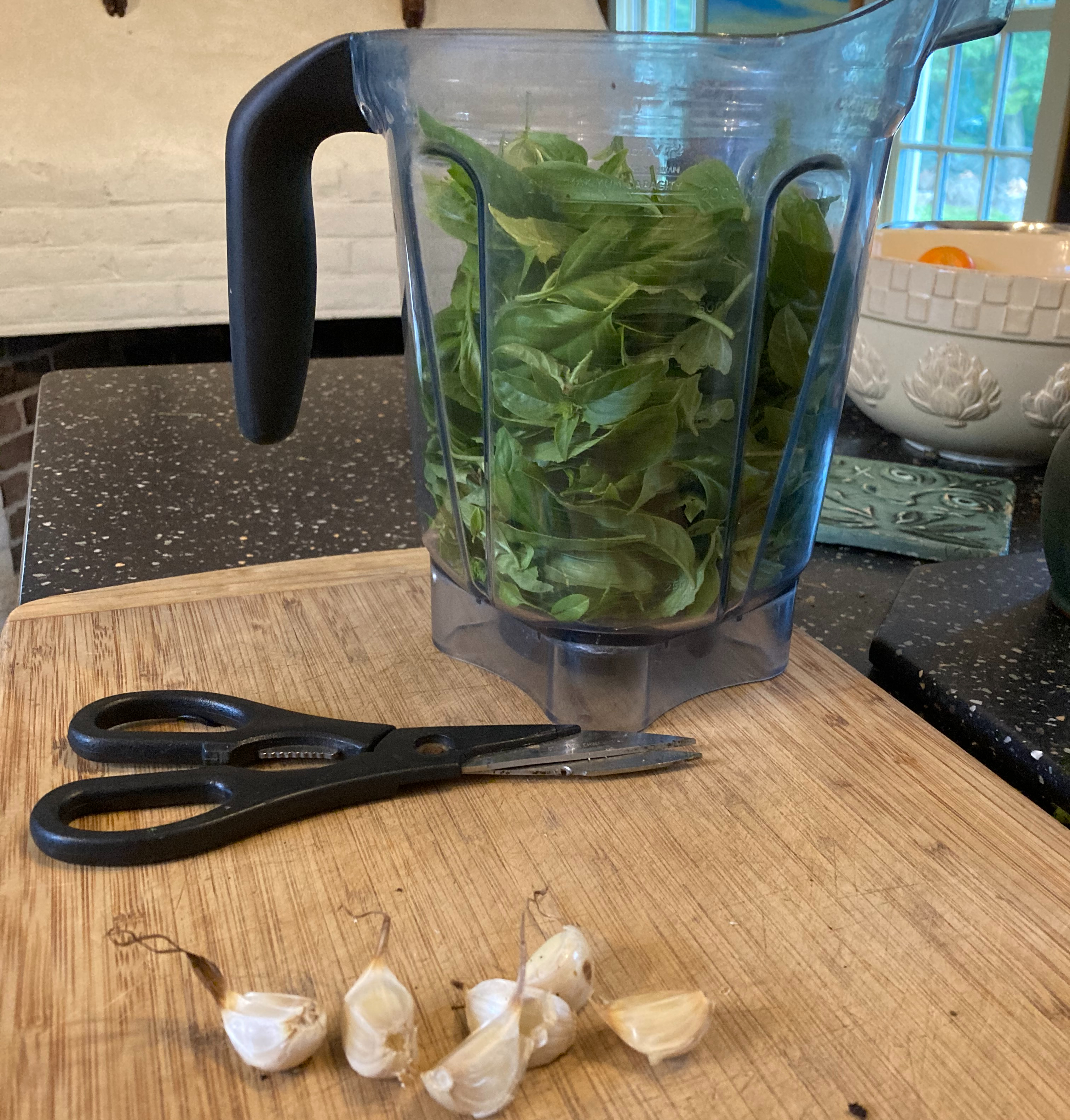
a blender full of fresh basil (blanched or not, optional)
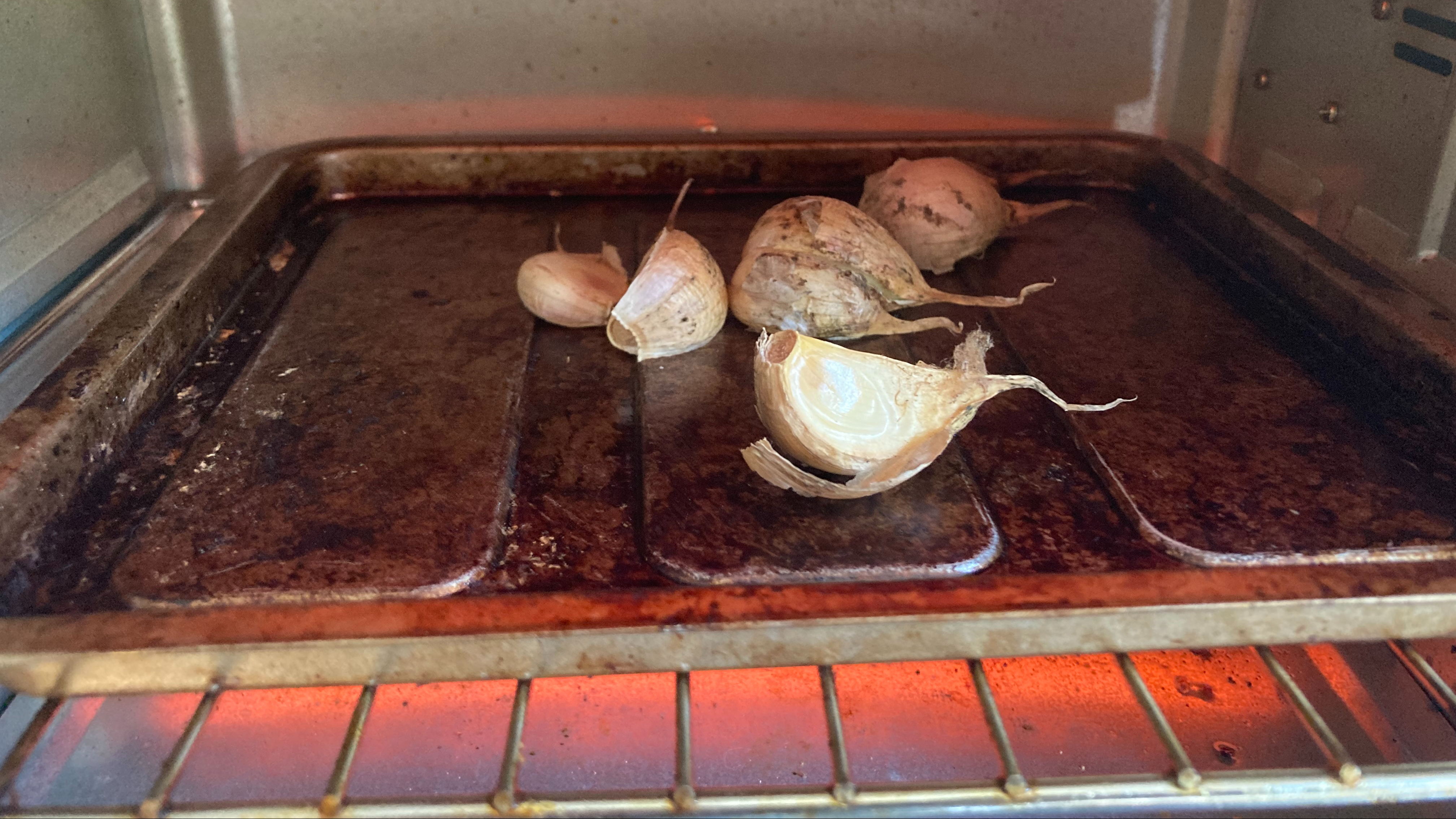
2-4 bulbs of garlic, roasted.
1 Tbsp lemon juice
1/4 c parmesan or romano cheese
olive oil
salt and pepper.
optional – pine nuts or walnuts
Roast garlic by putting unpeeled bulbs in a toaster oven or toaster and toasting at 350 until the peels are starting to brown.
Roasting the garlic really adds a warm, nutty flavor to the pesto that I love.
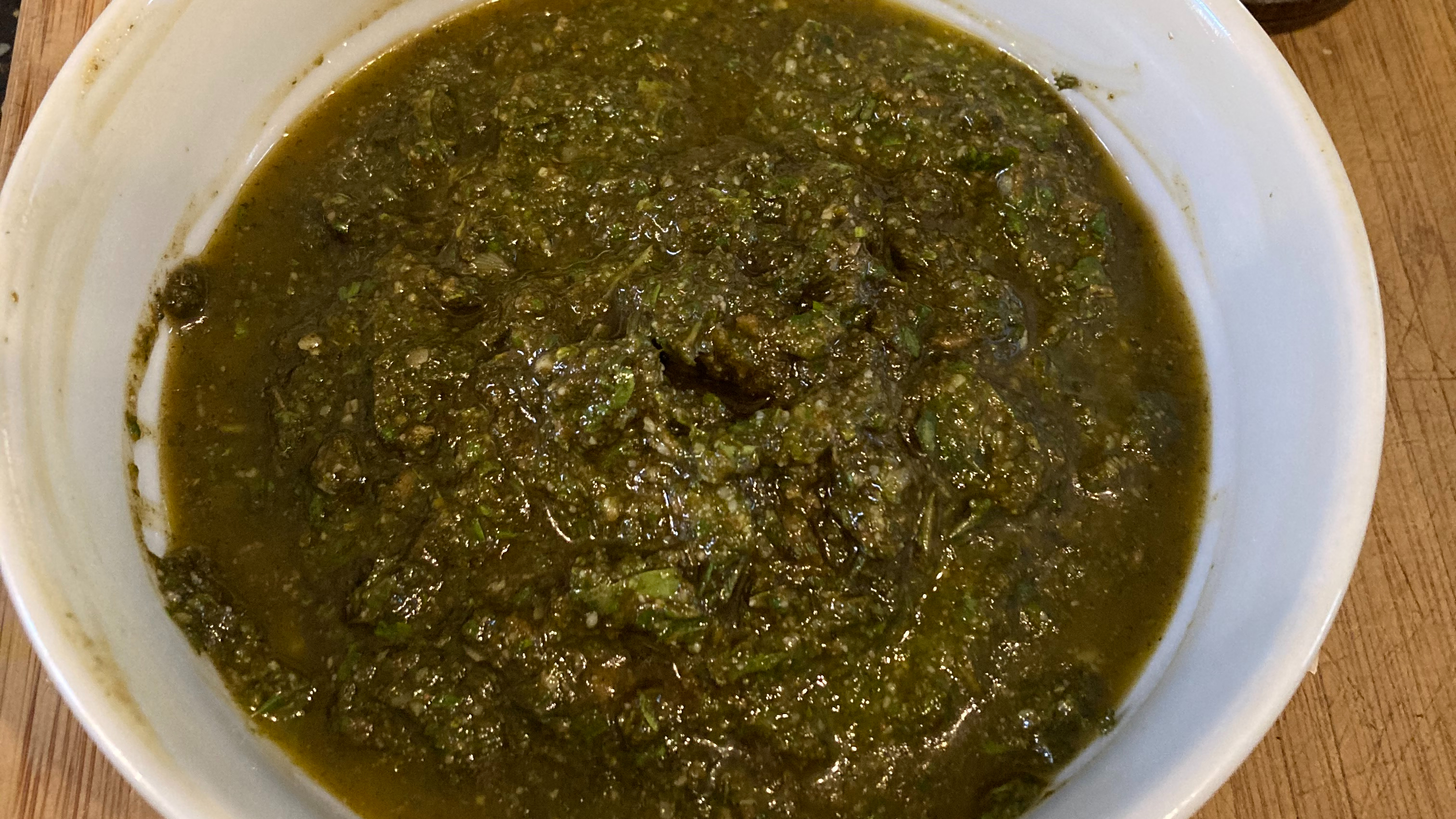
To make your pesto place the basil in the blender with the roasted garlic, cheese, salt and pepper, lemon juice, and nuts, and blend away.
Delicious on pasta, toast, chicken, sandwiches, whatever… And so good for you.
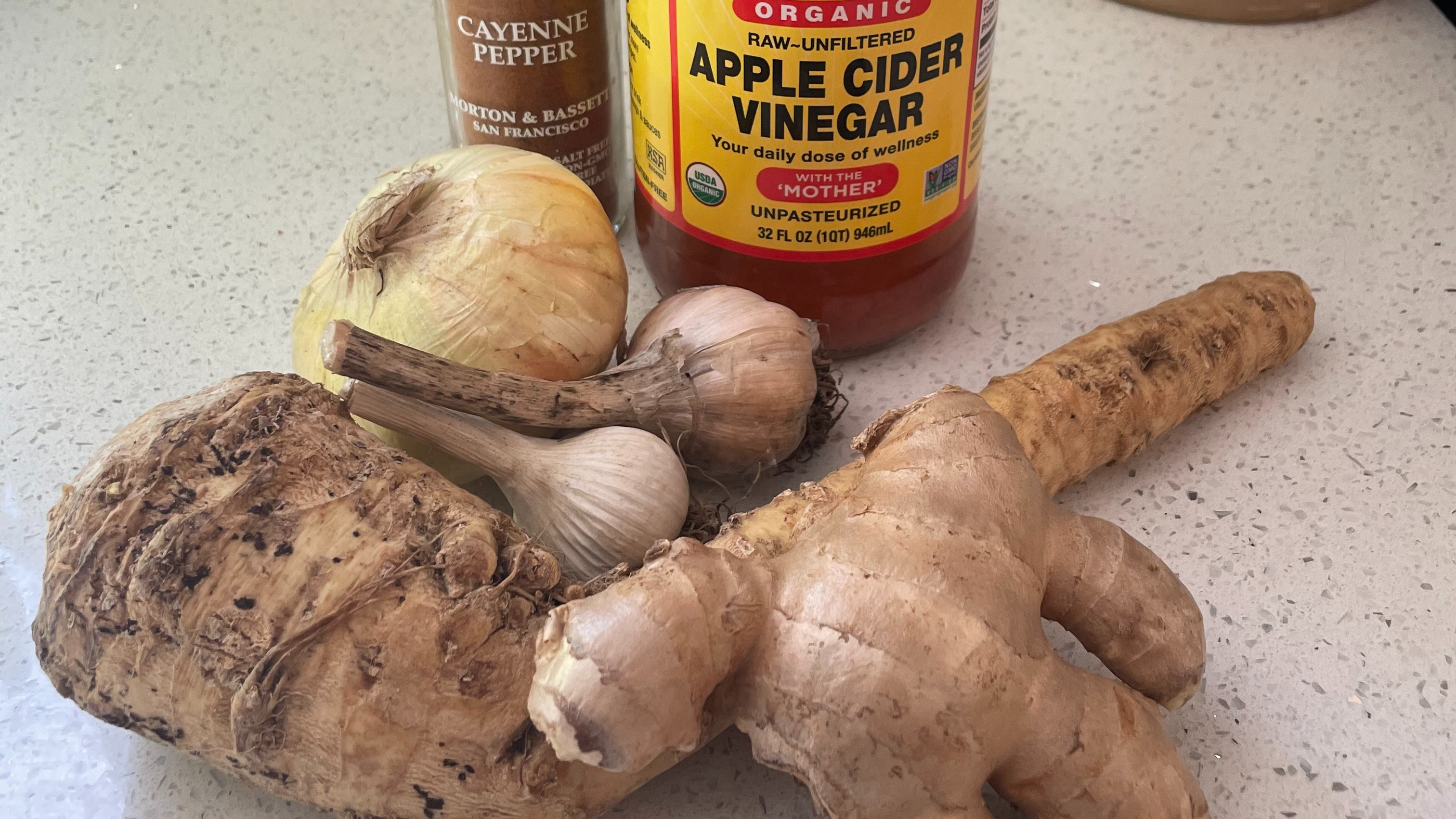
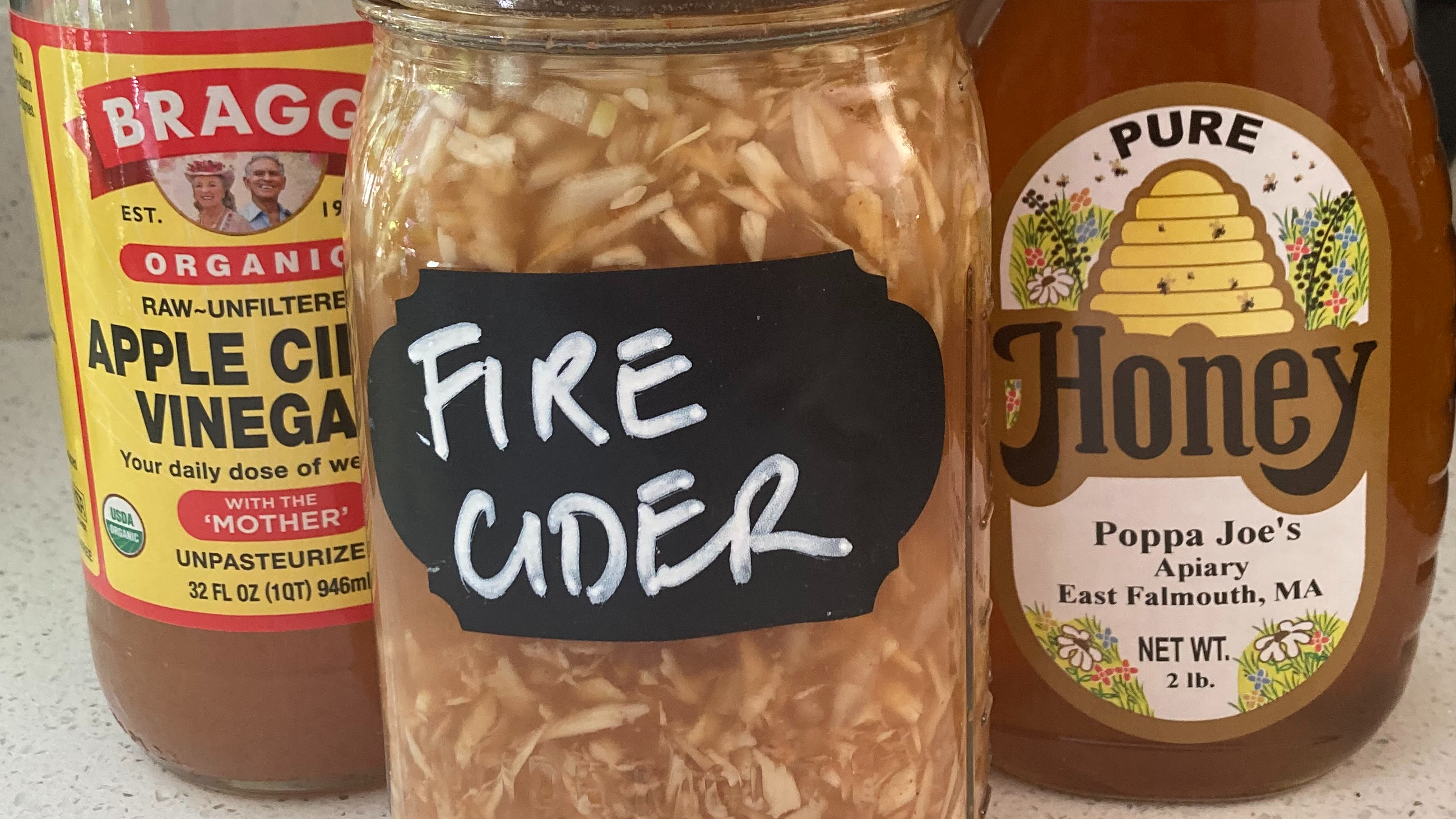
Fire cider is great for your immune system, leveraging garlic, onions, ginger, horseradish, cayenne, honey, and apple cider vinegar.
Healthful tonics like this one have been around and in use since ancient times — our ancestors knew what was good! In the 1970s, Rosemary Gladstar, a wonderful herbalist, coined the term “Fire Cider” and it stuck. The recipe is below – feel free to scroll down directly.
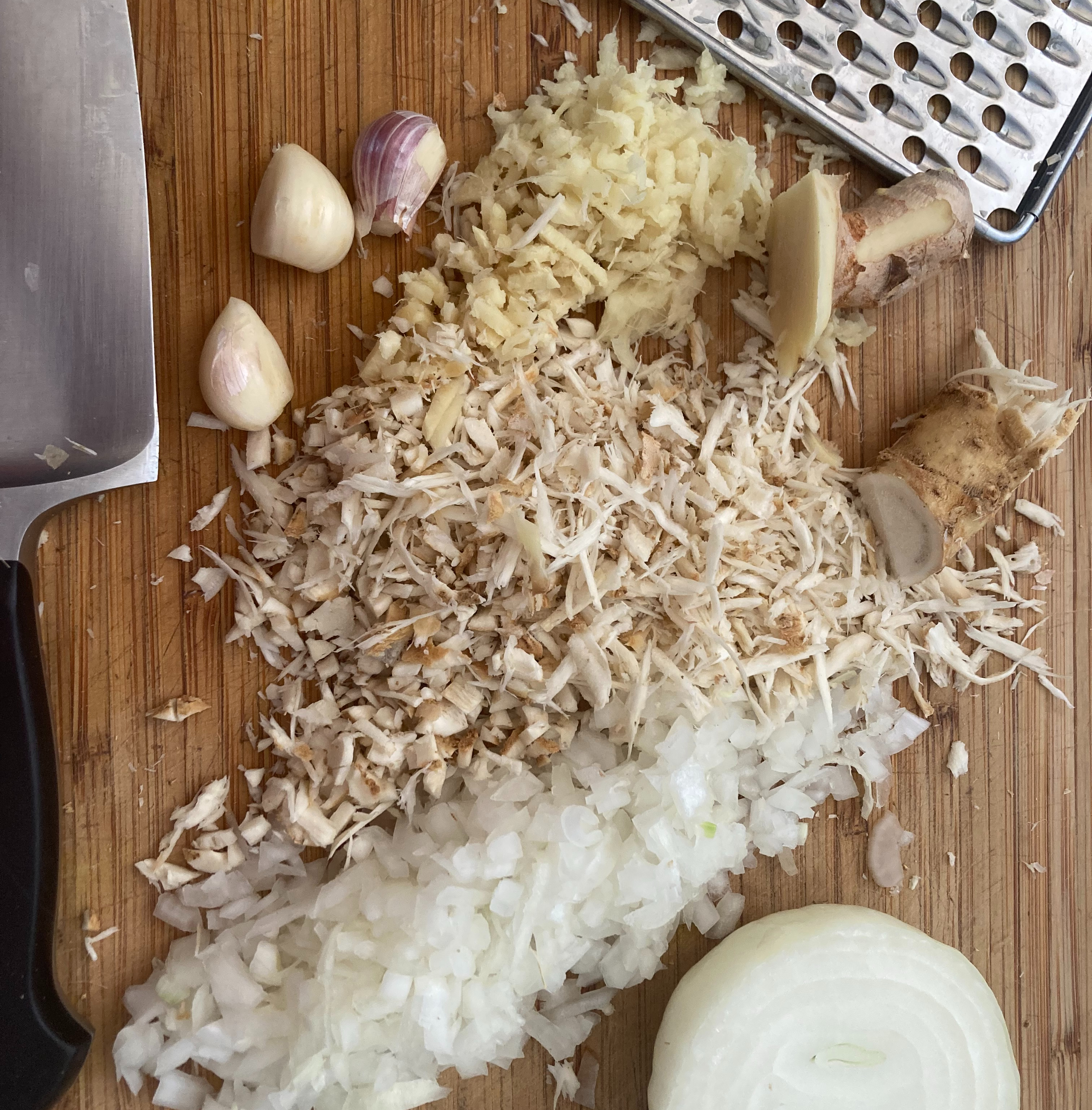
Fire ciders are popular; there are many recipes out there. A simple one: chop onions and garlic and grate horseradish and ginger, and add it all to apple cider vinegar, ensuring the roots are submerged. Let them stew, shaking daily for 3-4 weeks, and add cayenne and honey to taste (this basic recipe comes from Rosemary Gladstar’s herbalism certificate through ecoversity).
Whipping up a healthful potion is always fun, and It would be hard to overstate the value of Garlic, ginger, onion, and horseradish roots combined with apple cider vinegar, for good health:
Garlic: An ally against colds and flu, support for immune function, healthy cholesterol, and a vermifuge/in treating intestinal worms.
Ginger: Reduction of inflammation, joint pain, cramps, nausea, and morning sickness.
Horseradish: traditionally known for its power to clear your sinuses, horseradish is full of antioxidants and nutrients, antibacterial properties, and is good support for healthy metabolism, digestive health, healthy cholesterol and, of course, as a decongestant.
Onions: Rich in antioxidants and packed with flavor, WebMD says “They’re rich in chemicals that can help protect your heart, lower your risk of some cancers, and make it easier for your body to make insulin. Onions are also one of the greatest vegetable sources of quercetin, a plant compound with many health benefits.”
I think fire cider is fun to make. I’ve been cooking with garlic, ginger, onion, and cayenne for years–all are aromatic and lend food an irresistible flavor profile … but horseradish was a new acquaintance when I first made fire cider. Grating it releases volatile compounds and a pungent, strong aroma that was unmistakably familiar as an ingredient in winter and fall sauces.
I had to hunt around to find fresh horseradish; if you see it at the grocery grab it! It’s a cold hardy perennial that you can also consider growing.
I love having a remedy on hand for days when I or a family member feel a cold coming on – and fire cider does the trick. Tough love in a jar, you can take a teaspoon every day to support your immune system or use it on salads.
And keep it on hand! You’ll want to take 1-2 tablespoons at the first sign of a cold and repeat every 3-4 hours until symptoms subside.
Basic Recipe:
1/2 cup grated fresh horseradish root
1/2 cup (or more) chopped onions
1/4 cup (or more) grated ginger
1/4 cup or more chopped garlic
Apple Cider Vinegar (raw and organic if you can get it)
Cayenne pepper (fresh chopped or powder or flaked – whatever you have/can get)
honey to taste
Directions – add the horseradish, onions, ginger, and garlic to a jar and pour the apple cider over it to immerse the ingredients by a couple of inches. Seal and store in a warm spot. Let it macerate for 3-6 weeks and shake it
One night this week I decided to roast some honeynut squash for dinner. We store our cast iron pans in the stove sometimes, and that night that was where they were. Jon started the oven and sometime later we realized the pans were in the oven heating up, so we removed them with hot mitts and went back to slicing squash, listening to Ike Quebec (jazz) and enjoying a glass of red wine.
Predictably, moments later I reached to move the pans aside and, touching the pan handle, burned myself. Sizzle – ouch!
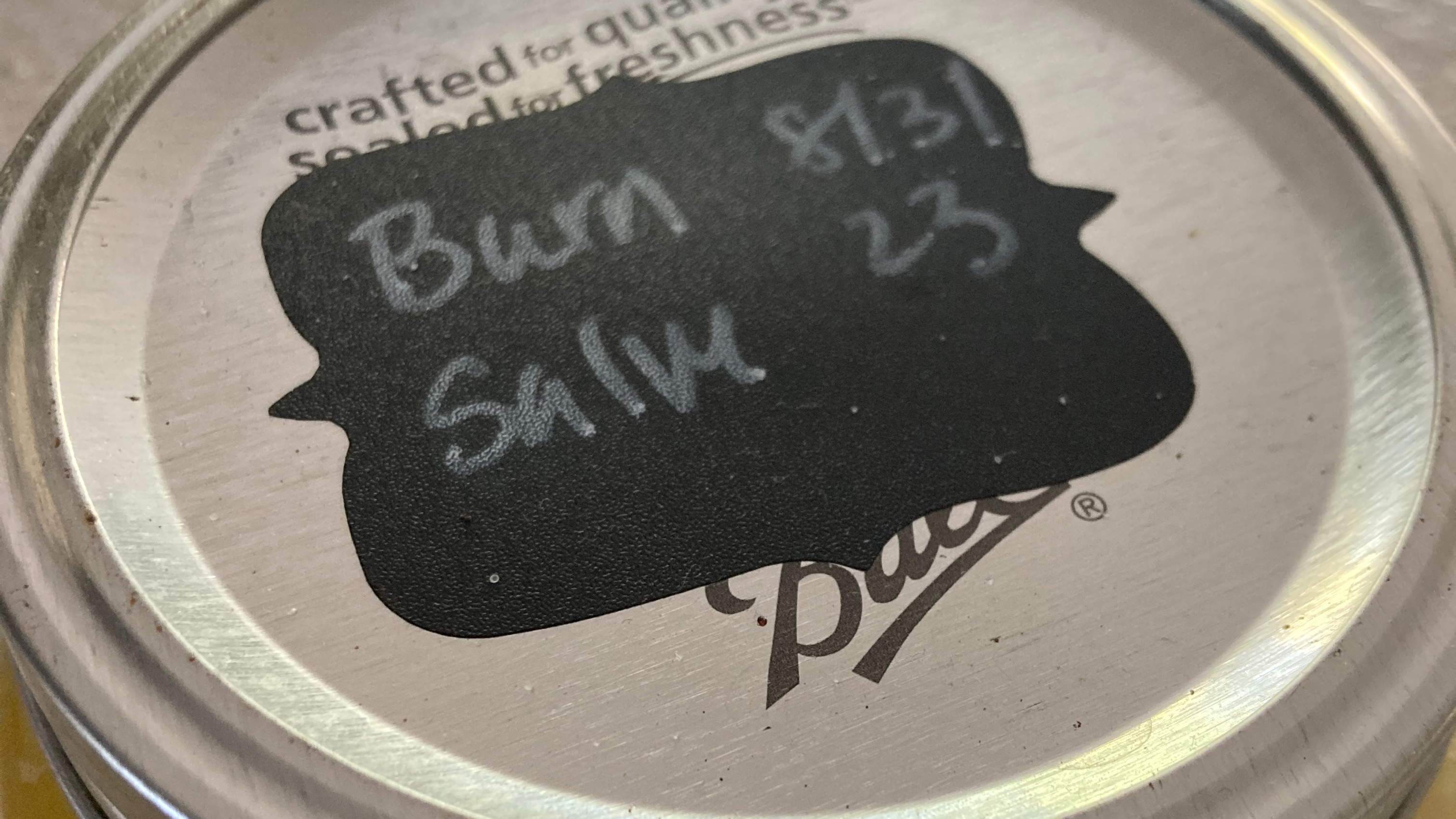
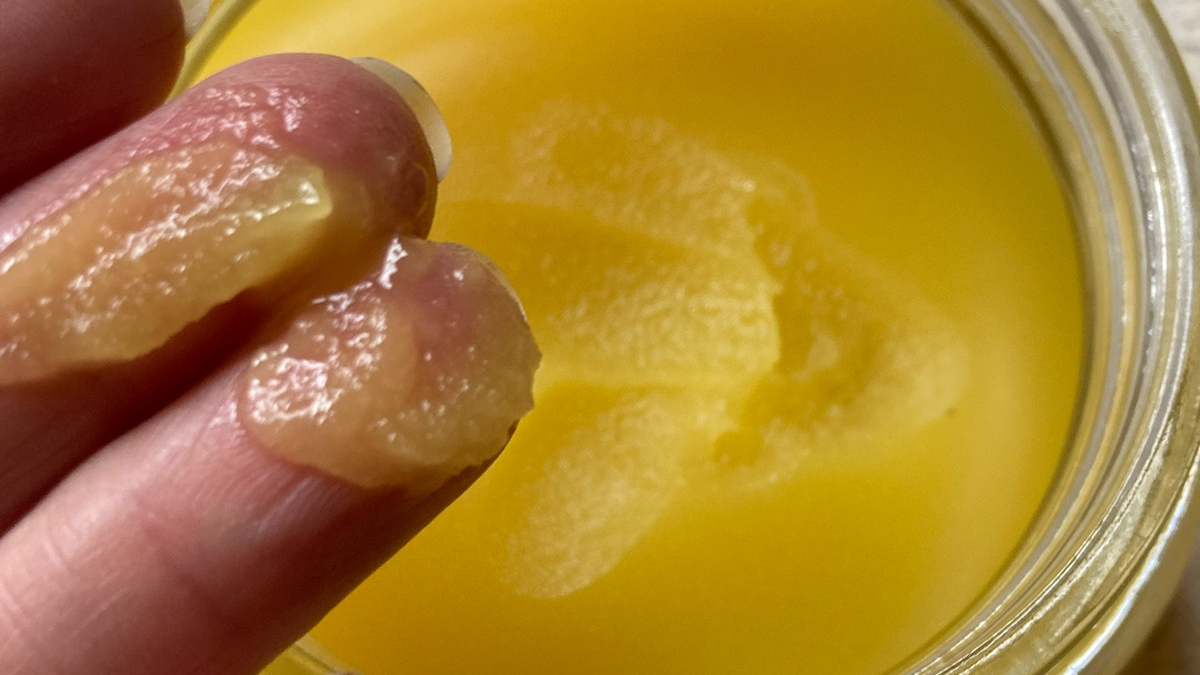
I remembered immediately that this summer during my course in herbalism I made all-purpose (aka burn) salve, and reached into the cabinet for it. After a few minutes of rubbing the salve into my burned skin my hand felt miraculously better.
To be honest I was surprised.
I knew the salve would have healing properties, I knew the the scarring I usually have on my hands after burning myself in the kitchen would likely be far less angry and noticeable. But I didn’t expect that the salve would stop the pain. I was astonished that it did. By the time we sat down to dinner I didn’t have any pain.
Rosemary Gladstar, who shared this recipe in an herbalism class I took this year, says that this salve is an all-purpose salve and can be used for rashes, cuts, wounds, even diaper rashes. I made it for myself as a burn salve – I knew it would come in handy.
In the past I have tried other burn remedies from the pharmacy — cooling sprays, antibiotic pain relieving creams … and of course running burnt skin under cold water. Always I’m left with a day or two of burning pain and a blister or mark that lasts days or weeks. Not this time.
I did run some cold water over the burn immediately, and only for a moment, before applying the salve, but the salve made all the difference. So I want to share how to make it for other cooks who, like me, sometimes burn themselves in the kitchen, or for anyone that’s looking for an honest and effective skin salve. Enjoy!
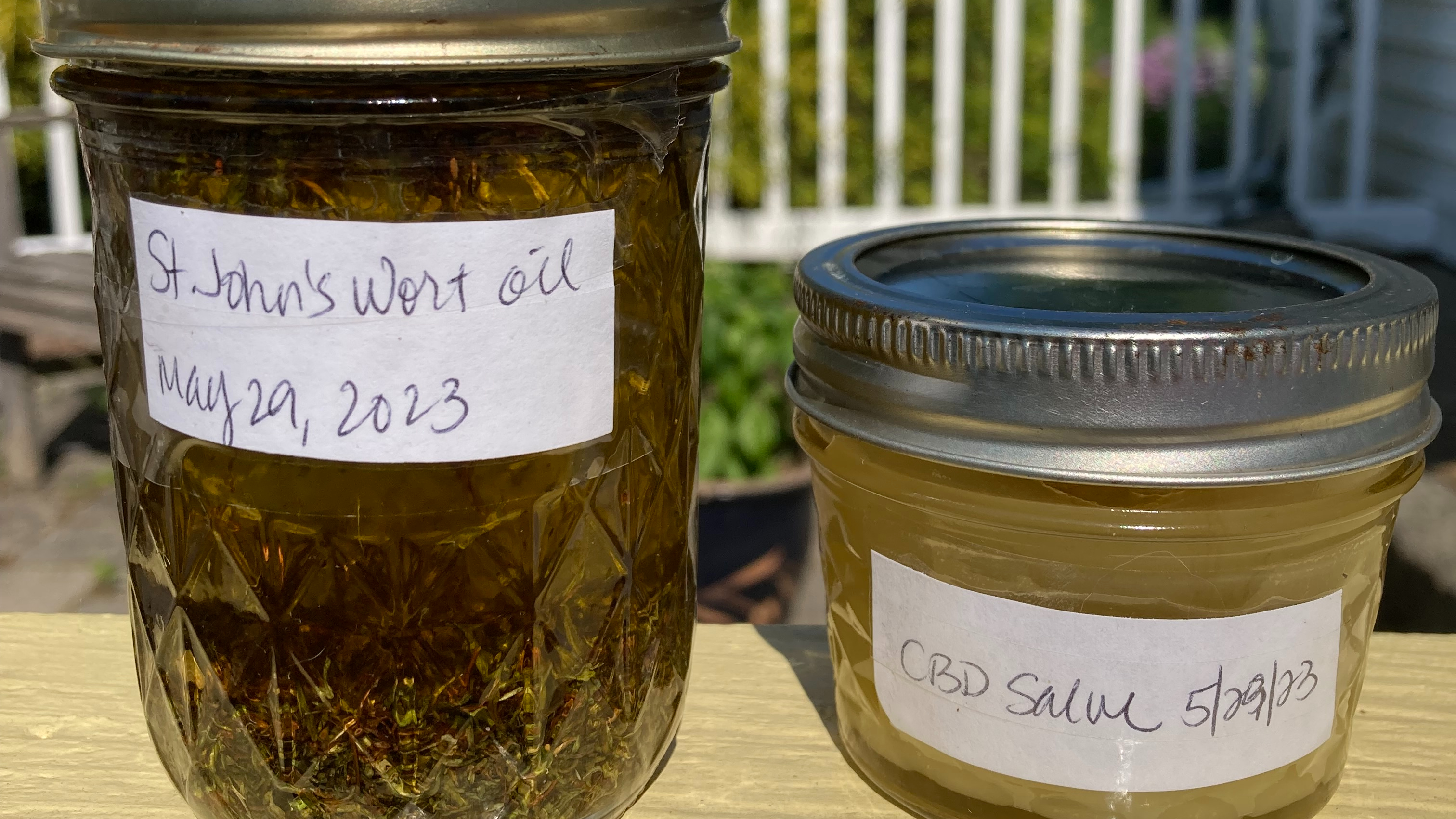
Step 1: Place each of the herbs in a glass jar and cover with 1-2 inches of oil. Place in a sunny window and let infuse for 2-3 weeks (I left mine a little longer). Strain and rebottle. label and date.
To make the salve strain the oil. For each cup of herbal oil add 1/4 cup beeswax. heat the oil and beeswax together over very low heat to melt the beeswax. The beeswax will thicken as it cools.
To check for firmness do a quick consistency test: place 1 tablesppon of the mixture in the freeze for a minute or two. check to be sure its the firmness you want. For harder salve, add more beeswax, for softer salve, add more oil.
When you are happy with the consistency of the salve remove from heat and pour into glass jars or tins. Store in a cool dry place.
Please feel free to send me any questions you have about the salve or the process of making it!
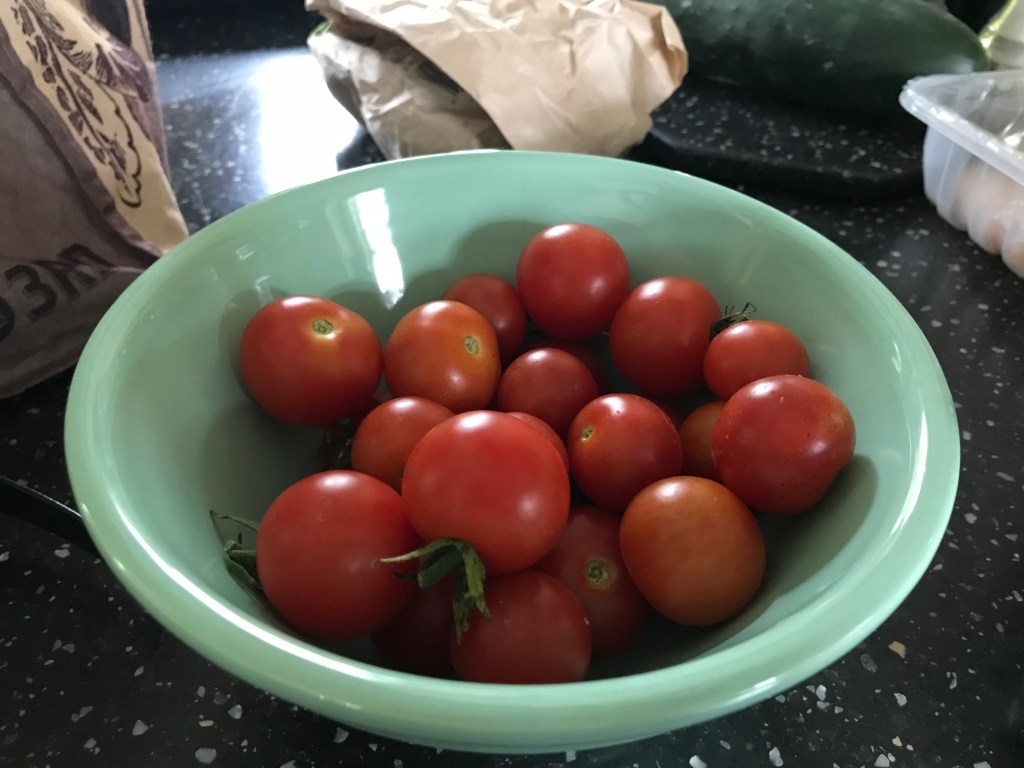
backyard botanics – Thomas’ beautiful cherry tomatoes from last year’s summer garden
Last year at the end of April we invited our friends Thomas and Lisa Mikkelsen for dinner. They arrived with a bottle of wine and a four pack of seedlings that Thomas had grown.
I had some tomatoes of my own started, heirloom brandywine (I know, very snobby) but Thomas’ were different – more robust looking – so I added them to the garden.
By August I had gigantic non-determinate cherry tomato plants overtaking the entire north end of the garden. I had cherry tomatoes coming out of my ears. Jon was saying “more tomatoes? really? when will they stop? what will we do with all these tomatoes?” Mind you, four plants. (Thank you Thomas.)
We were getting the brandywine tomatoes, too, which I was in a battle to harvest ahead of the rabbits getting them. But we had plenty of cherry tomatoes to satisfy the rabbits and still fill our bowls to overflowing.
During a later summer pick up from our nearby CSA, we complained to the farmer that we didn’t need his tomatoes – we had too many of our own. On hearing this, he exclaimed “Too many cherry tomatoes! What a luxury! Throw them in a pan and make sauce! That’s what I’d do if I had too many cherry tomatoes!
We did. I sautéed some onions and added basil and oregano, halved the tomatoes, added salt and pepper and crushed the tomatoes while they cooked with tip of my spoon. No peeling. No processing. Just sautéing in a pan of oil. So easy. And absolutely delicious.
Tomato sauce: great on pasta or pizza
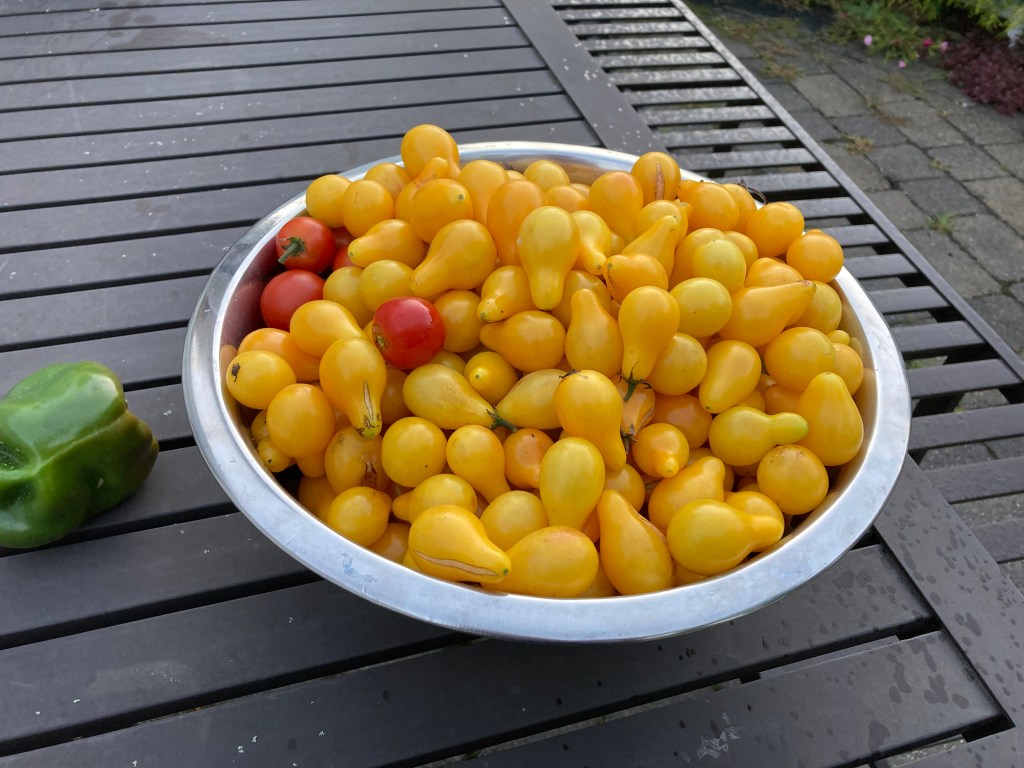
This year, I got some free seeds from the Holliston Garden Club seed bank to try– little golden pear tomatoes.
Again, a forest of tomato plants appeared. Thankfully, they were determinate this time; they got to around 6 feet, which still is about 2 feet higher than my tomato stakes.
I’d like to pause here for a short rant on tomato stakes. Because–really? The hoops and stakes you can buy, even the ones in reputable gardening magazines, while made of a nice plastic-coated durable metal, are always WAY shorter than even the determinate plants. They are a complete rip off, leaving tomato plants to climb all over the garden, falling over into walkways and breaking their tender stalks while fruit is till ripening on them. You’d think one of these garden supply companies could create an affordable stake that actually accommodates the height on such a common garden vegetable. But I digress.
yellow pear tomatoes with a few volunteer cherry tomatoes from last year’s plants
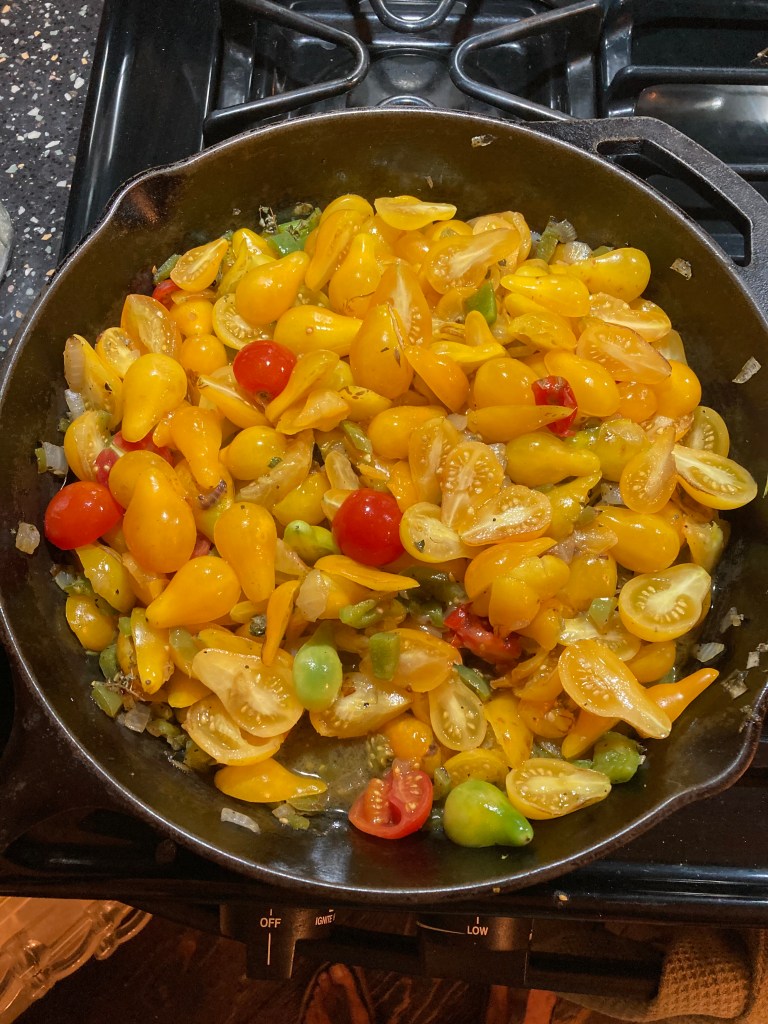
We’ve collected a half a dozen gigantic bowls with more coming… cherry tomatoes are prolific. Time to make tomato sauce. This year I have too many green peppers so I’m cutting up and sautéing onions, green peppers, adding salt pepper and oregano and basil from the garden or rosemary (or whatever I have around). The fact is this sauce doesn’t even need the herbs because the tomatoes are so fresh and sweet.
tomatoes, green peppers, onions in some olive oil
This is delicious on pizza dough, too — we all like it better than the traditional thicker red tomato sauce — with cheese over it.
finished tomato sauce
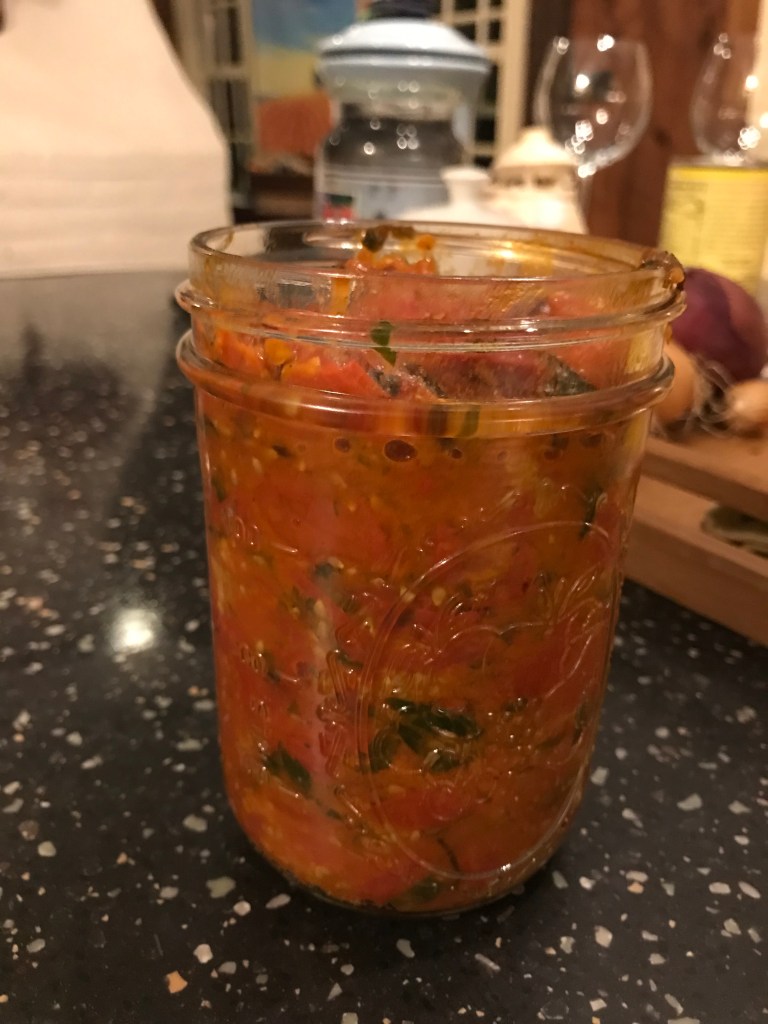
This year I’m freezing the sauce. I even gave mason jars a try, having read in Treehugger.com that they are a reasonable choice for freezing liquids.
Tomatoes keep coming almost to the frost date here in Massachusetts. I figure by then I’ll have filled the downstairs freezer with sauce.






 Bespoke Herbals @ Backyard Botanics