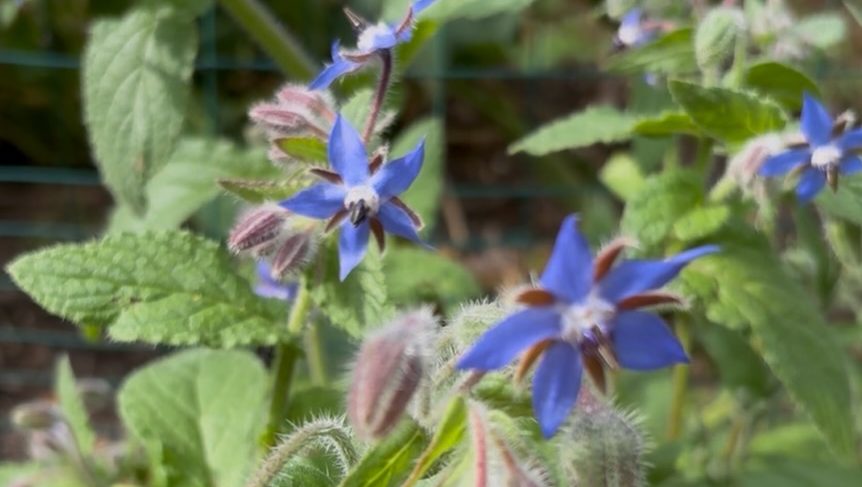
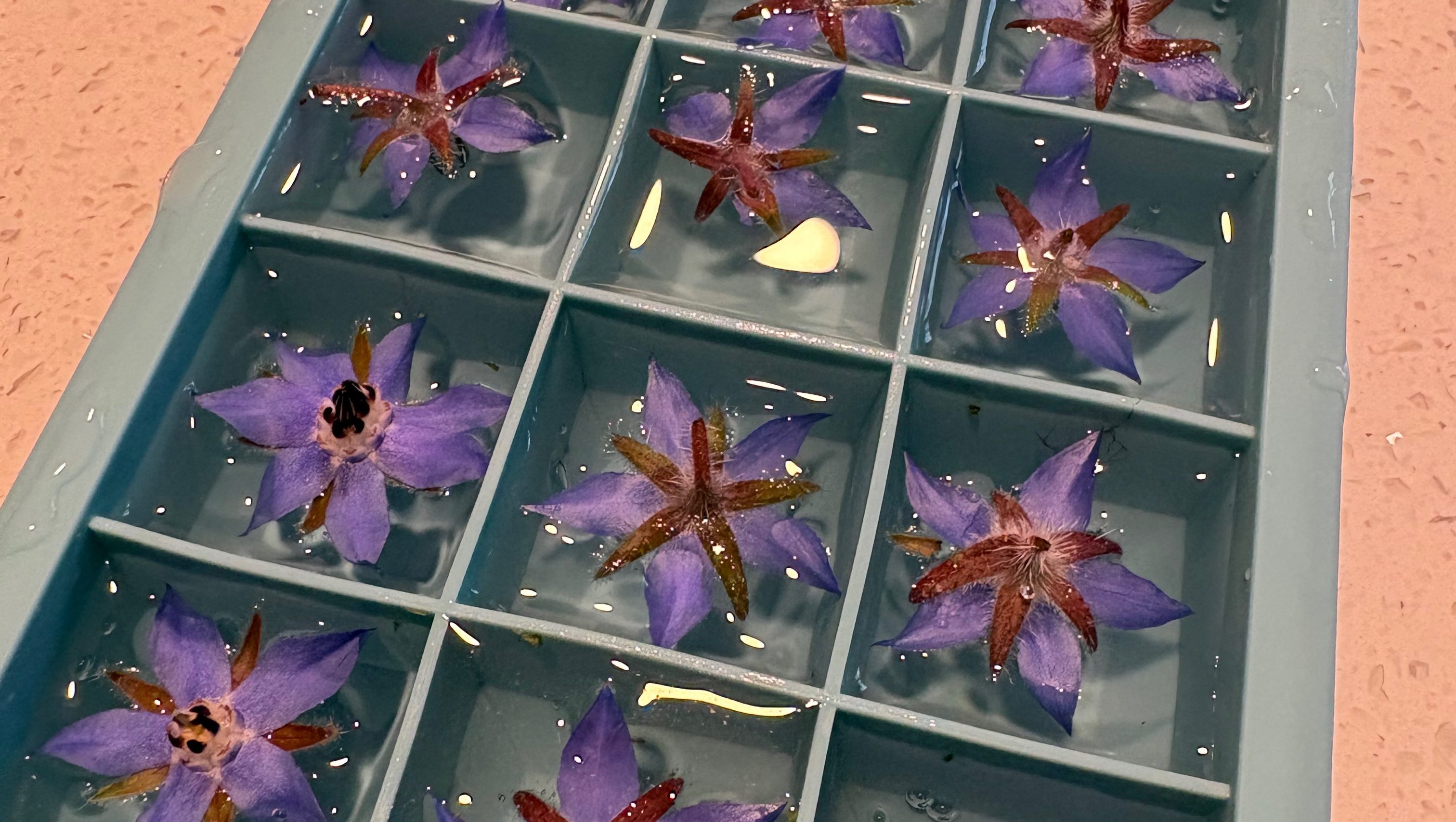
There’s nothing more like a love letter from the planet than self-seeding pop-up borage. It’s hard to say what it is that makes them the delight that they are -is it that they are edible? That they can be frozen in an ice cube to create joy in a cold drink? The vivid blue color or the way the pollinators love them? Or is it just that they appear where they want to, when they want to?
These turned up in my potato bed, and is still blooming in mid-October.
Borago officinalis is native to the mediterranean, but it self-seeds happily here in New England. Sometimes called bee bread or star flower, the blue of these flowers is vivid and cannot fail to capture the eye’s attention. Pliny the Elder called Borage a euphorosinum —a plant that elicits a feeling of euphoria. Consumed for centuries, the blue can be used as a dye and of course this lovely flower attracts bees to your garden.
Kat Maier notes that borage is a salty, mineral dense, oily herb, popular as a remedy for inflammation brought on by dry states.
For me, a perfect blue star flower suspended in my ice cube gives me joy. That’s enough for me.
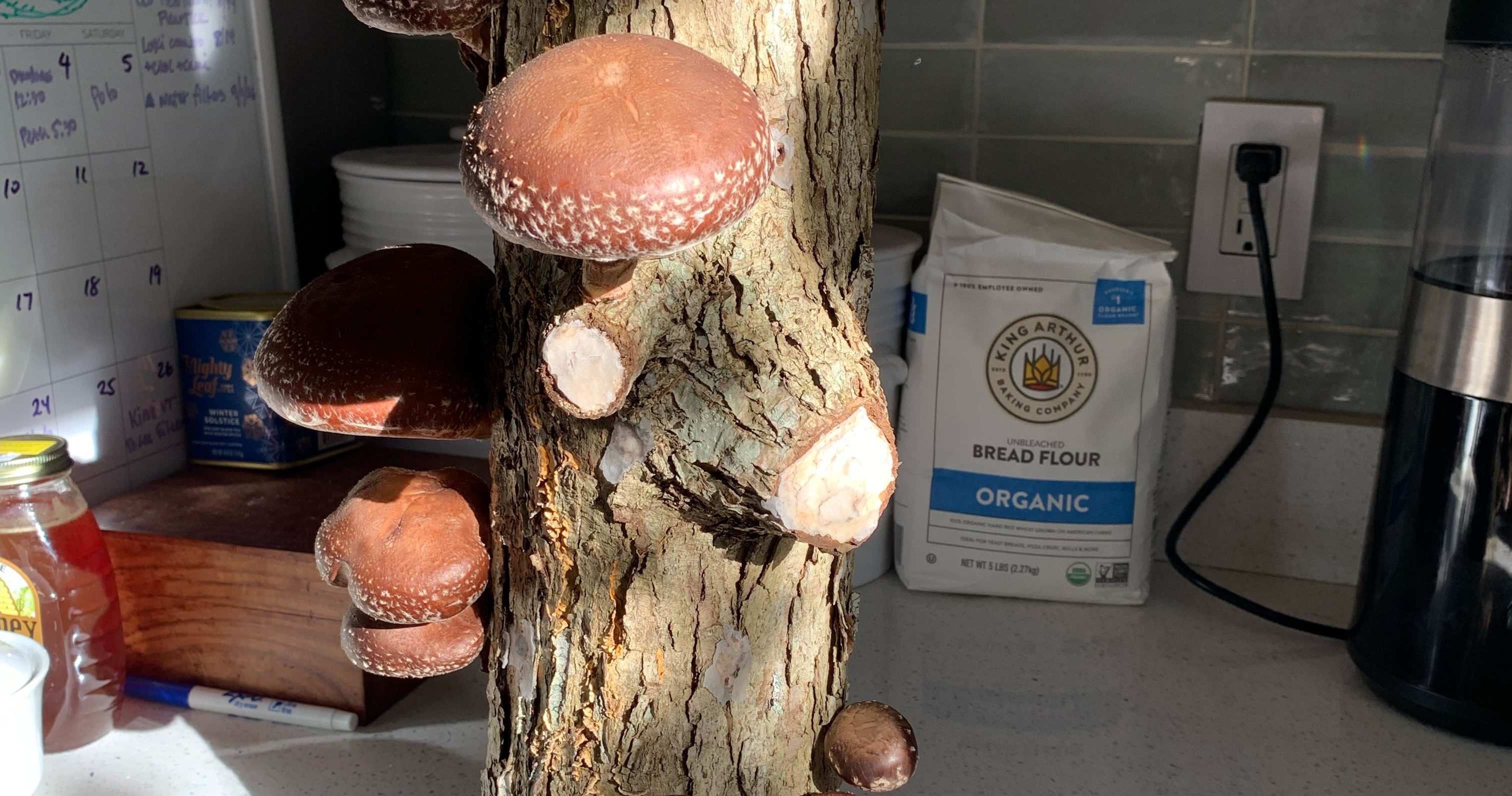
Every spring Resilient Roots of Cape Cod offers Shiitake Mushroom cultivation workshops. We took one in April 2025, and the photo above is the result.
We brought home two oak logs, which we’d inoculated in the workshop, placed them under a cedar tree, and mostly forgot about them except for occasionally aiming the hose at them.
After a recent rainstorm, we noticed a couple of mushrooms on them—mostly gone by, but mushrooms nonetheless. So I dug out the instructions the Resilient Roots staff provided, which offered instructions for taking spore prints to positively identify mushrooms and “forcing” them, which means submerging them for 24 hours in cold water to shock the mycelium into blooming.
Why take a spore print of a mushroom that has grown from a purposefully inoculated log? Well, it’s remotely possible that some other fungi could have hijacked my mushroom log. Unlikely! But worth taking a print.
We set the log out to bloom and an adorable set of mushrooms appeared on our logs as seen above.
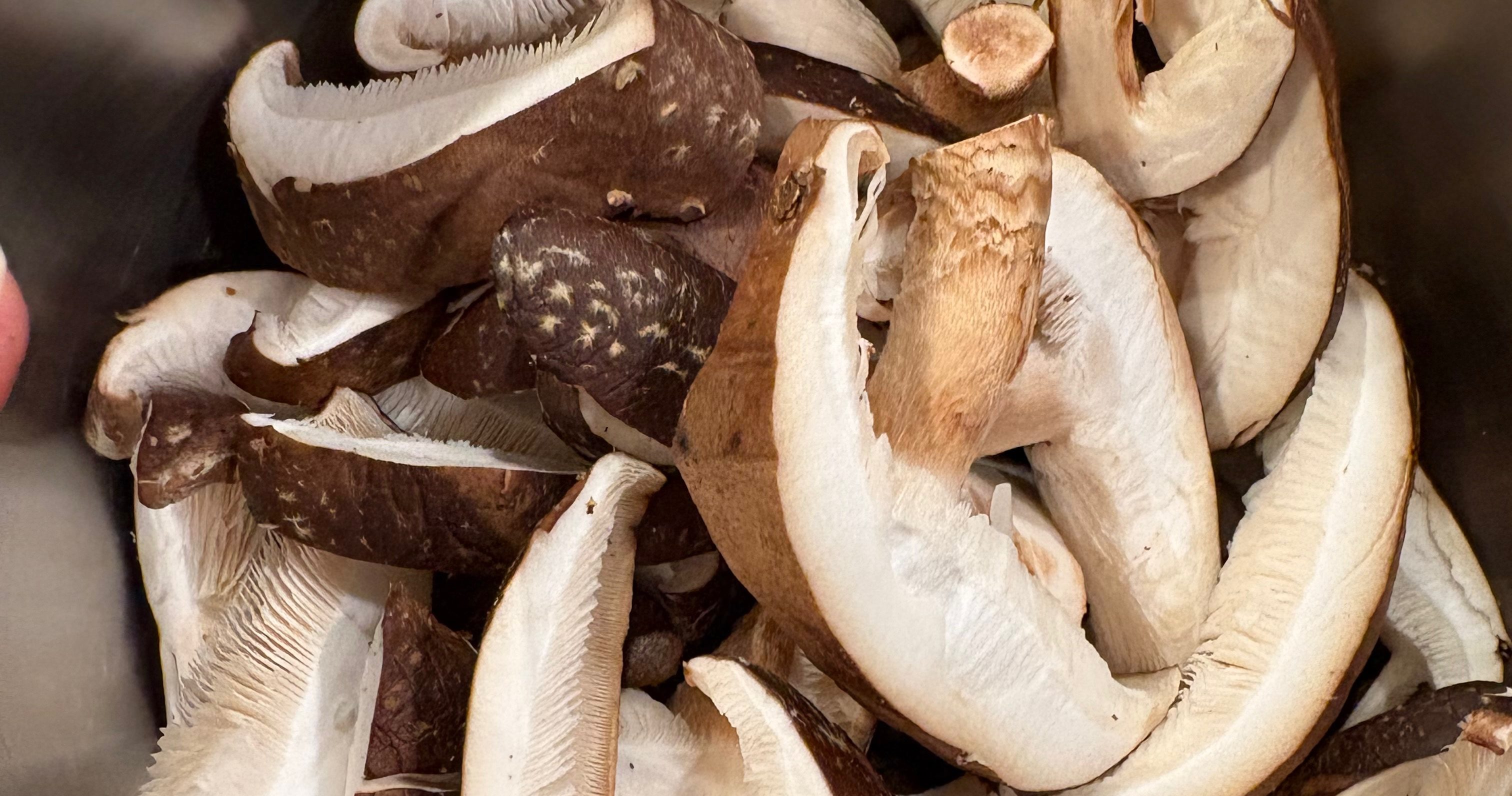
tender home-grown mushrooms ready to cook
There were delicious and truly fresher and firmer than anything I’ve bought.
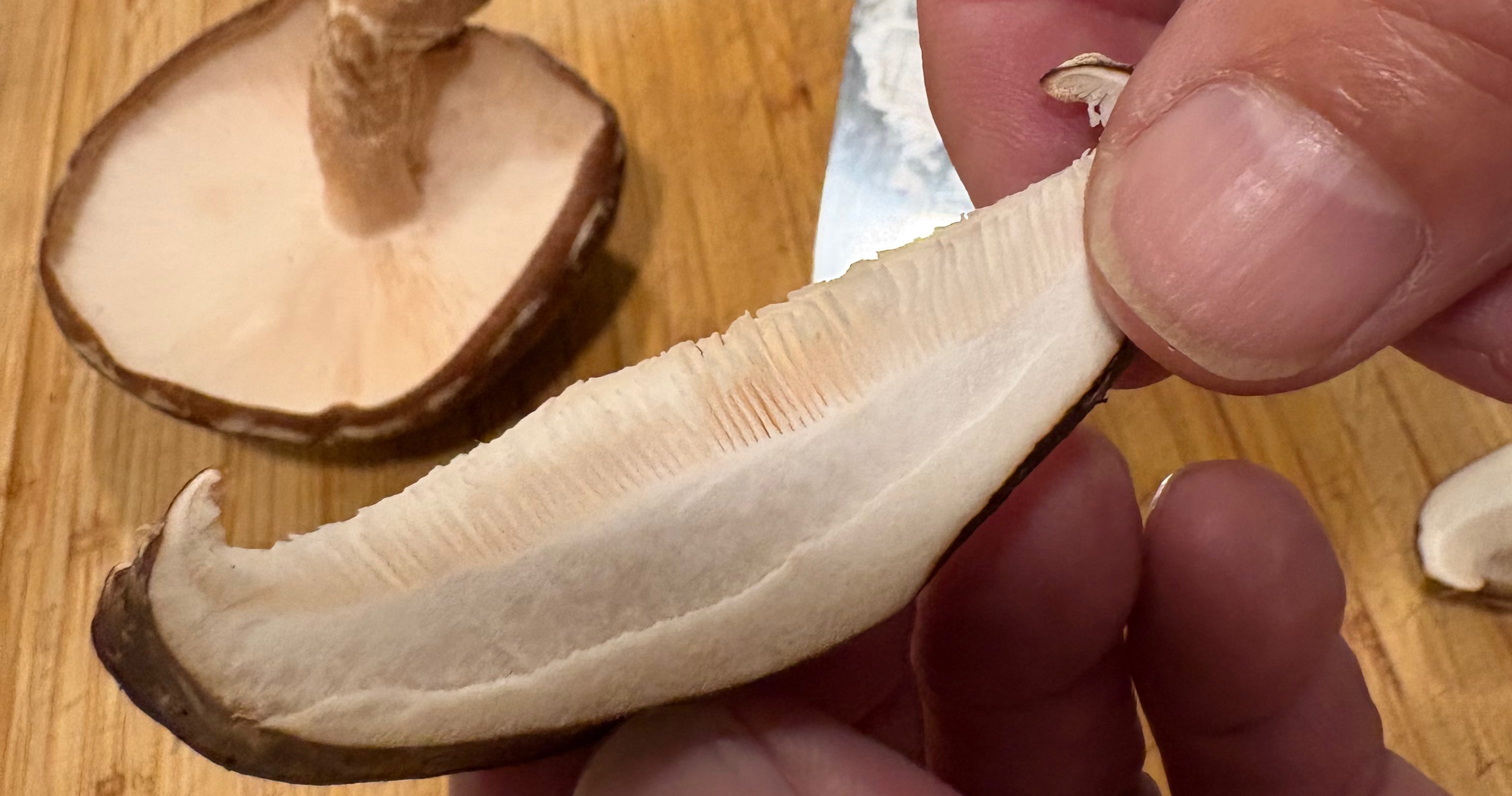
this close up of a cross section of one of the mushrooms shows how beautiful they were
The total time from inoculation to bloom was about 17 months, but Resilient Roots says they can be forced 14 months after creating them.
If you enjoy these sorts of experiments or just love growing your own food give it a whirl!
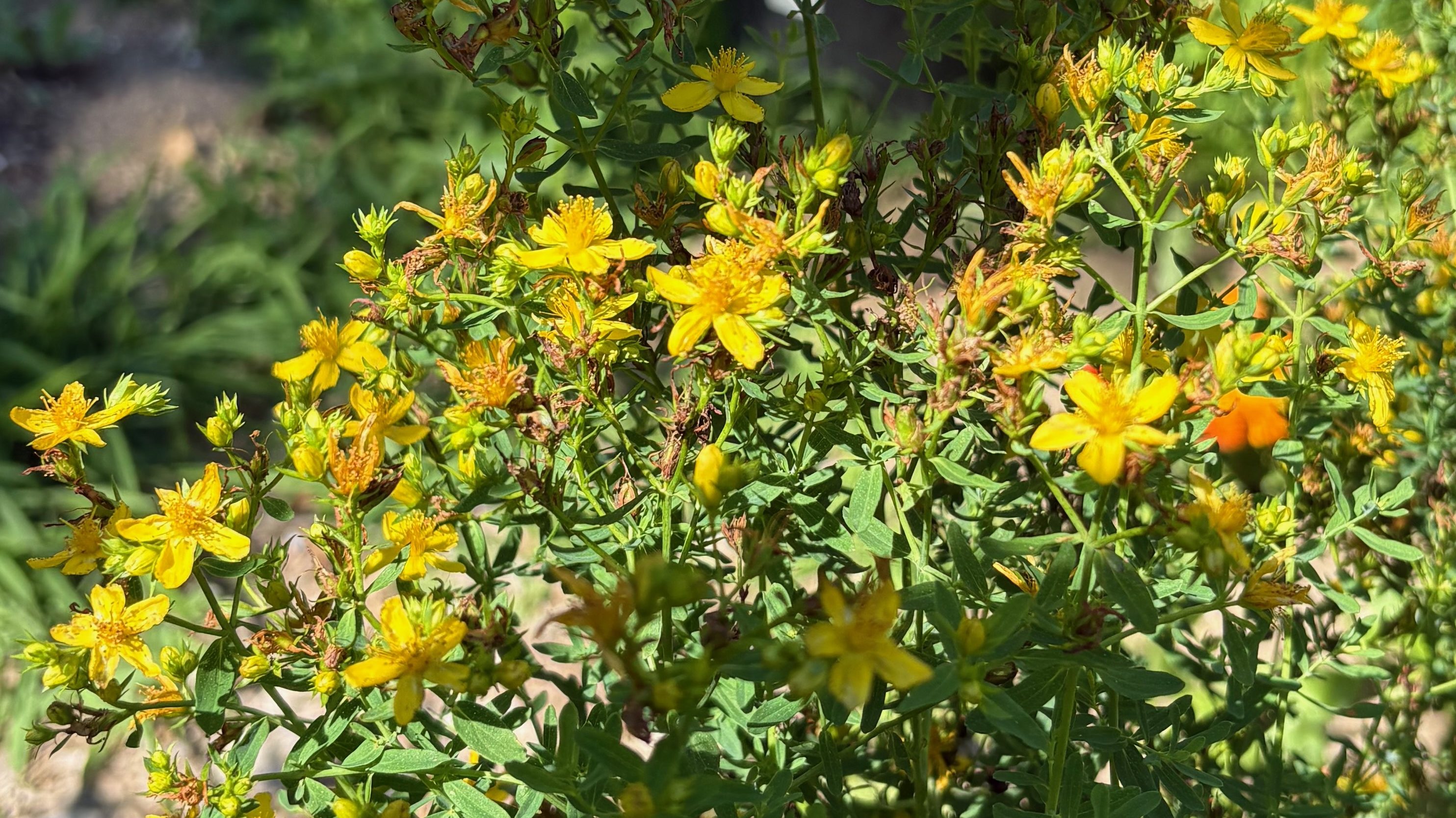
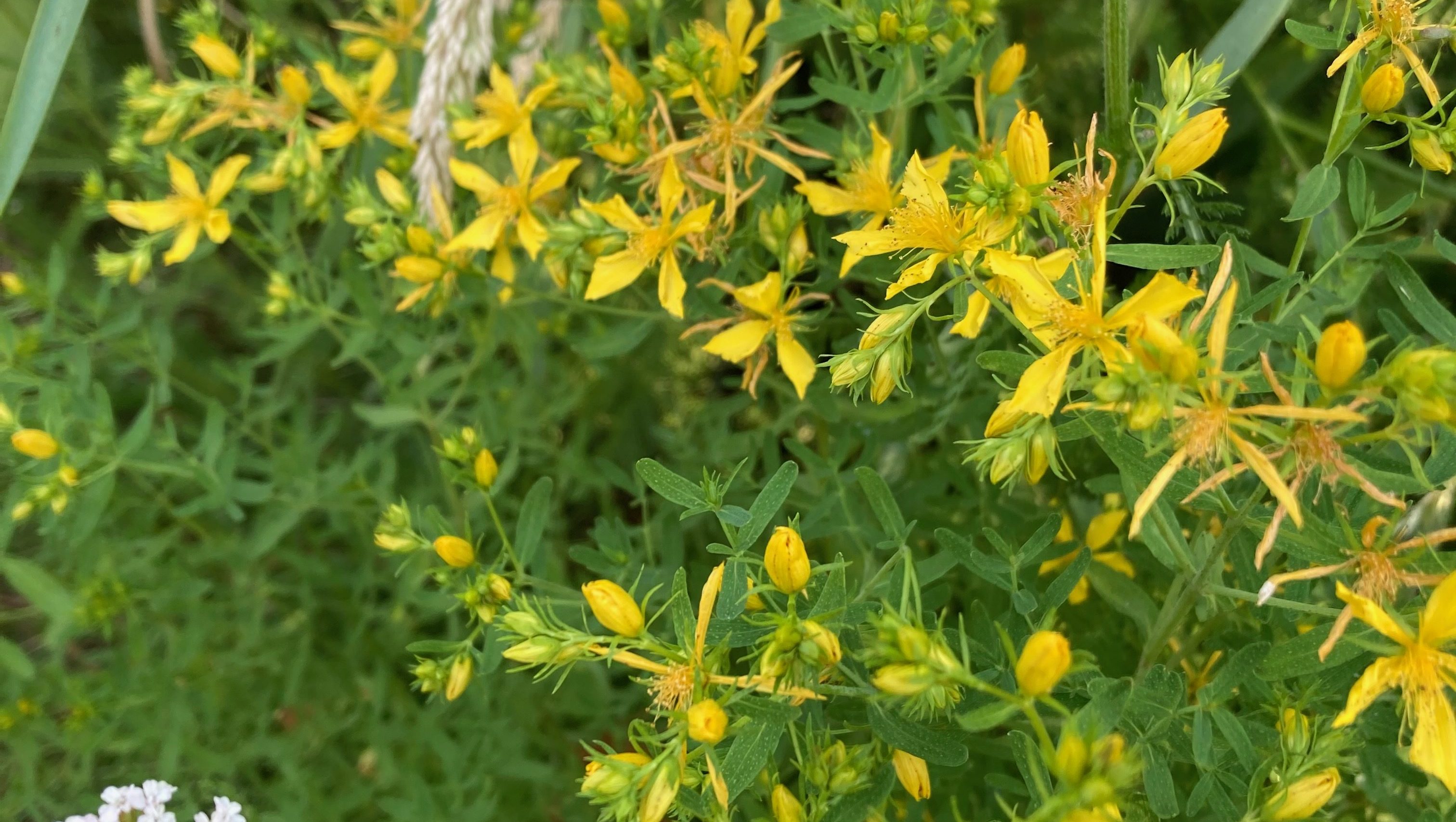
the common weed st johns wort is known for its healing ability, and pollinators love it too.
The first couple of years we lived here there was no St Johns Wort in our yard. It’s a common weed – Hypericum perforatum – in these parts, and has good medicinal value. Used to support against depressive mood and for its healing benefits, it’s become famous. That said, it accelerates the metabolism of pharmaceuticals, which makes internal use contraindicated for folks on meds.
I complained to no one in particular the summer before last about its absence here in my garden, and wondered aloud where I could find enough to make some oil. The following summer a few St Johns Wort plants appeared in a few spots around the garden. And this year – pow! There were many. Who says we don’t get what we ask for? The savvy gardener has raised an eyebrow here and said “yes. And next year it’s all you’ll have in your garden!” But it does pull out easily enough.
So at around July 4th I harvested the flowers that have come to our yard. There was enough to make both oil and tincture. The tincture can be taken internally or used in liniment, and the oil can be used as it is or in a salve or liniment to support healing of the skin and pain relief. I use the tincture in formulas to support mood and I make healing salves regularly. In years past I’ve ordered both from Mountain Rose Herbs, who make wonderful organic products.
collecting St John’s wort is easy to do, and leaves your fingers stained red.
St Johns Wort only flowers once in the year, and not for very long. Miss your opportunity and wait another year.
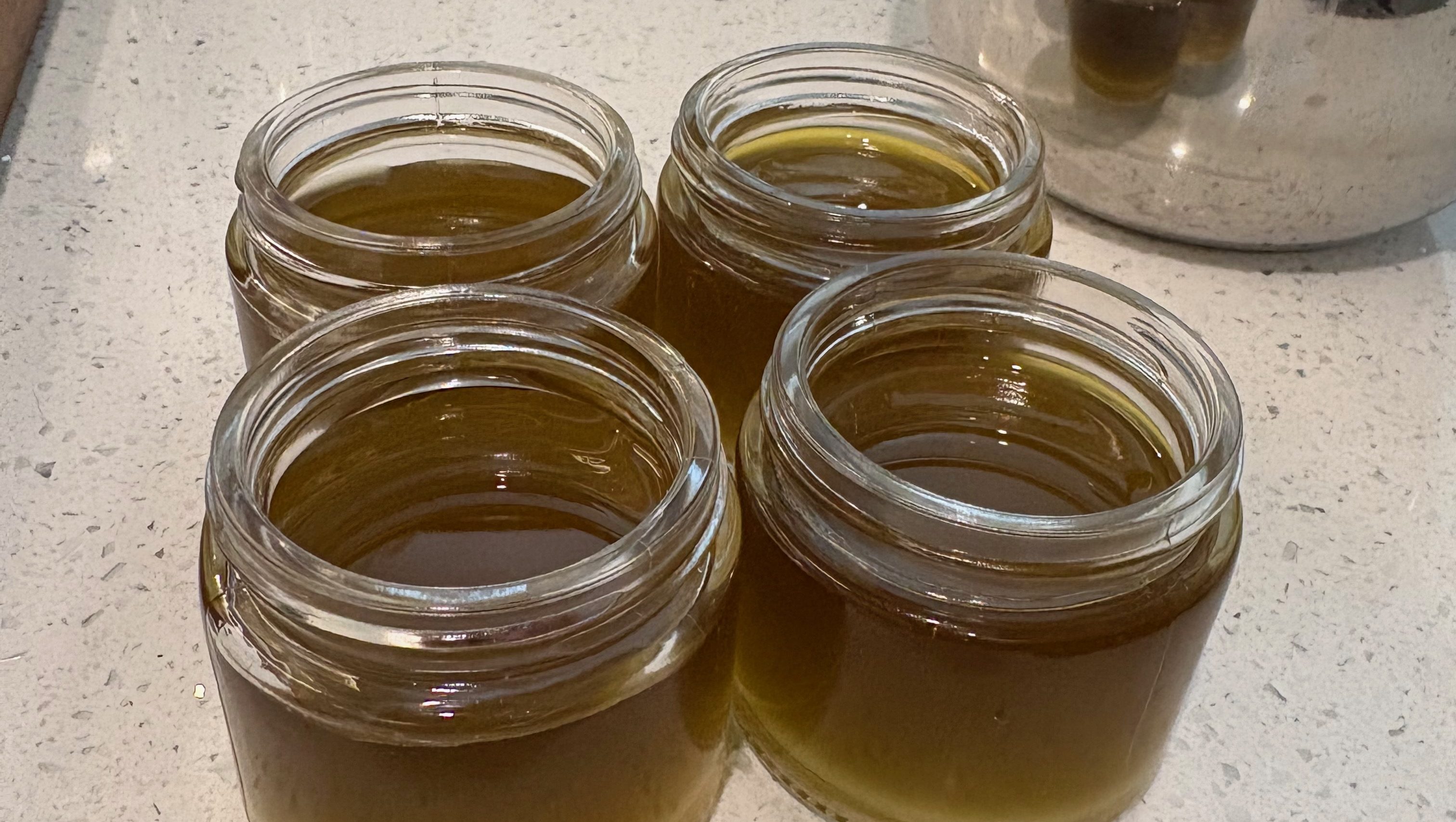
When the time to strain the flowers came, the color was the deep red color St John’s Wort should be – an indication of the oil’s medicinal value. The tincture has an even redder, darker hue.
St Johns Wort oil and tincture are red.
Today I combined the St Johns Wort oil with Arnica flower oil and birch essential oil to make a salve for muscle and joint pain and stiffness.
There’s been so much growing in the garden this year- herbs, flowers, vegetables and fruit to admire, enjoy, water, and harvest….. and the wildlife the flowers attract – yellow finches, monarch and other butterflies, and hummingbirds… along with the less affable chipmunks and voles, has been its own story. But the flowers take center stage for everyone. Sunflowers, Wood Betony, Oregano, Sage, Calendula, morning glories, marshmallow, fennel, daisies, rudbeckia, echinacea, yarrow,, zinnia, lavender, and others… medicine for the mind, body, and soul.
A pot of nasturtium has become a favorite haunt of the local hummingbirds. When they appear on the deck visiting the flowers everything and everyone stops to watch and listen to them. They bring their kind of own medicine, too.
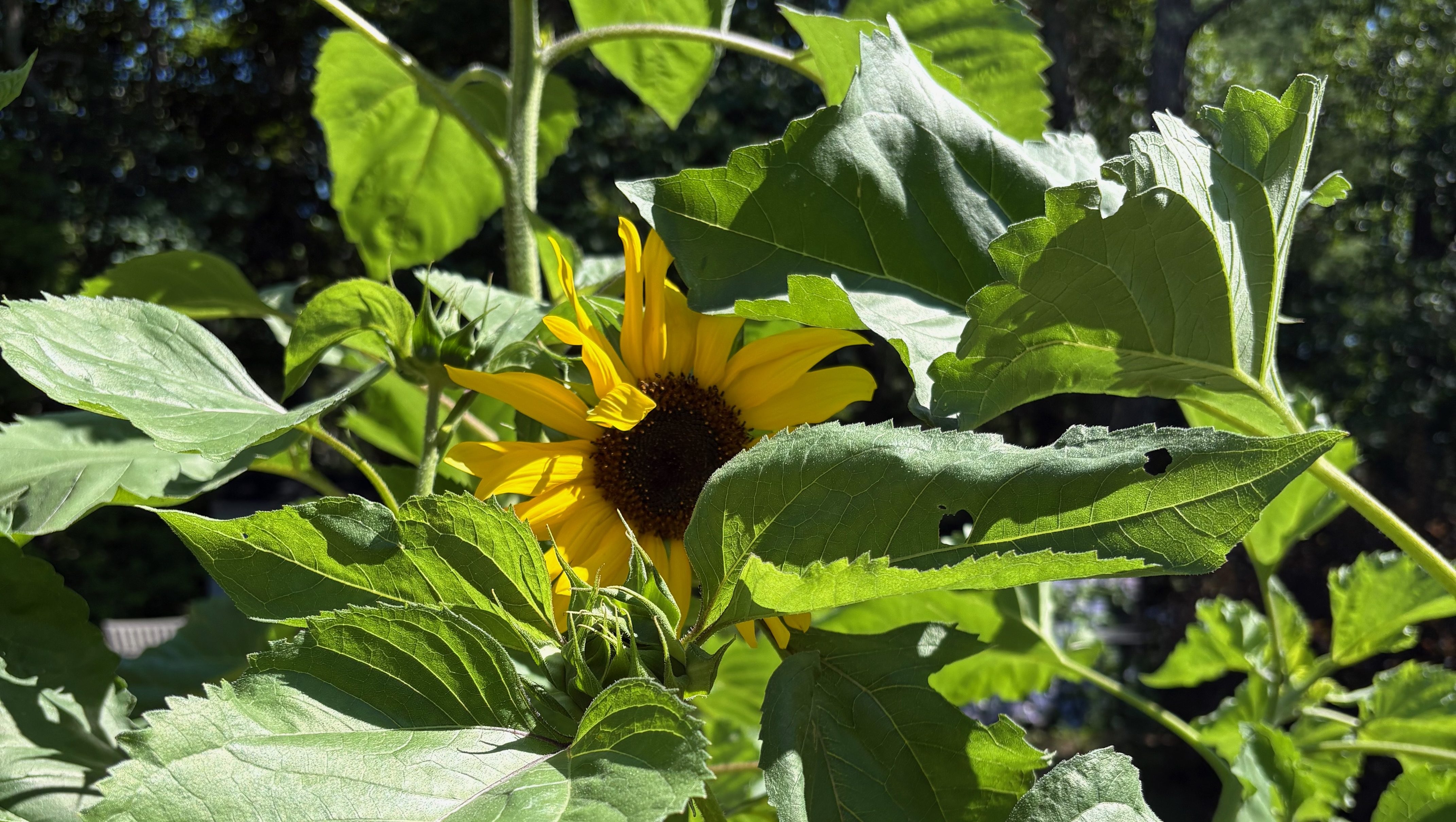
There’s no feeling like watching a bumble bee on flowering st johns wort or a giant sunflower; radiating the pure joy of doing what comes naturally, of things going right, of the natural abundance of summer and the flowering season.
the common weed st johns wort is known for its healing ability, and pollinators love it too.
Fleeting, magical moments.
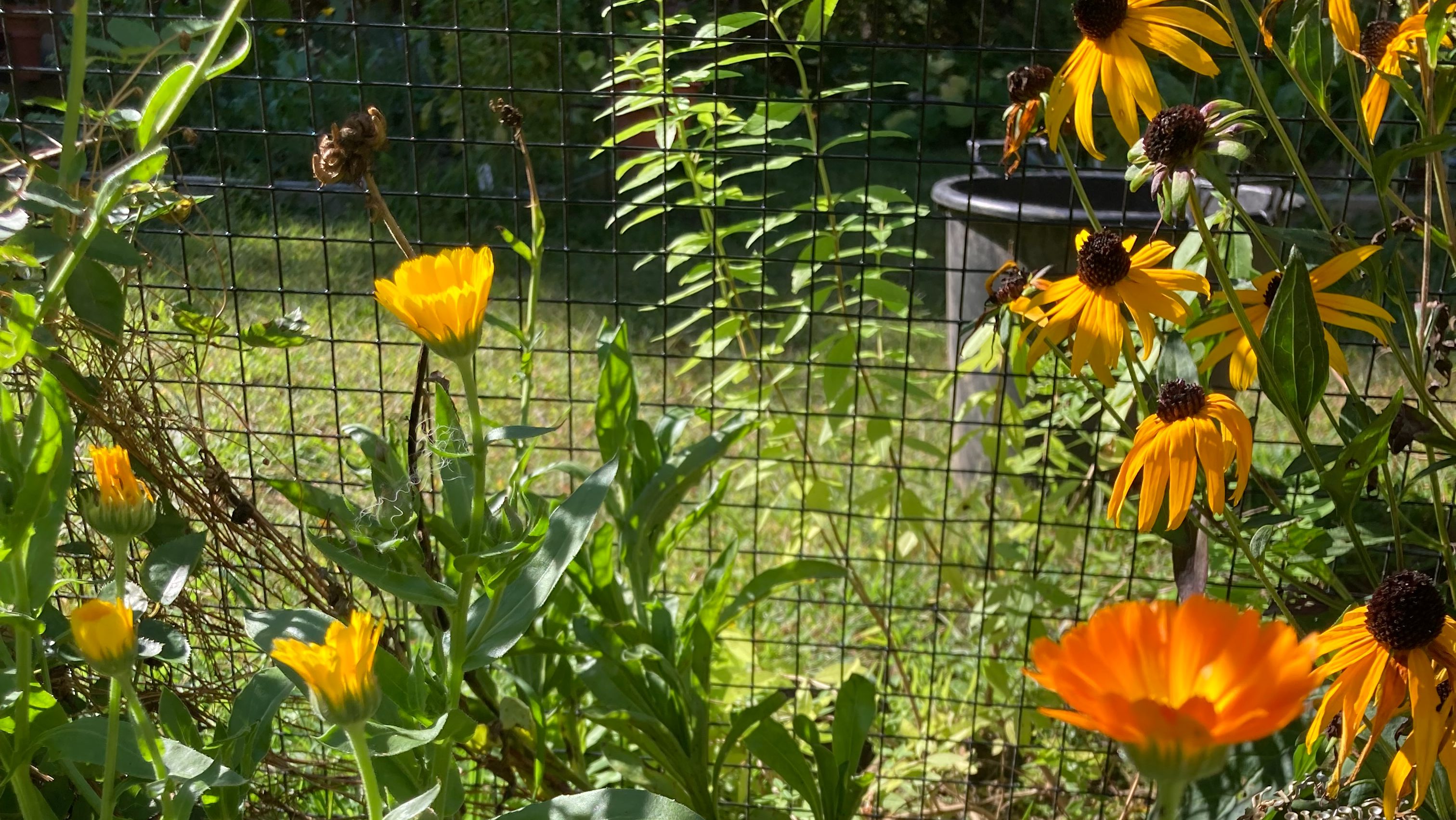
This week the sun was shining just before the wildfire smoke blew in. Calendula stood nodding in the morning sun.
calendula is used for it’s healing power in skin and tea remedies
Wood betony, covered in happy pollinators and graceful in the morning light, looked magical. Mint grew tall, absolutely at large and threatening a takeover of the garden, it’s soft leaves rising into the sun and flanked by a regiment of lemon balm.
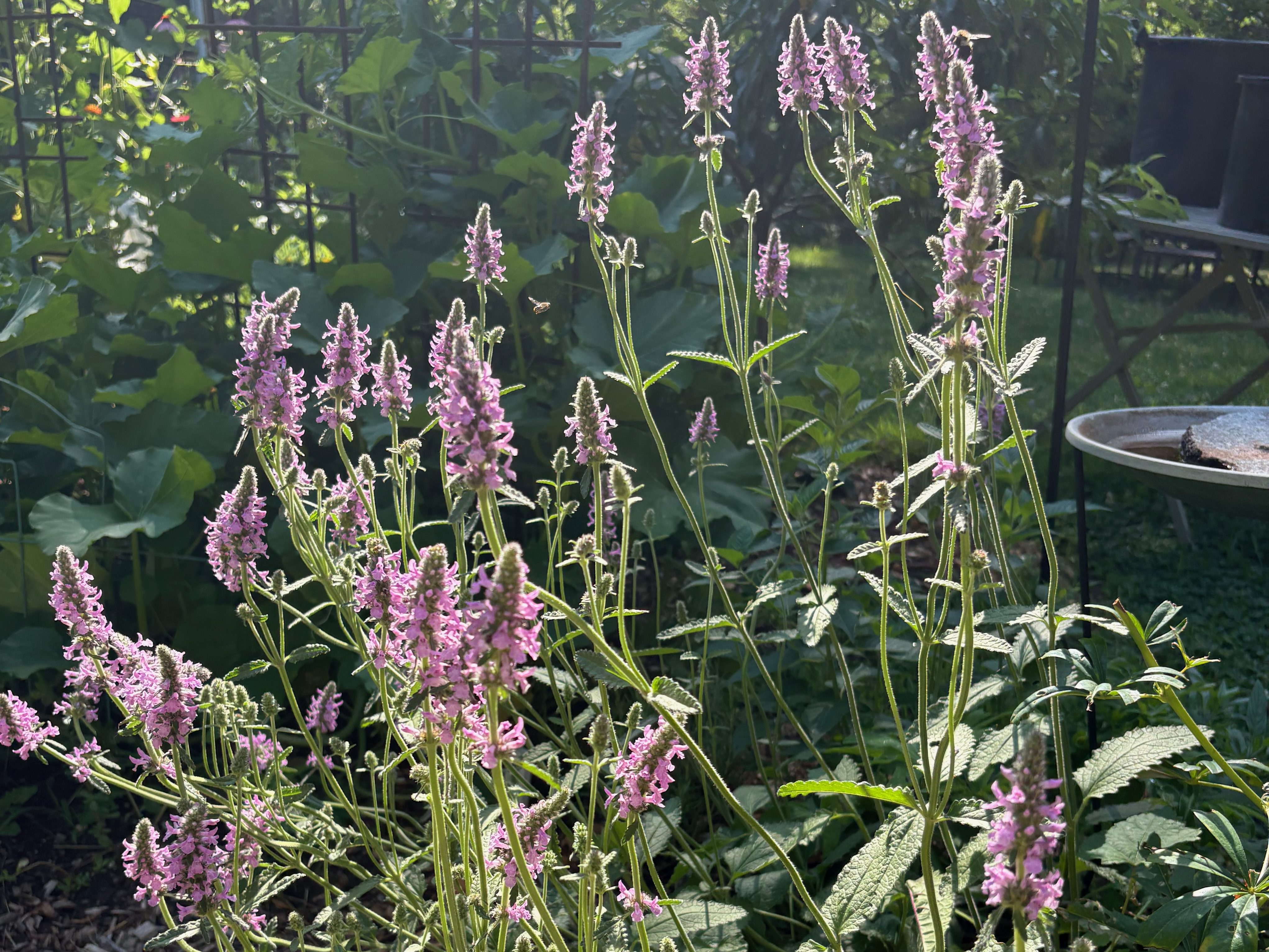
Wood betony is a perennial herb used as a nervine. Graceful purple spires of flowers bloom in July in the Northeast of America.
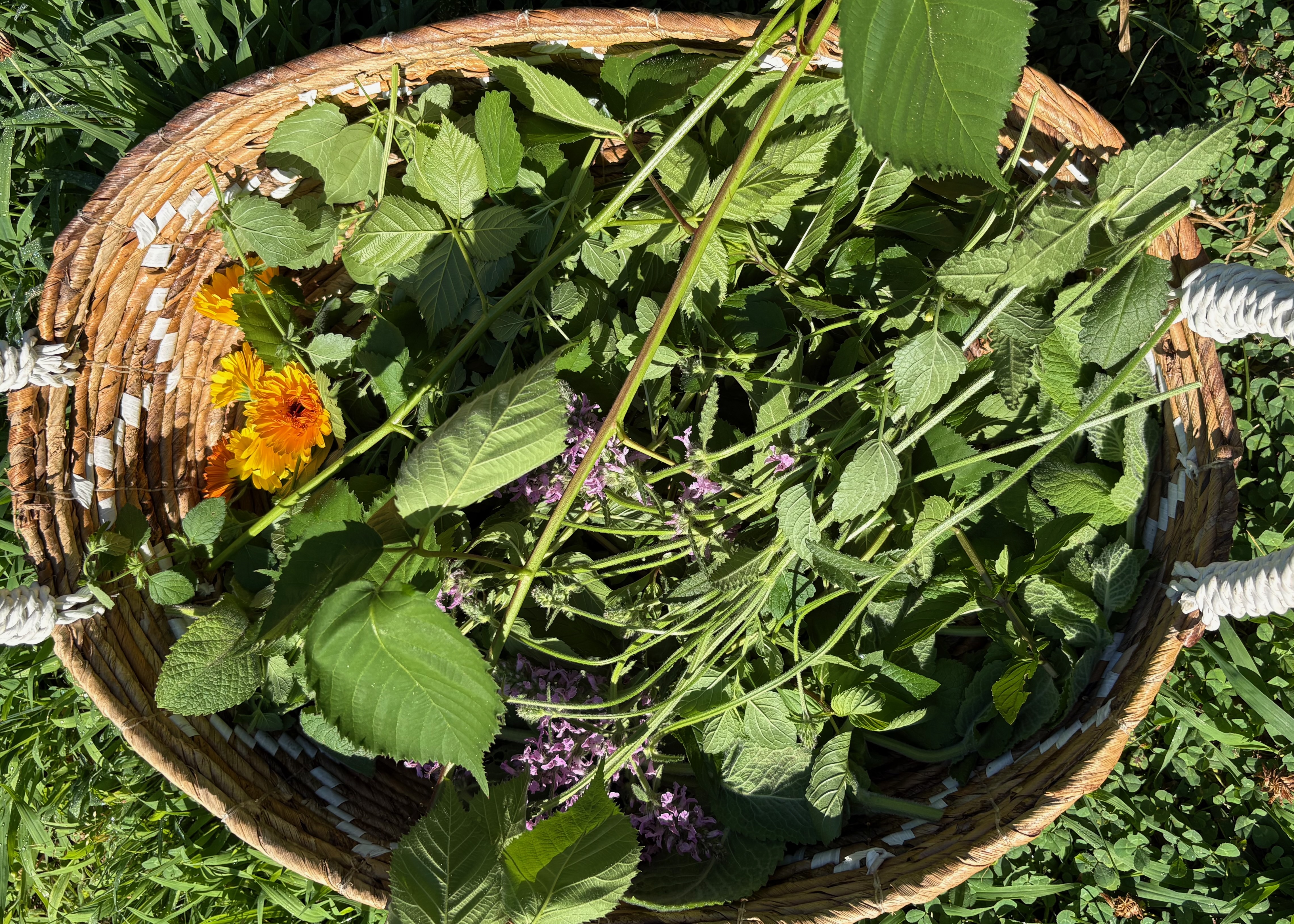
So I joined the bees and their pollinator friends in the garden, collecting calendula, wood betony, peppermint, plantain, and lemon balm to dry for teas.
Many people have asked me how to make salve, so I thought I’d revisit an old post that details how to make an all purpose healing salve. The same process can be used for a simpler salve of just calendula or any infused oil.
In this salve we’ll use a blend of st john’s wort flowers, comfrey leaf, and calendula flowers.
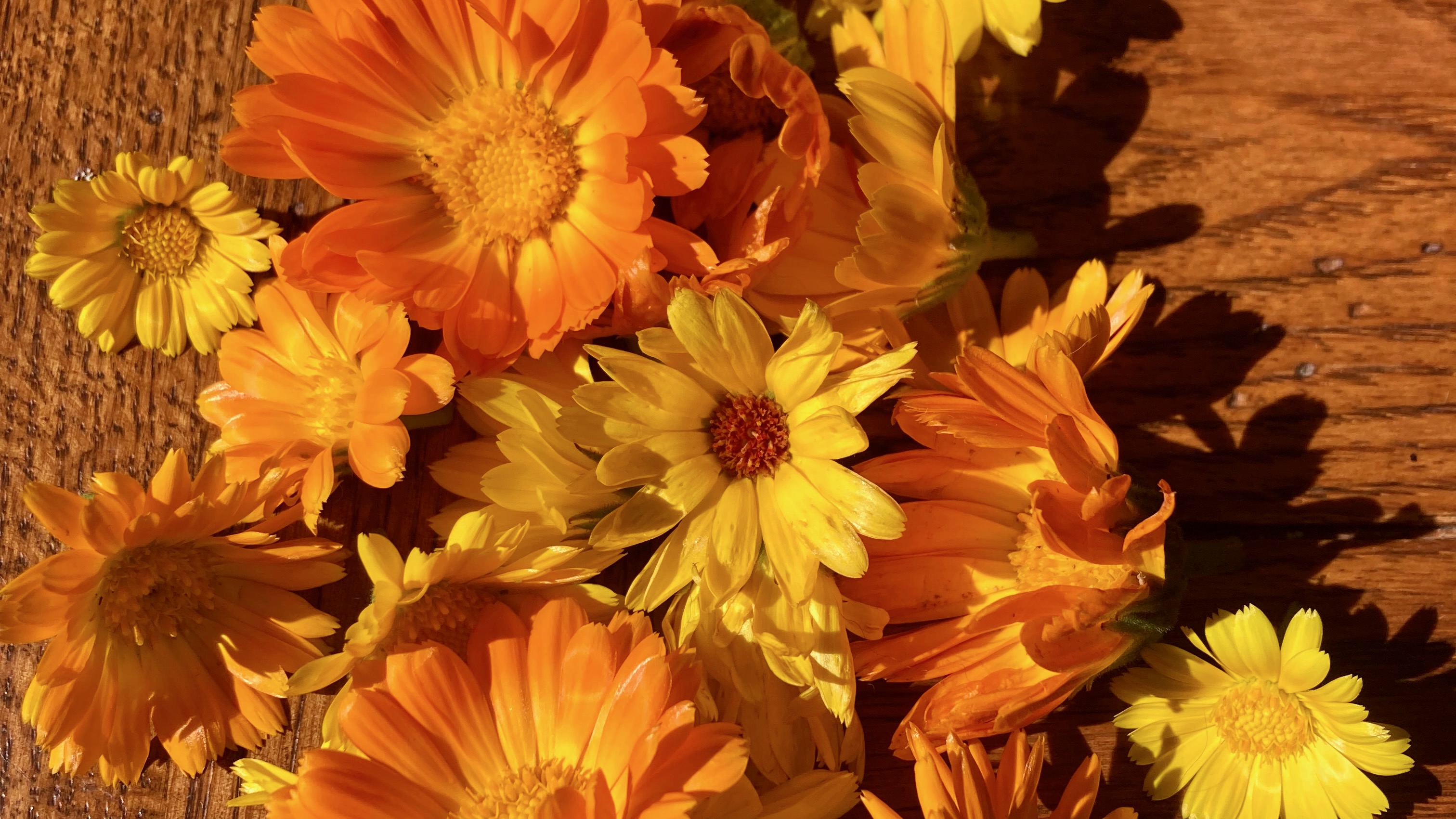
calendula flowers are healing for the skin and the gut
Popular for its healing properties and lovely color, calendula is often an ingredient in salves. Cuts, bruises, stings, and abrasions all benefit from this herb, which stimulates blood flow to the surface of the skin. Infuse it in oil by filling a jar with the fresh flowers, covering in olive oil, and setting in the sun for a few weeks. Instructions here.
St John’s wort, widely considered a weed, helps to heal the skin and is used to treat depression
Saint John’s wort is a traditional remedy for wound treatment. Known for accelerating tissue regeneration, repairing nerve damage and reducing scarring.
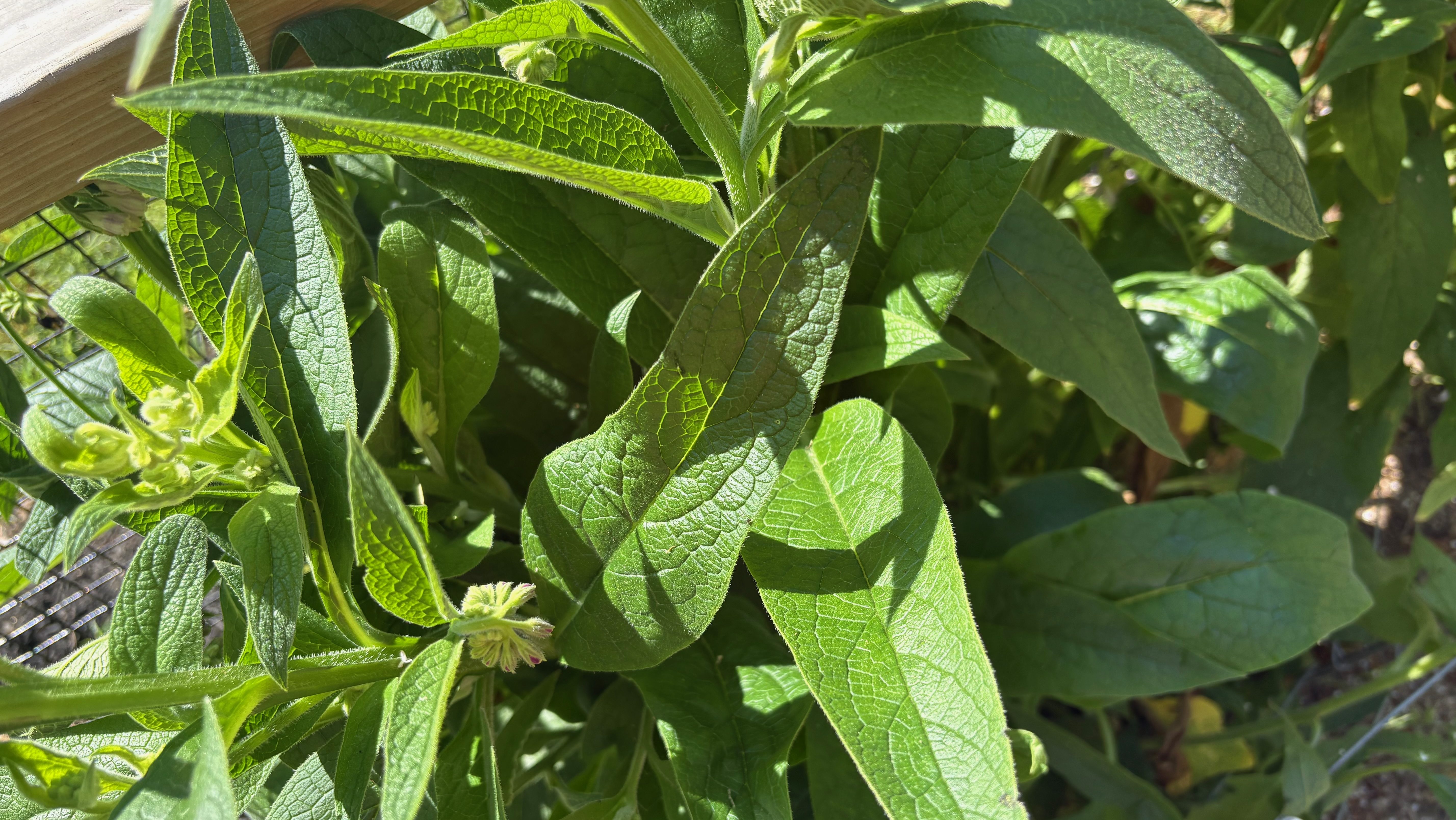
Comfrey is mineral rich and can help heal the skin quickly
An extremely active wound healer, comfrey is rich in allantoin, which is a constituent that speeds the proliferation of new skin cells. An excellent burn remedy, it’s also used fresh as a poultice for sprains, stings, and even bone breaks.
To make the salve, create the infused oils and then combine with with beeswax:
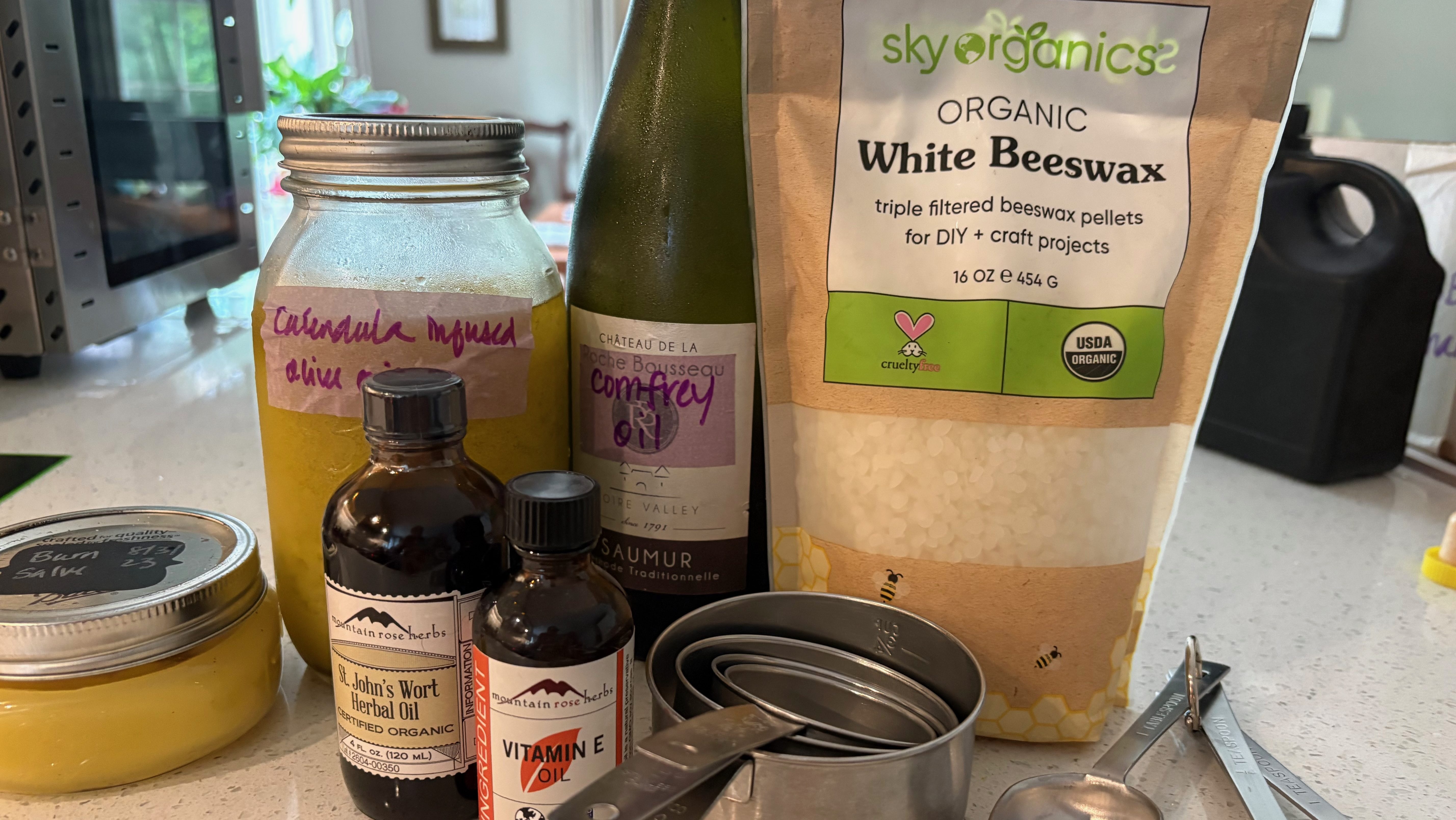
1 part st. john’s wort leaf and flower
1 part comfrey leaf
1 part calendula flowers
olive oil (or sunflower oil)
beeswax
salve ingredients
Step 1: Place each of the herbs in a glass jar and cover with 1-2 inches of olive oil. Place in a sunny window and let infuse for 2-3 weeks (I have left mine a little longer). Strain and rebottle. label and date.
Step 2: To make the salve strain the oil. For each cup of herbal oil add 1/4 cup beeswax. heat the oil and beeswax together over very low heat to melt the beeswax. The beeswax will thicken as it cools.
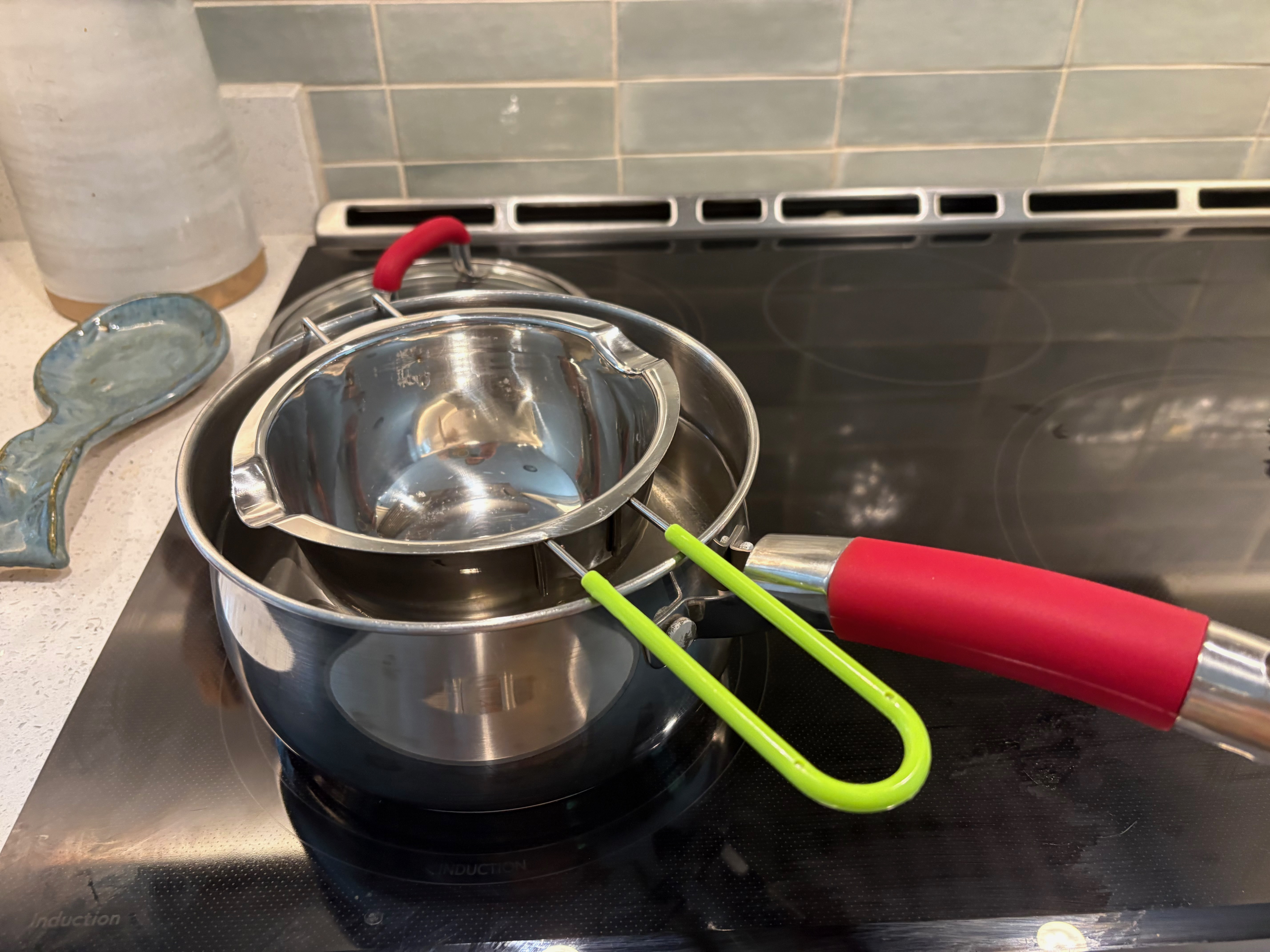
you can use a double boiler like this to make salve
To check for firmness do a quick consistency test: place 1 tablespoon of the mixture in the freezer for a minute or two. Check to be sure its the firmness you want; for harder salve, add more beeswax, for softer salve, add more oil.
When you are happy with the consistency of the salve remove from heat and pour into glass jars or tins. Store in a cool dry place.
And spring has arrived in North America after our long stormy winter. Where I’m from it’s been heaps of snow, long power outages, broken trees, financial stresses.
But daffodils have emerged. Forsythia are just starting to spark. We had a whole 2 days of ceasefire. There’s a Ken Burns documentary about Henry David Thoreau that evokes a spirit of possibility and personal journey airing on PBS. So.
We begin again. Reintend. Plant seeds. Create space, find forgiveness, make grace. Forgive what didn’t quite come to be. Renew belief, renew resolve. Because a new season is arriving all full of longer days and possibility.
To that end, I planted seeds that were meant to be planted last year… or even in 2024. I’ll see if they sprout.
Some people are getting married. Some people are starting businesses. Some people are finding a spiritual space in their minds and hearts, or pivoting toward spending their days with an eye toward developing their own vision.
Still, as if winter hasn’t passed, might not pass, I keep hearing so much about what’s wrong right now. It’s true, there’s a lot that isn’t going right. But when wasn’t that true? There’s always something that is stealing the moment’s joy, or could do. You don’t have to dig far to read or hear stories that remind us of how much we have to be grateful for.
We can claim joy back if we have the courage to. Earned or unearned, we can always just take it back to ourselves. And as if to remind us, spring has returned. Again!
I once knew a person who was bound early in his life for Spain. I think just for a while. I asked him about his intention for his trip – was I asking about his career? I hadn’t meant to. His answer: ‘Same as everyone. I want to be fabulous.’
Over the years I’ve thought about his answer, its rightness, and how we say no to ourselves.
But spring has come. There’s a new moon in Aries this week. Maybe we should all say yes. Maybe we should all make a little space for being fabulous, in our own rights, just as we are. No change required.
Skullcap is effective for relieving anxiety, calming anger, clearing the head.
Likely the most common request I’ve had for herbal support has been for the relief of anxiety and stress. Speaking for myself, stress, tension, and anxiety have been a condition for which I’ve sought an antidote over the years.
Enter Skullcap.
Skullcap is well known in herbalism as an effective relief for anxiety, stress and muscle tension, especially in the neck, shoulders, and head. Herbal Reality, an excellent source for all things herbal, also notes it is used for the relief of angry hot states and as a support in addiction withdrawl. It’s beneficial for those dealing with tension headaches or TMJ.
Taken as a tea or in tincture form, it’s a reliable way to calm the mind during the day because it does not bring on drowsiness. And combined with Passionflower, Hops, or Wild Lettuce it becomes a sleep formula, lending it’s calming and relaxing effects to the hypnotic effects of these other herbs.
In a tea it has a mild flavor, so it’s easy to add to any loose tea you are drinking or to have on its own. Native to North America, it grows readily in moist places.
It’s a good friend to have along in a dosing bottle of tincture to take the edge off on stressful days… I can personally vouch for it’s effectiveness!
Skullcap is safe for folks of all ages, is gentle, and benefits teenagers who are often anxious. The dose is 5-30 drops of tincture a day or 3-6 grams of dried leaves and flowers in a tea. You can find this delightful herb at Mountain Rose herbs or you can easily grow it in your backyard in a sunny moist spot. Take care to get the right variety – Scutellaria lateriflora – if you choose to grow it yourself!
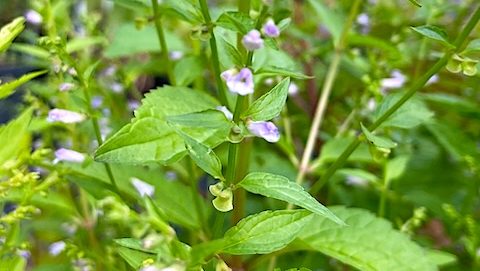
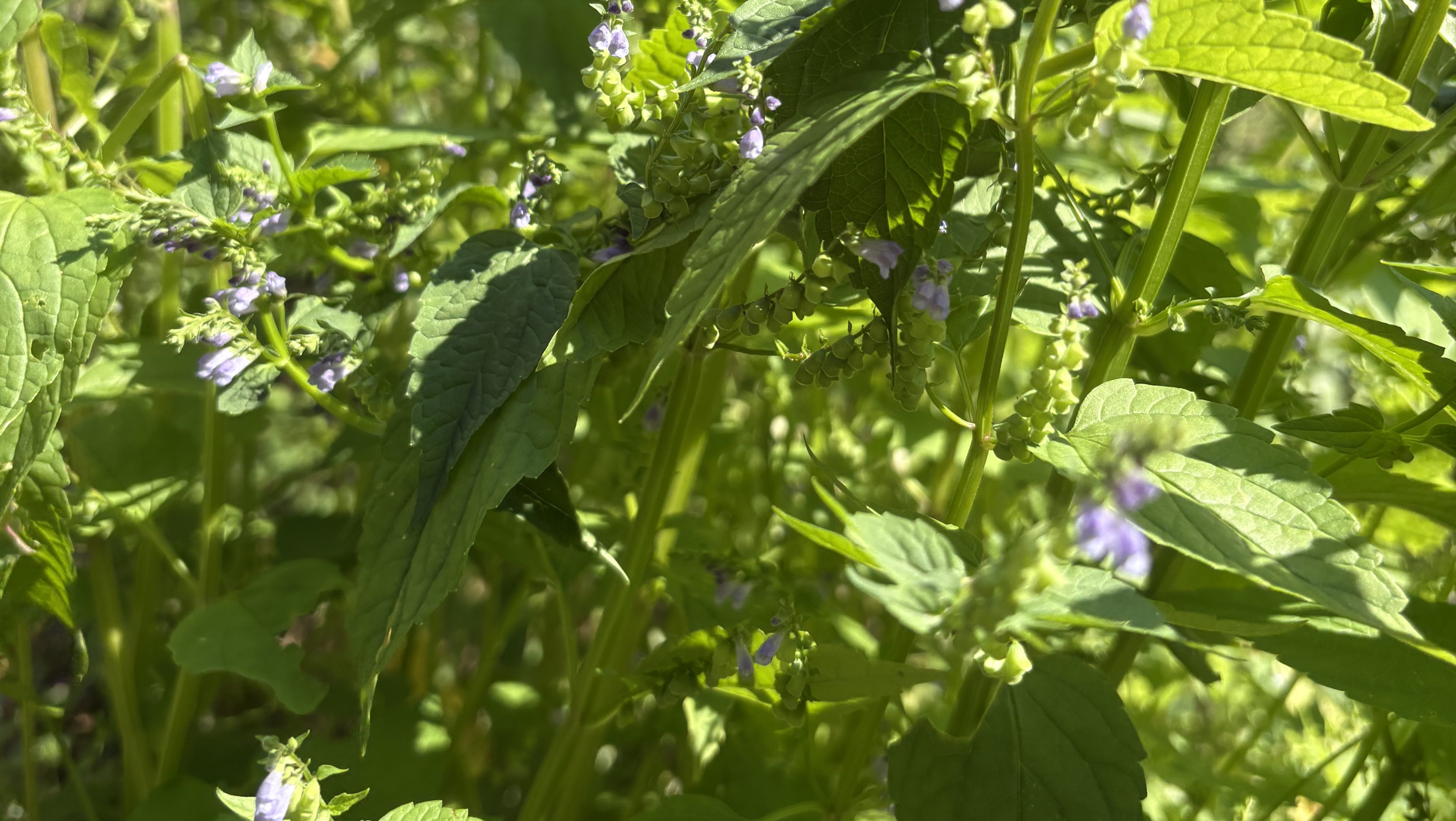
Skullcap, Scutellaria lateriflora and also called Mad Dog skullcap growing happily in my backyard.
Gut health influences so much beyond digestion – energy, mood, immunity, brain function …. I’d go as far as saying it affects and feeds our vital force. We’ve all heard this, but so often we don’t really know how to support our gut outside of taking a supplement for our microbiome and digestive health.
Some days our gut just isn’t feeling its best. Despite that, we go on with our day, our work, school … meeting our responsibilities. In this blog I’d like to suggest gut healing tea as an opportunity to care for ourselves while continuing to soldier on, if that’s what we choose to do.
A tea that’s formulated for gut health can taste great. Ginger, fennel, peppermint … all delicious and easy to find. You can add honey, too, if you like your tea sweet. These herbs, along with others, can also be healing to the gut, support digestion, reduce inflammatory states, stimulate digestive secretion, relax and ease anxiety, support the lymphatic system, soothe and protect irritated or inflamed tissue in the stomach and gut, and even tone and strenthen the stomach. It’s a long list of benefits, isn’t it?
Some of my favorite herbsfor a gut health tea follow below, with notes about their benefits. This is not an exhaustive list, the idea is that you can blend your own tea if you want to. Or just buy a fabulous blend from an organic tea maker with some of these herbs in it!
Chamomile –(Matricaria recutita) flower–warming and relaxing (nervous system and lower part of the digestive track), discourages nausea.
Catnip (Nepata cataria)– warming and relaxing (nervous system and upper digestive track; also antacid (helps with heartburn)
Marshmallow Root (Althaea officinalis) – soothing to the gut, anti-inflammatory.
or Licorice (Glycyrrhizza glabra), soothing to the gut, tones the stomach, sweetening, harmonizes your tea blend. Helps with digestive dryness, irritation, ulcers. [Can use up to ¼-⅓ part Licorice root in your tea. Note Licorice increases aldosterone,which can raise blood pressure, so not recommended for those with hypertension.]
Some years ago during my time as the Digital Program Manager for the New England Journal of Medicine, I developed hypertension. I was genuinely surprised; I’d had low blood pressure most of my adult life.
In retrospect there was a clue; my predecessor had been gifted a blood pressure cuff by our General Manager at her going away party. Why should I have been any different?
My physician, a wonderful, deeply practical and very knowledgeable internist, advised me my diastolic pressure was dangerously high and had to be attended to. But I didn’t want to take pharmaceutical blood pressure medicine. So we agreed I could try exercise and meditation first and return for a blood pressure check soon.
When I returned my blood pressure was not reduced. It proved to be a tenacious condition. I was busy at work, and agreed to monitor my blood pressure daily and take the meds. I did this, meditating regularly, which did help. But I maintained a high stress level despite efforts to manage it, and my blood pressure remained high, too.
Eventually I left the job, taking another job in program management. My blood pressure remained a problem throughout, no matter how much I exercised, meditated, and ate foods that supported me.
The meditation helped and I got to a new place in understanding what was happening in my mind – very powerful. But my daily life and internal dialogue were still driving my blood pressure. I think meditating more would have ultimately helped bring it down reliably, but I have not disciplined myself to a practice that regular and deep, yet.
So, finally the game-changer was an herbal formula I found in David Hoffman’s book “Medical Herbalism.” Not just the motherwort, the hawthorne, the linden, the skullcap — all very helpful and they do affect my pressure positively — but the addition of crampbark to the formula was the magic. My diastolic blood pressure finally came down into the 70s.
And I feel that the crampbark has affected my thinking and my stress level, too. I can calm my stress reaction much more effectively now that I’m working with it. Somehow it’s shifted my relationship with the narrative that causes the pressure, in the same way a conversation with a wise elder brings fresh understanding.
It’s hard to describe the relief I felt when the monitor started to show me acceptable numbers without taking the lisinipril. Peace. Freedom. Deep deep relief.
Peace created.
Everyone’s different and most people struggle with their systolic, rather than their diastolic pressure. What works for me might not work for others – perhaps unsurprisingly there are several formulas in Hoffman’s book that address blood pressure associated with a range of conditions; dealing with the root cause is always the aim and Hoffman’s formulas make clear that there are several plants that can work together to address hypertension in an individualized way.
And interestingly, if you monitor your blood pressure it’s not hard to see how it responds to your medication and your state of mind -experimentation is not hard.
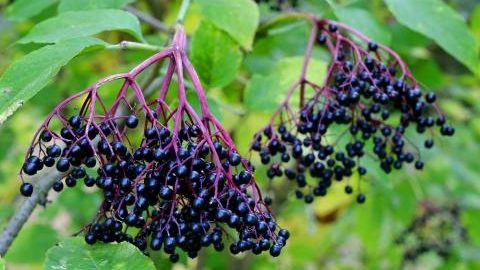
Native to the Northern Hemisphere and a modern staple in many households, elderberries, in the form of elderberry syrup, help the body fight the flu by blocking the virus’ replication.
By way of an epilogue, the flu (Influenza A to be precise) had a short stay of about 4 days in the house, thwarted as it was by the raft of anti-flu remedies I mentioned in the last post.
For my part, I did feel it coming on but the blend of elderberry, echinacea and goldenseal capsules, and fire cider were successful – no flu days for me and I didn’t need to call on the Tamiflu. Same for Jon – he took only herbs and did not have the flu, although he had the added protection of a flu shot.
Clinicians often suggest avoiding herbs to their patients because they don’t know much (or anything) about their effects. And most herbalists don’t think the living is better through pharmacology. But there is room for both in everyone’s lives–and which to choose depends on the change you are trying to support or effect.
Wishing everyone a healthy flu season. I heartily recommend picking up some Elderberry (Sambucus) Syrup, just in case.