That last piece of leftover pie I had for breakfast this morning left me thinking “I need a cup of peppermint tea.” Too many sweets over the last few days has taken a toll.
I drink peppermint tea whenever my stomach’s unhappy. Peppermint, the binomial name is Mentha piperita, is known to have other health benefits but it’s enough for me that that it tastes great and soothes my stomach. It’s fabulous after dinner with honey (and maybe even a dollop of cream) for a sweet treat, too.
To make it:
Boil water
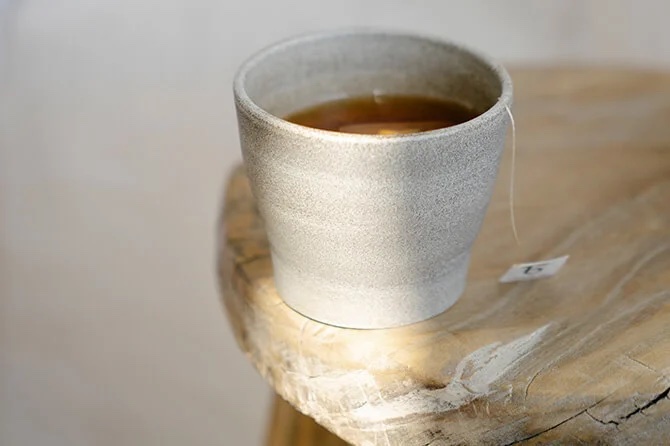
Pop a peppermint tea bag into a mug of the boiling water.
Cover the tea – this keeps those volatile oils in your teacup. You can use a little dessert plate over the cup if I don’t have a proper teacup.
Let the tea steep for at least 5 minutes (10-15 minutes is better).
Enjoy the mint on its own or add honey or milk if that appeals.
You can buy peppermint tea bags at the grocery. Or you can grow it! It’s easy… so easy, in fact, that it will spread if left alone.
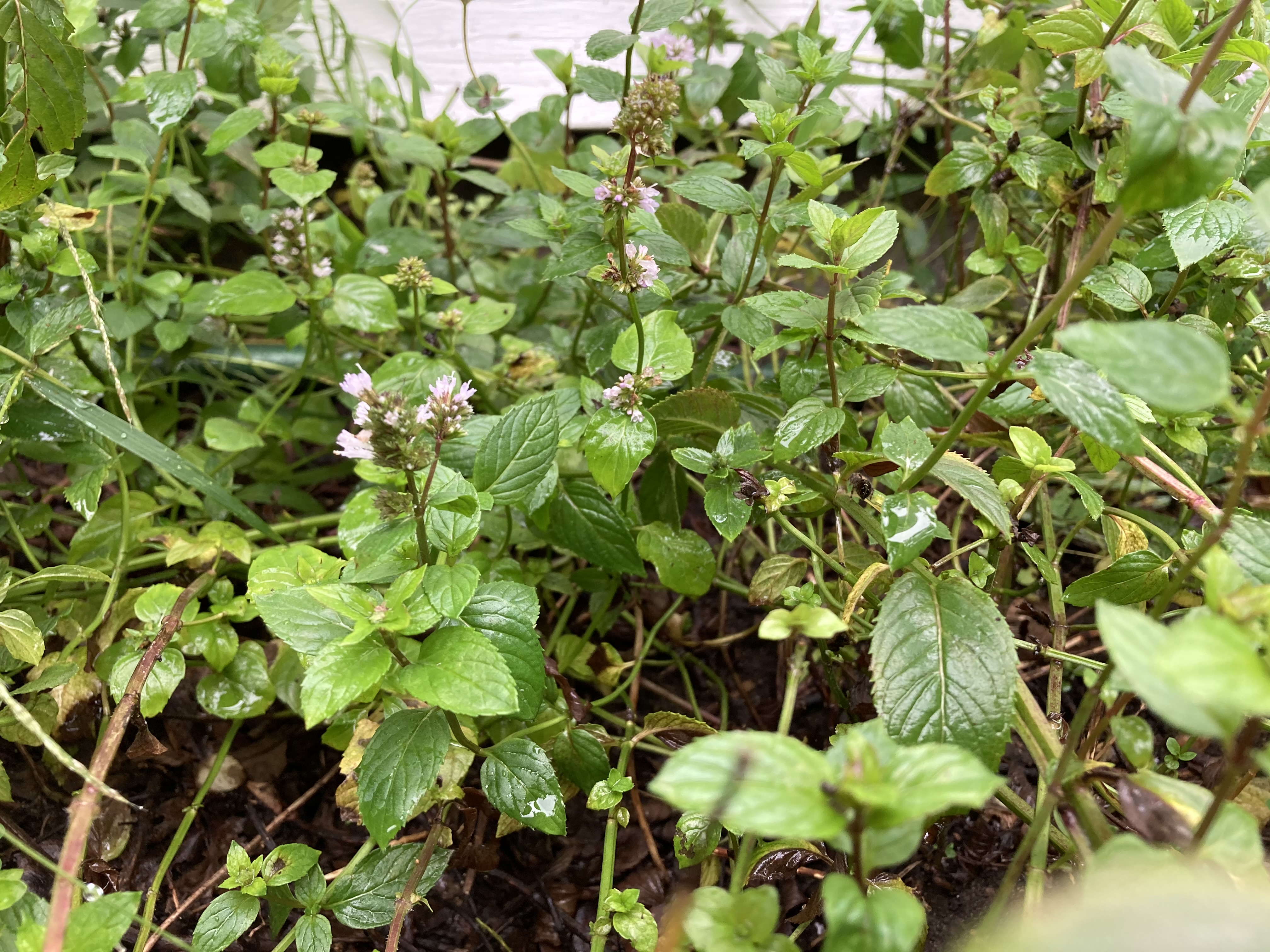
The peppermint show above is in my garden. Peppermint is perennial. If you plant it in good soil it will grow in sun or part shade. It isn’t fussy and I’ve never needed to water it once it was established, though it thrives with periodic watering. But be careful! It will take over your garden if you let it!
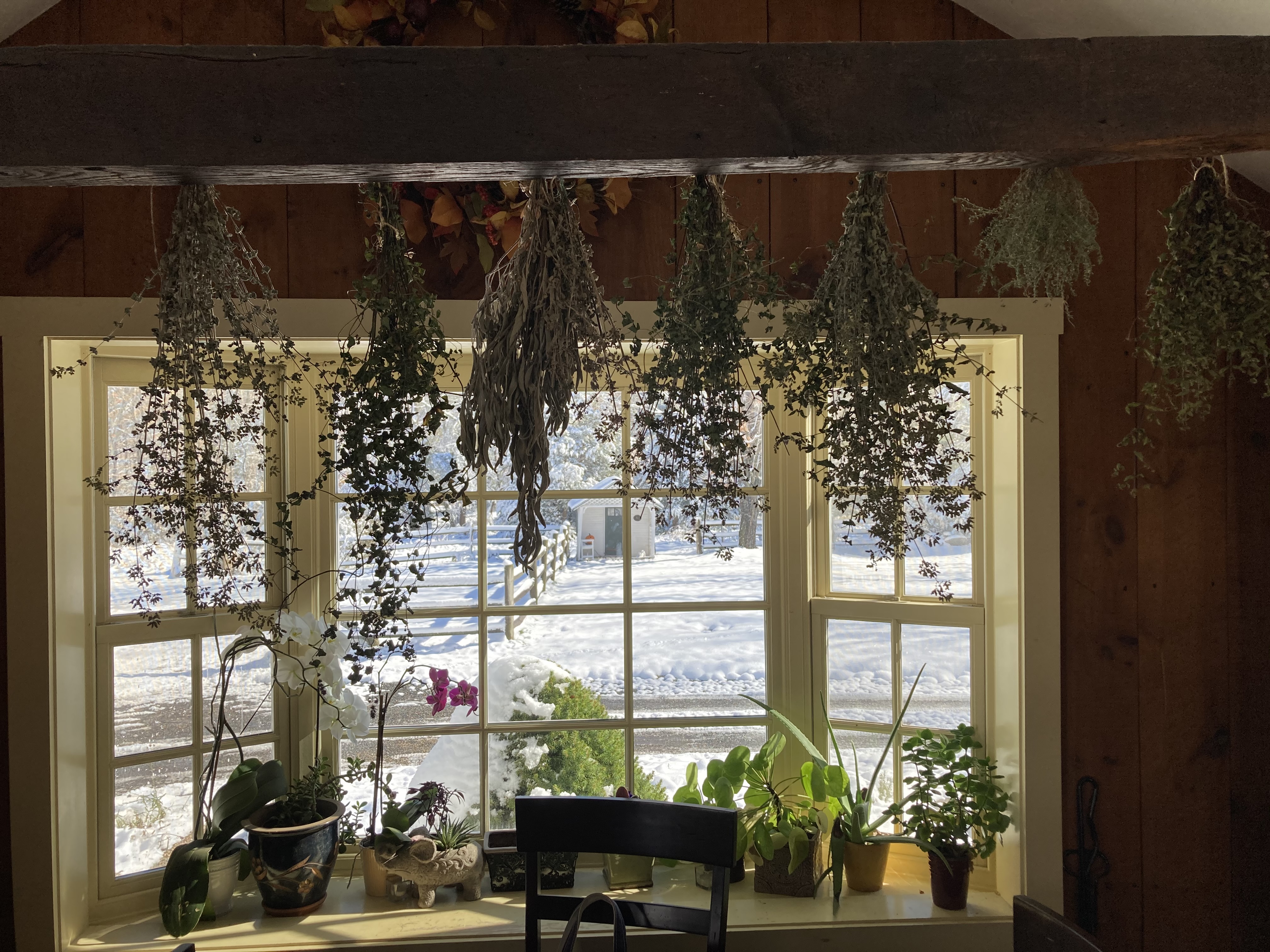
To make tea just cut the stems and hang them up to dry or use a dehydrator.
It’s always a good time to appreciate plant world magic. It’s a reason to be cheerful or grateful that is always there, always happening. We just don’t always notice.
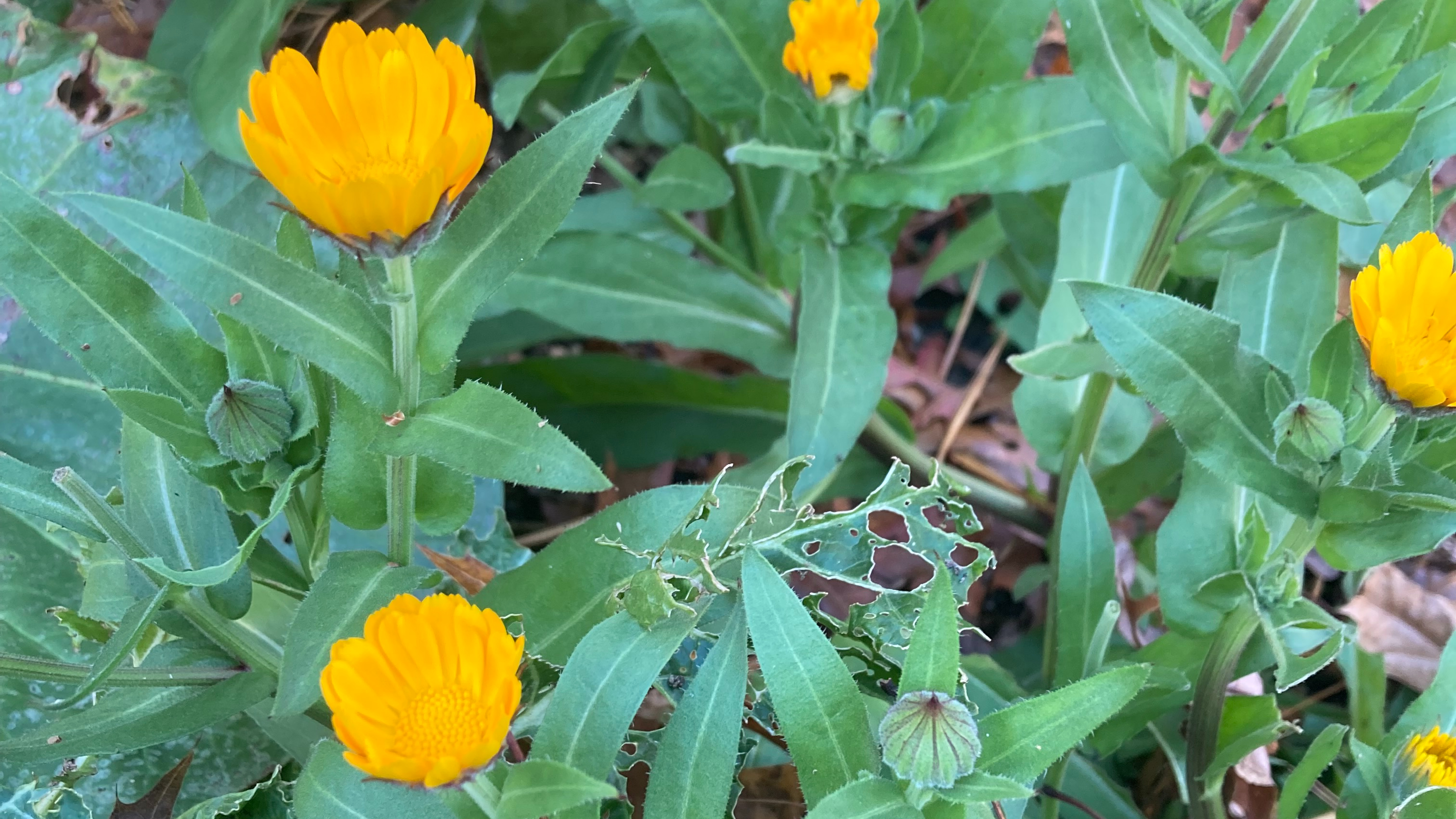
A couple of magical little things at work in my garden right now: Calendula pictured above, still blooming beautifully (at least until a hard frost!)
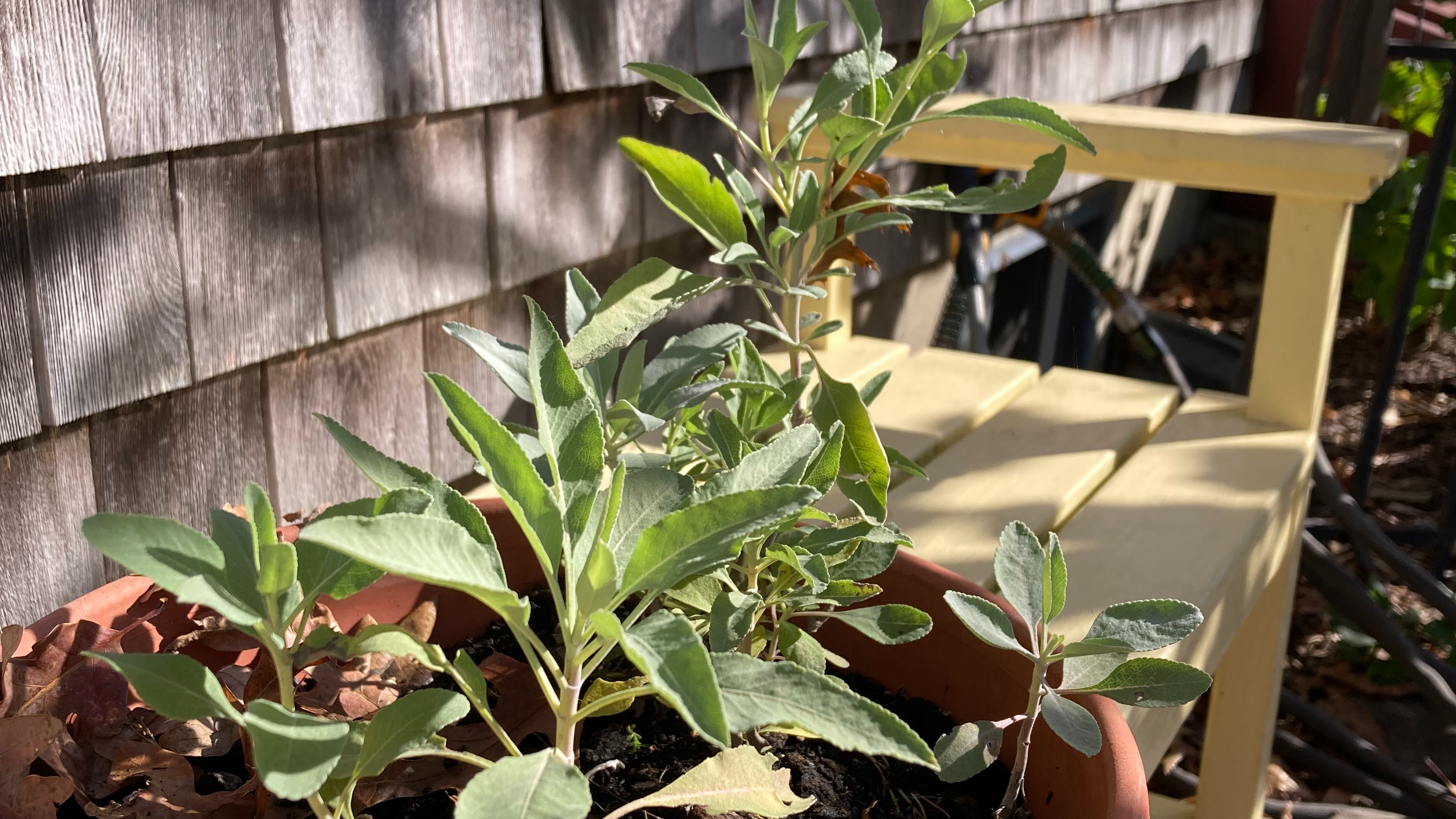
white sage in afternoon sun
White sage – not a native of this area. And in danger. But this lovely plant pictured above grew in a pot for me this year from seed. White sage is the plant people buy to smudge a new apartment. As a traditional energetic cleanser it’s been over-harvested. I’m grateful it chose to grow in my garden!
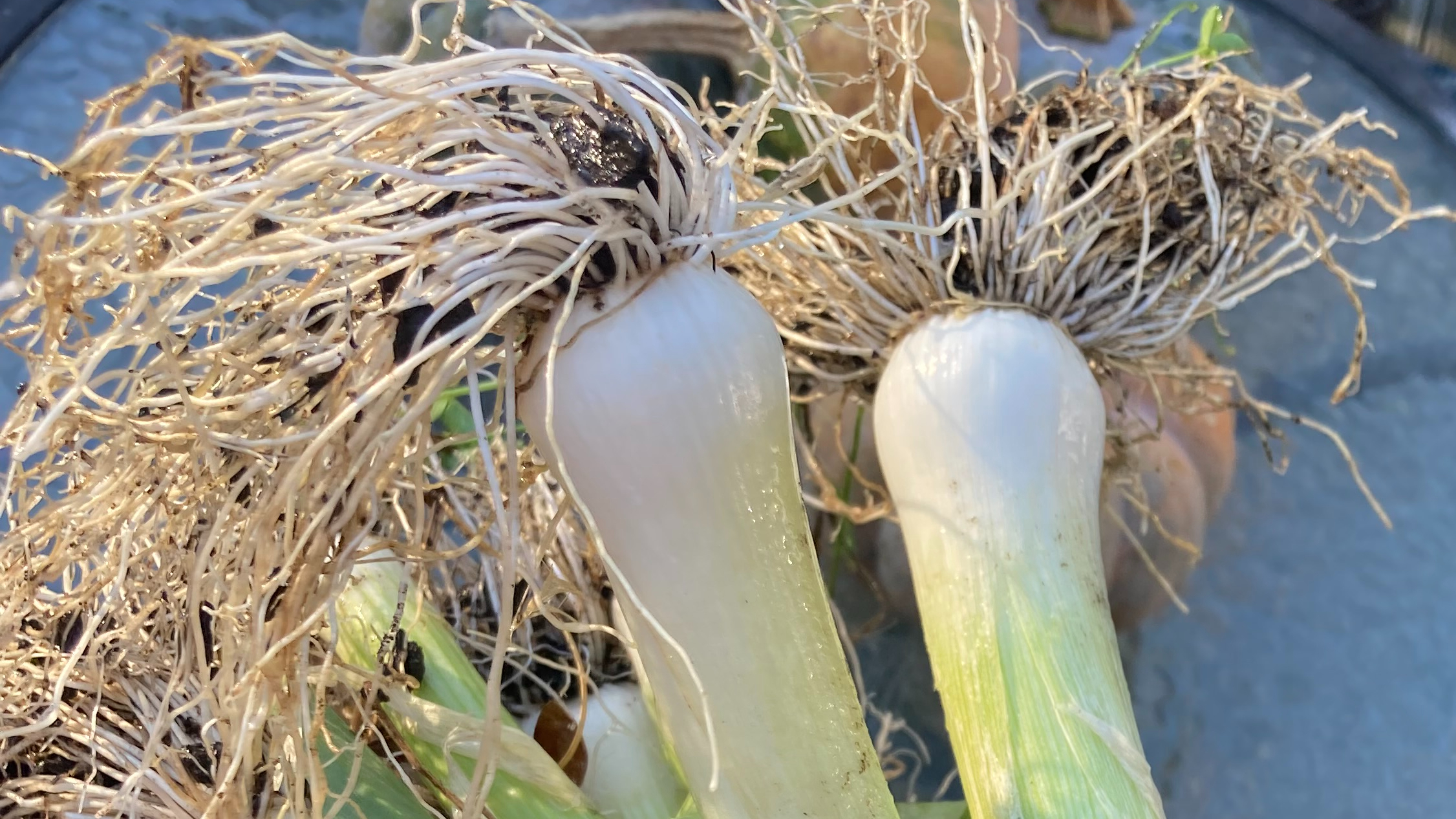
leeks, dirt still in the roots, from the vegetable garden
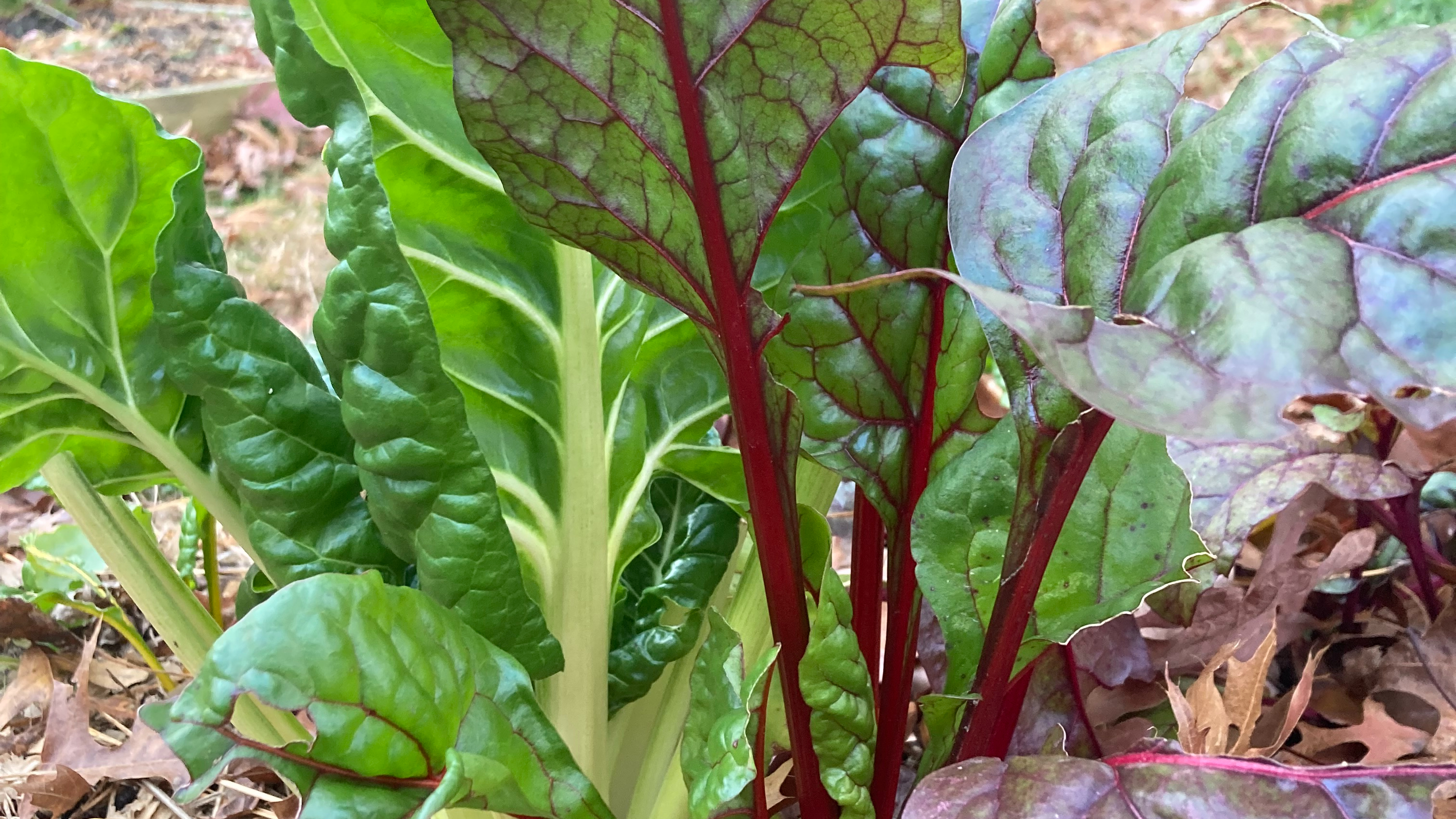
Leeks. We don’t think about mid November as a time for harvest but my carrots, leeks, and swiss chard are still going strong. Not interested in tempting the fates, I harvested them today. Pictured above.
Swiss chard, a spring green, loves the fall, too. Yum.
Green spirits to feed, protect, and nourish us- still afoot in the garden. At least for now. And when the snow fairies arrive to bring the fallow season, some lovelies will sleep until spring – even more magic.
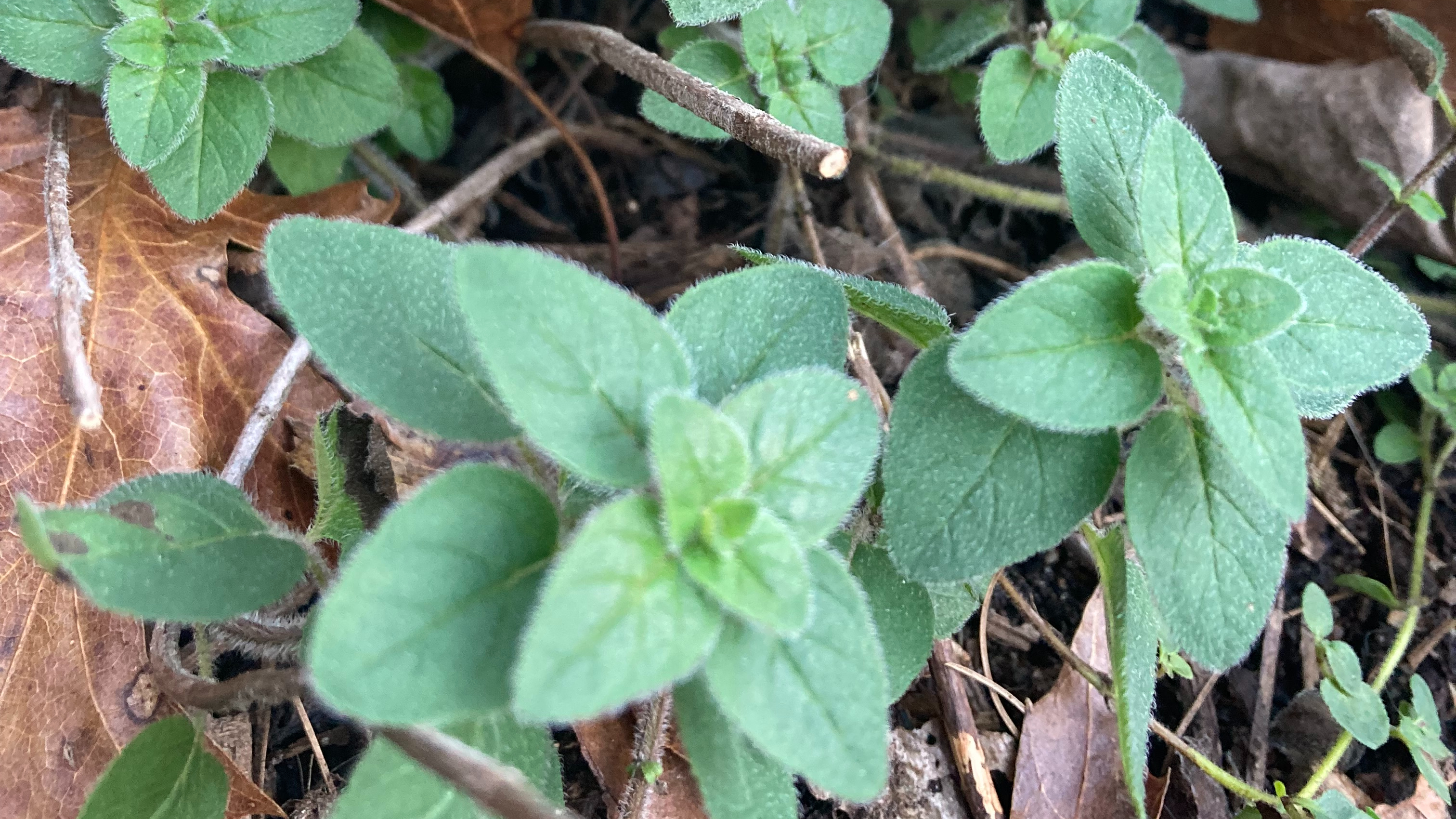
Oregano, still tender and green after a summer haircut, winters over beautifully to emerge again in the spring…
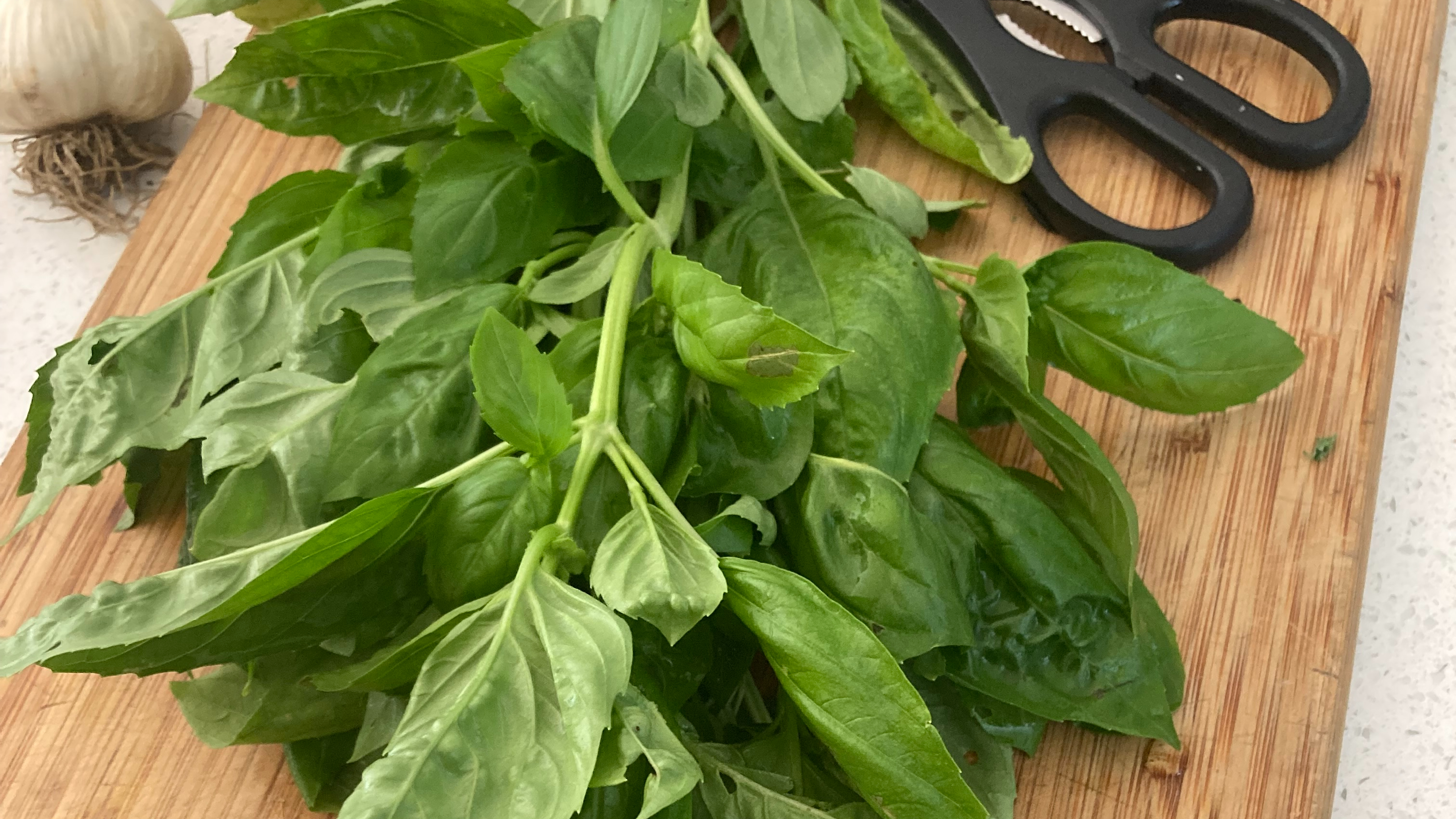
basil just cut from the garden or bought in the produce section of the grocery makes delicious pesto
Basil is easy to grow. The secret is watering with some seaweed emulsion fertilizer. If you don’t garden you can pick up fresh basil or even a plant at the grocery store and make pesto fresh at home. It’s *so* much better than jarred pesto.
As to basil’s health benefits: it’s soothing to the digestive and nervous systems. It can ease gas, stomach cramps, and nausea. It can be helpful for fatigue, depression, and nervous irritability. Full of antioxidants, it’s been shown to support healthy blood sugar, heart and vascular health, immunity, and cognitive ability. A delicious food that’s great for your health – truly food as medicine.
It’s easy to make Pesto with or without nuts. For that matter, the french make something very similar, Pistou, that omits the cheese and the nuts and focuses on the garlic and the basil. So you can make this sauce in whatever way you please. Here’s a variation recipe:
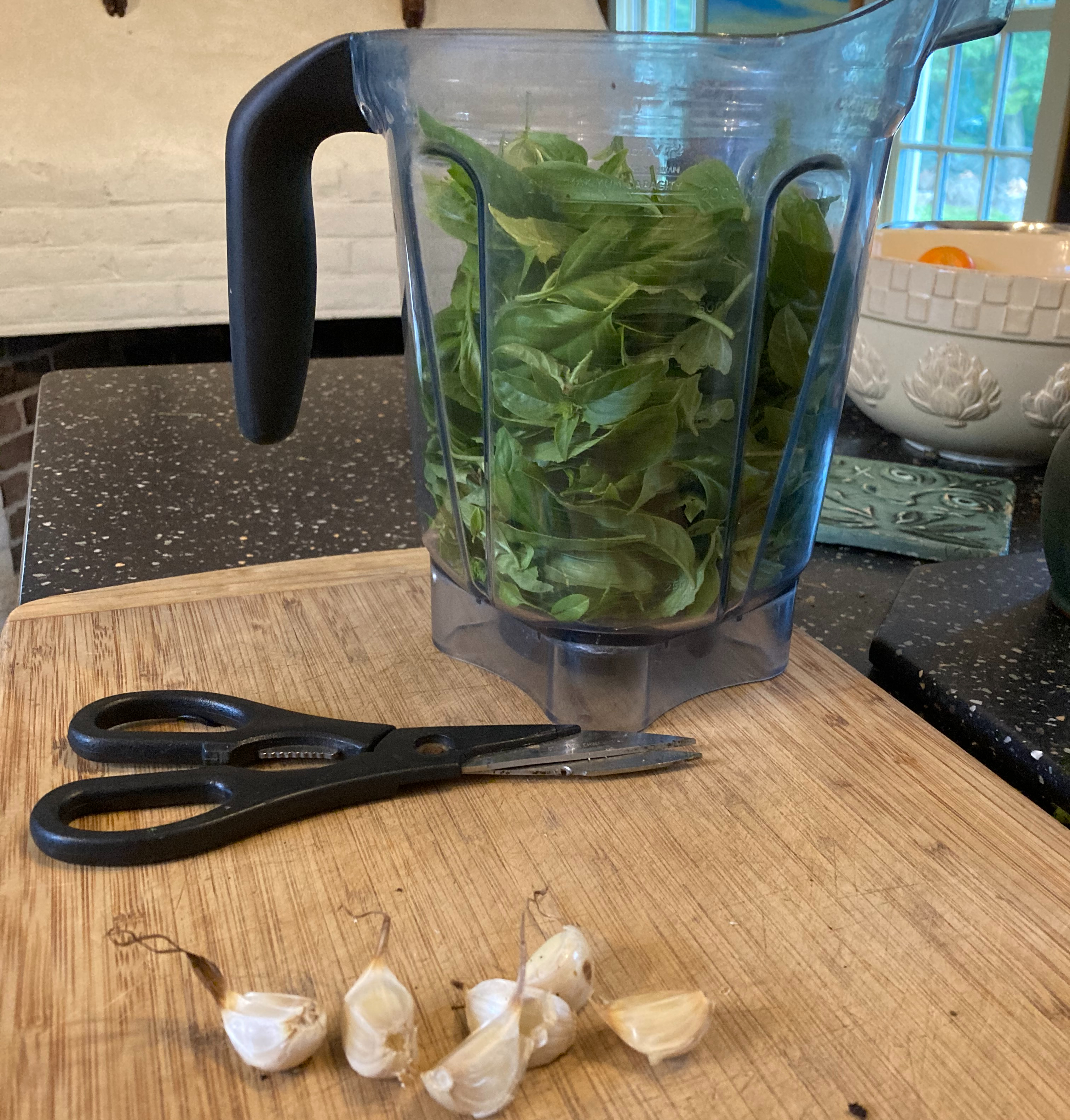
a blender full of fresh basil (blanched or not, optional)
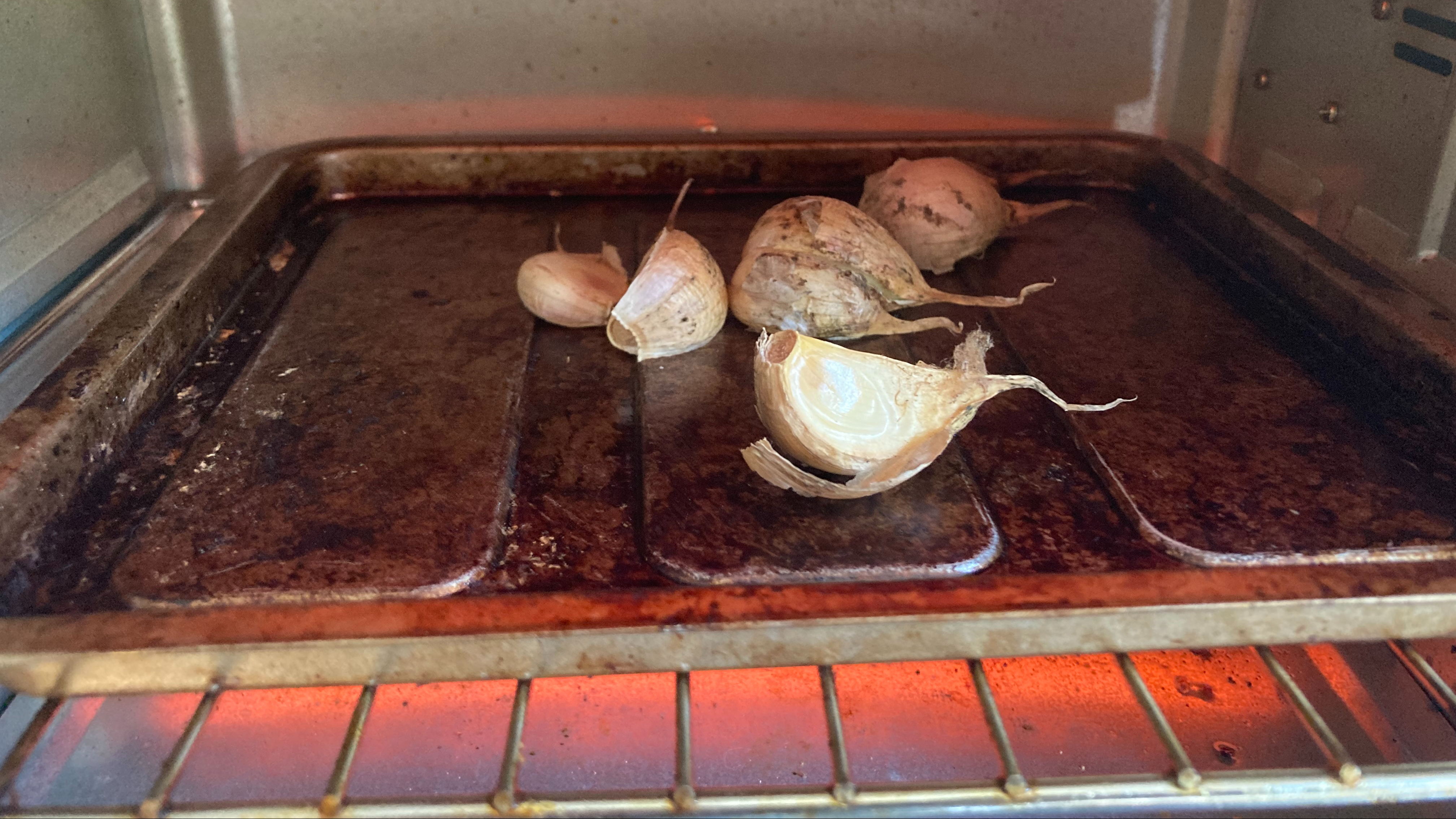
2-4 bulbs of garlic, roasted.
1 Tbsp lemon juice
1/4 c parmesan or romano cheese
olive oil
salt and pepper.
optional – pine nuts or walnuts
Roast garlic by putting unpeeled bulbs in a toaster oven or toaster and toasting at 350 until the peels are starting to brown.
Roasting the garlic really adds a warm, nutty flavor to the pesto that I love.
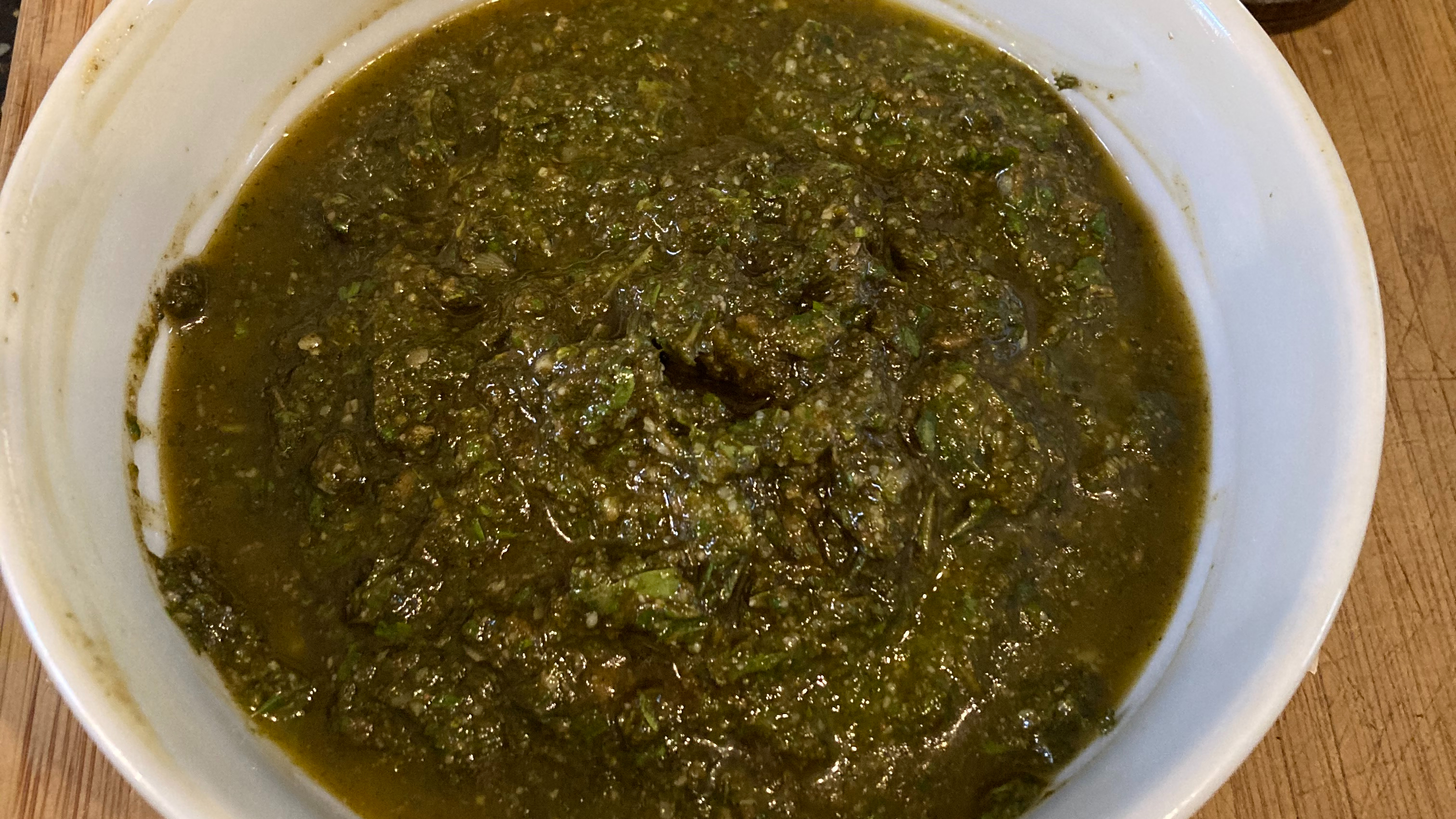
To make your pesto place the basil in the blender with the roasted garlic, cheese, salt and pepper, lemon juice, and nuts, and blend away.
Delicious on pasta, toast, chicken, sandwiches, whatever… And so good for you.
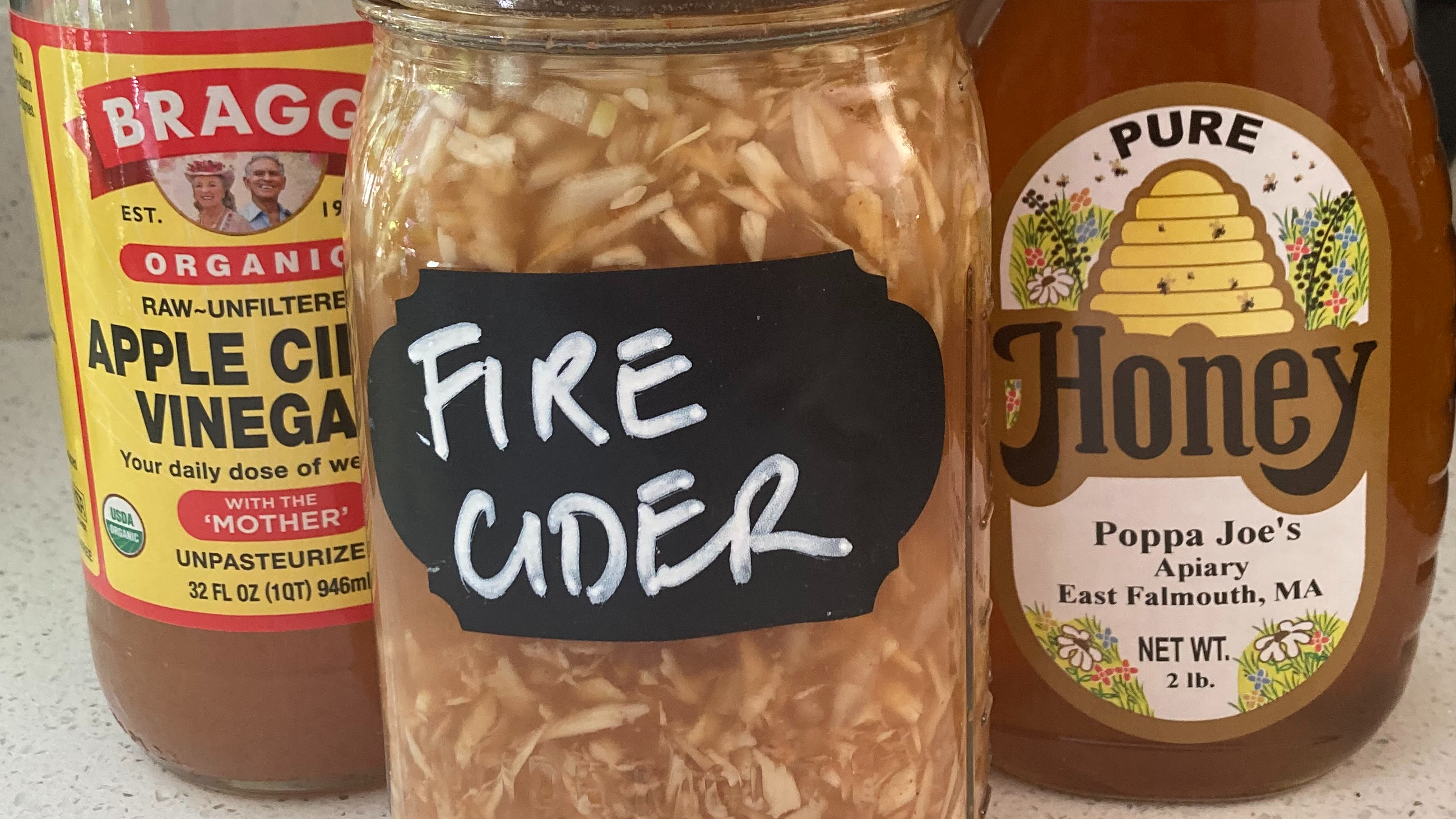
Fire cider is great for your immune system, leveraging garlic, onions, ginger, horseradish, cayenne, honey, and apple cider vinegar.
Healthful tonics like this one have been around and in use since ancient times — our ancestors knew what was good! In the 1970s, Rosemary Gladstar, a wonderful herbalist, coined the term “Fire Cider” and it stuck. The recipe is below – feel free to scroll down directly.
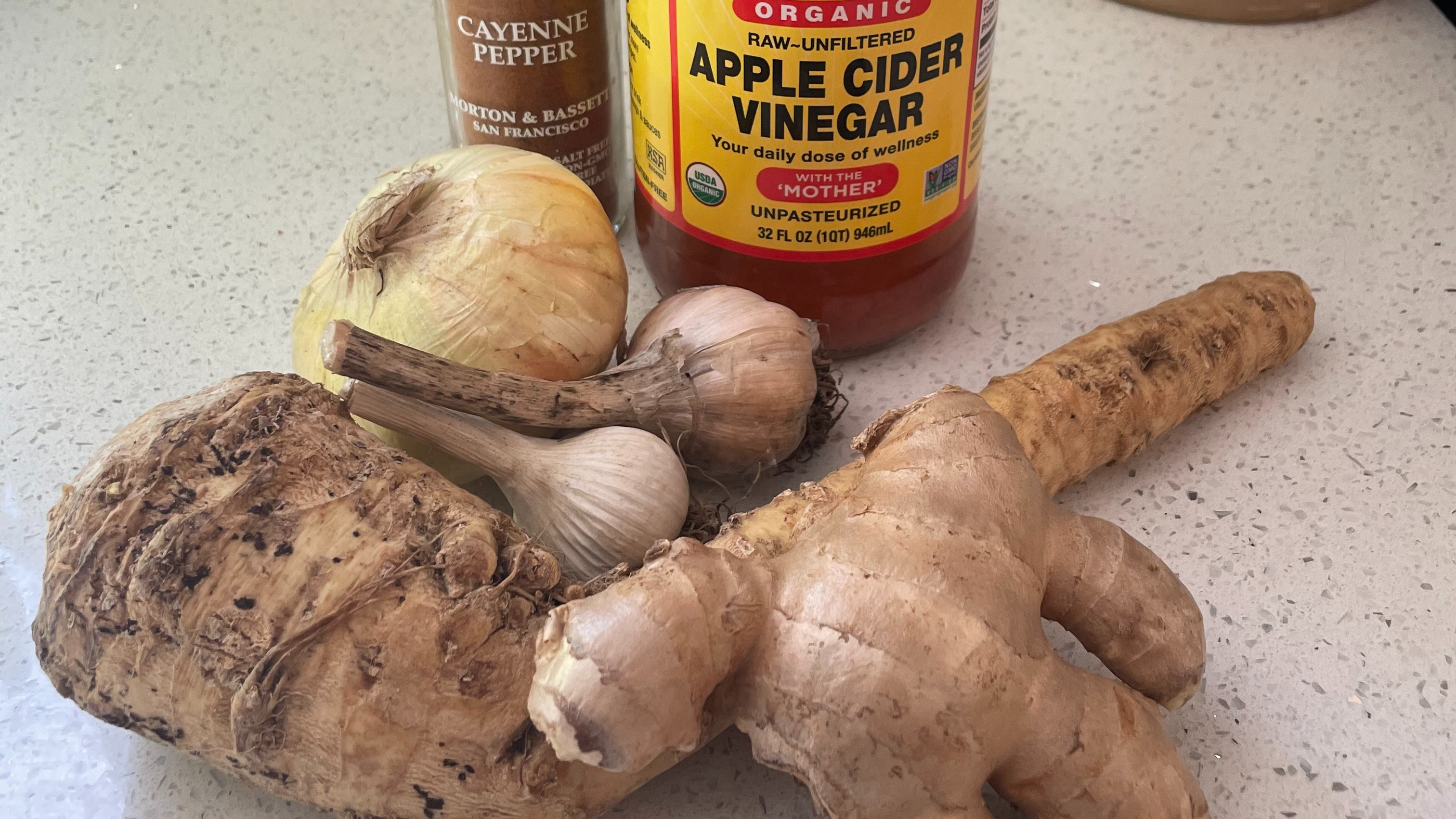
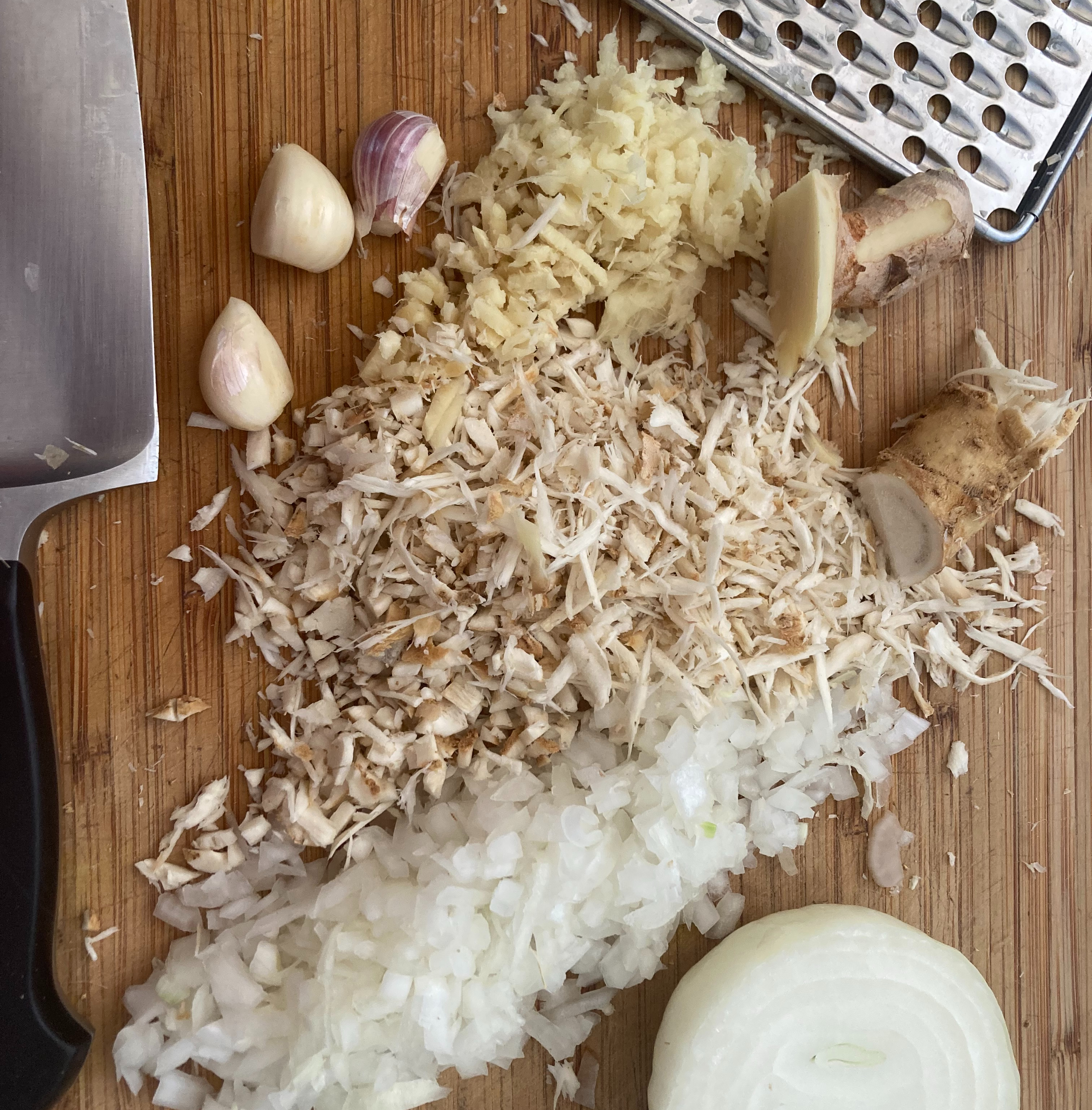
Fire ciders are popular; there are many recipes out there. A simple one: chop onions and garlic and grate horseradish and ginger, and add it all to apple cider vinegar, ensuring the roots are submerged. Let them stew, shaking daily for 3-4 weeks, and add cayenne and honey to taste (this basic recipe comes from Rosemary Gladstar’s herbalism certificate through ecoversity).
Whipping up a healthful potion is always fun, and It would be hard to overstate the value of Garlic, ginger, onion, and horseradish roots combined with apple cider vinegar, for good health:
Garlic: An ally against colds and flu, support for immune function, healthy cholesterol, and a vermifuge/in treating intestinal worms.
Ginger: Reduction of inflammation, joint pain, cramps, nausea, and morning sickness.
Horseradish: traditionally known for its power to clear your sinuses, horseradish is full of antioxidants and nutrients, antibacterial properties, and is good support for healthy metabolism, digestive health, healthy cholesterol and, of course, as a decongestant.
Onions: Rich in antioxidants and packed with flavor, WebMD says “They’re rich in chemicals that can help protect your heart, lower your risk of some cancers, and make it easier for your body to make insulin. Onions are also one of the greatest vegetable sources of quercetin, a plant compound with many health benefits.”
I think fire cider is fun to make. I’ve been cooking with garlic, ginger, onion, and cayenne for years–all are aromatic and lend food an irresistible flavor profile … but horseradish was a new acquaintance when I first made fire cider. Grating it releases volatile compounds and a pungent, strong aroma that was unmistakably familiar as an ingredient in winter and fall sauces.
I had to hunt around to find fresh horseradish; if you see it at the grocery grab it! It’s a cold hardy perennial that you can also consider growing.
I love having a remedy on hand for days when I or a family member feel a cold coming on – and fire cider does the trick. Tough love in a jar, you can take a teaspoon every day to support your immune system or use it on salads.
And keep it on hand! You’ll want to take 1-2 tablespoons at the first sign of a cold and repeat every 3-4 hours until symptoms subside.
Basic Recipe:
1/2 cup grated fresh horseradish root
1/2 cup (or more) chopped onions
1/4 cup (or more) grated ginger
1/4 cup or more chopped garlic
Apple Cider Vinegar (raw and organic if you can get it)
Cayenne pepper (fresh chopped or powder or flaked – whatever you have/can get)
honey to taste
Directions – add the horseradish, onions, ginger, and garlic to a jar and pour the apple cider over it to immerse the ingredients by a couple of inches. Seal and store in a warm spot. Let it macerate for 3-6 weeks and shake it
Last night at 11:30 PM I received a text from my youngest, now away at college. “I’m at the ER with a fever, feel awful.” And later at 2:30 AM, “I tested positive for the flu. They gave me Tylenol. I’m heading home now.”
We are a four hour flight away, so there wasn’t much I could do other than to ask her to keep me posted. I hadn’t yet put together cold and flu capsules for this coming season and was planning to make and send them this week. I didn’t know when I mixed and made them yesterday that she was already sick. I think that comes solidly in the Murphy’s law category!
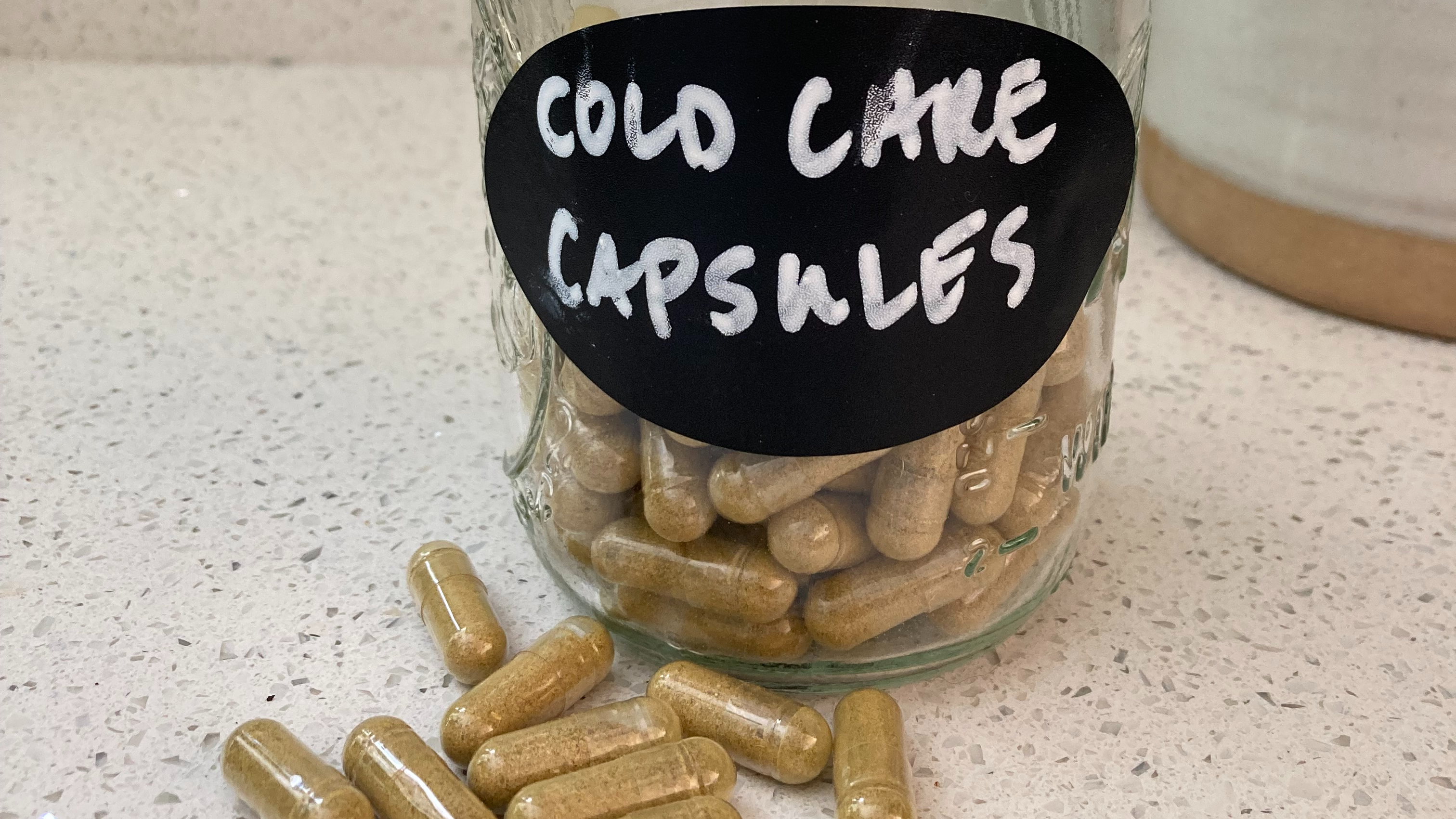
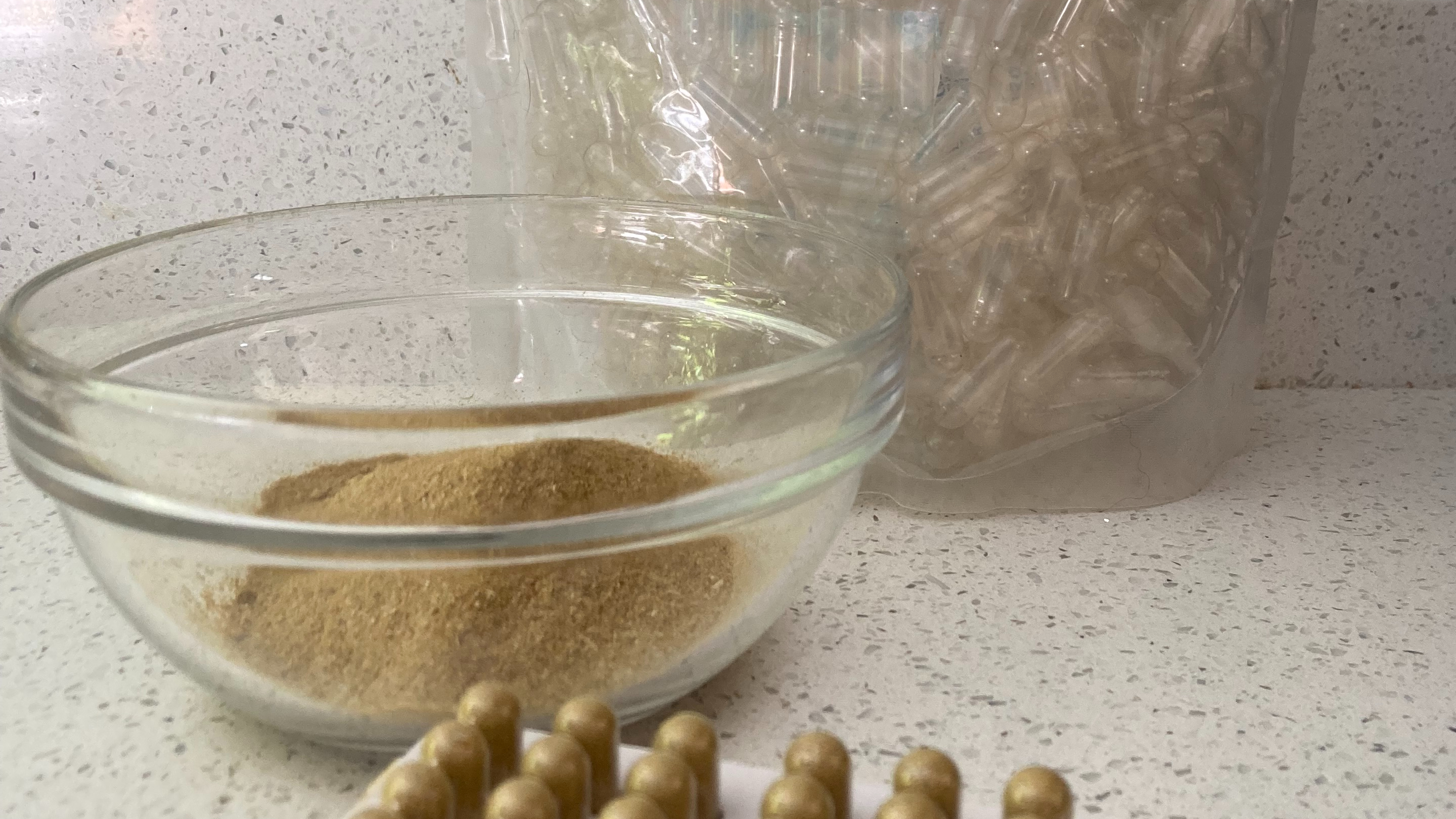
I did in fact make cold care capsules (pictured above) yesterday, pack close to 50 of them – more than she’ll need – in a box, and mail them to her. I anticipate they’ll arrive right around the time she’s starting to get better. Oh, well. Next year they will be on the plane with her.
These capsules are very effective. When taken at the first sign of symptoms they always seem to prevent a serious cold or flu from setting in. I often pair them with a nice dose of Emergen-c to hedge my bets, being a belt and suspenders kind of girl. 🙂
The formula, which comes from Rosemary Gladstar’s recipes, is simple:
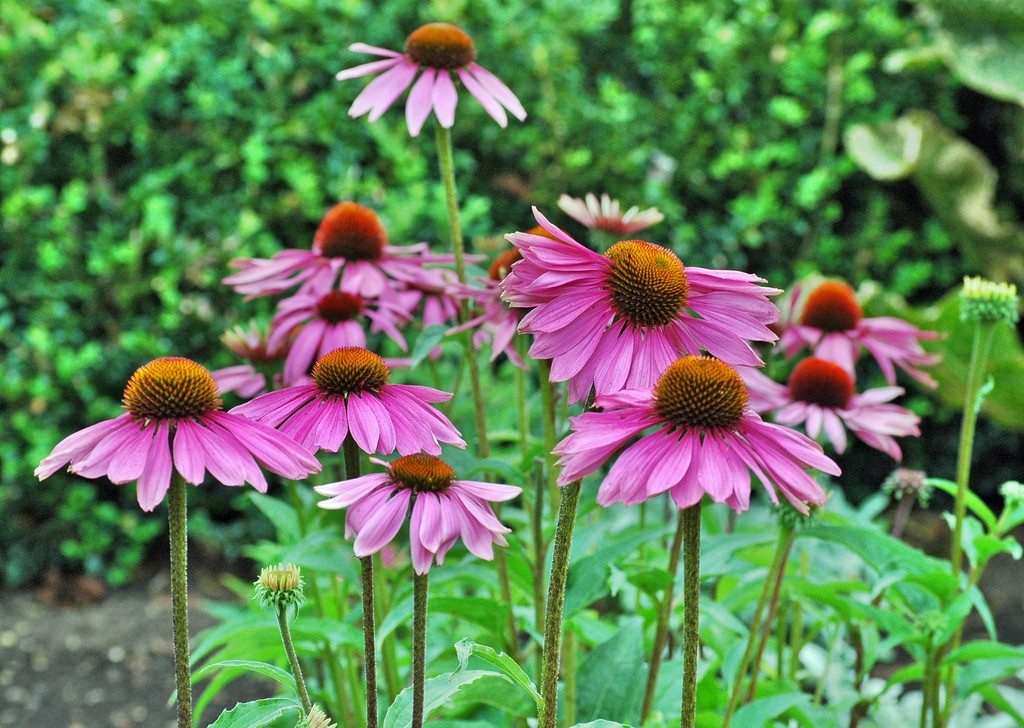
1 part powdered Echinacea angustifolia
1 part powdered Hydrastis canadenis/Goldseal root
1/2 part powdered Althaea officinalis/Marshmallow root
1/4 part Capsicum annum/Cayenne
Mix them together evenly and encapsulate.
making capsules is easy with a capsule maker. And you can buy gel capsules online inexpensively.
Dosage: Take 2 at the first sign of cold or flu and every 2 hours up to 9/day and not exceeding 3 days.
If you would like to buy capsules I make and send them. A trusted technical advisor and I are working on an on-line store for these kinds of apothecary essentials. Till that’s up and running, and mindful that flu season seems to have started early, please drop me a note at kirsti.frazier@gmail.com. The cost is $47.99 for 30 capsules or $84.99 for 60 of them.
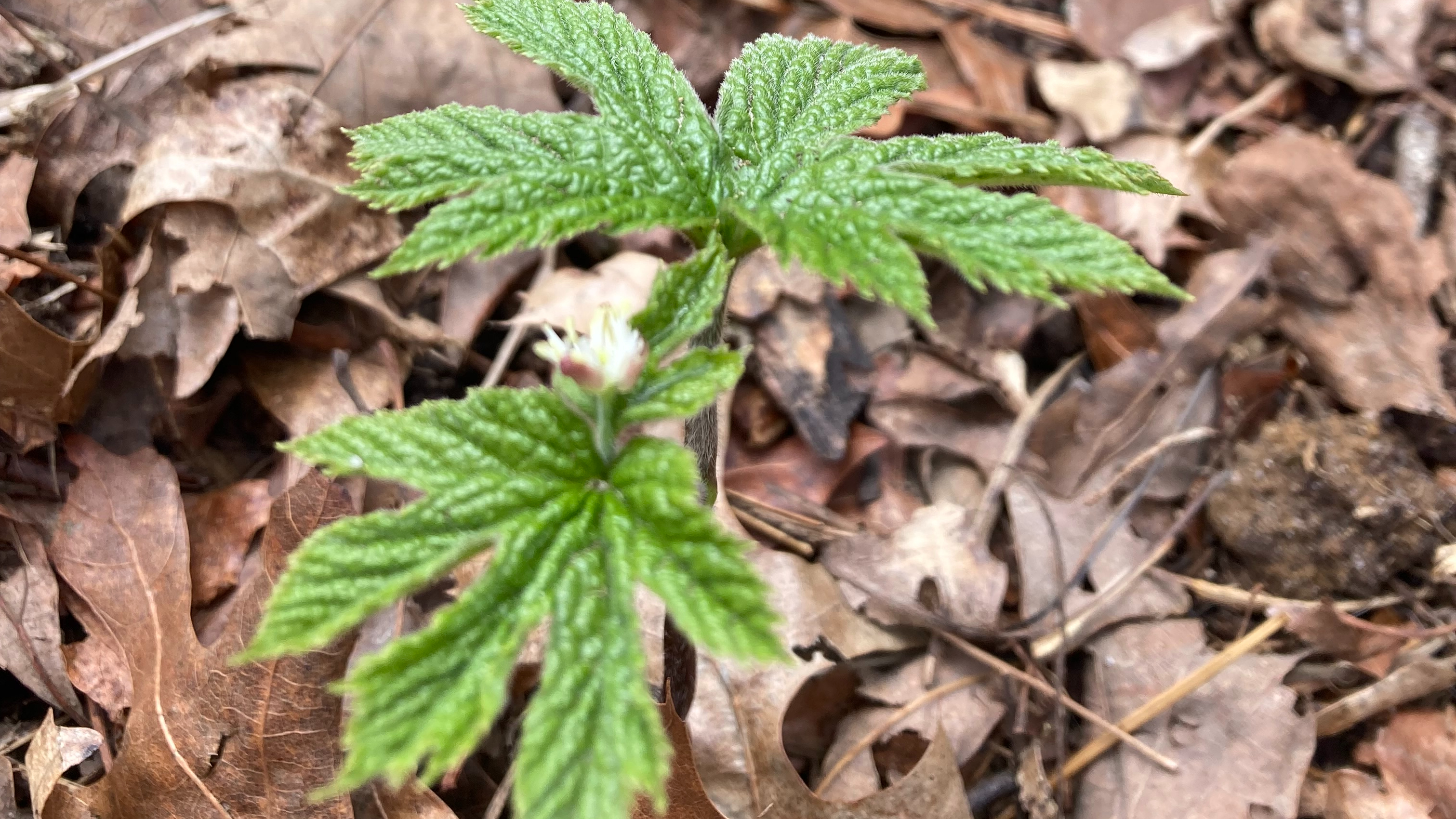
Goldenseal root, an herb endangered in North America from over harvesting, emerging from the forest floor in spring
With so much bad news all around us, especially in Gaza, before that Ukraine, and in the middle east for so long, it’s been challenging to focus on simple things, like a garden. To the point of it feeling irrelevant and even silly to focus on such an ordinary small thing. I’ve felt guilt at not making this horrible news more central in my life. And yet, I’m not there, there is little any of us can do beyond pray, sympathize, donate, commiserate. And this beautiful planet, devastated by the blasts just as her children (us humans, animals, plants- everything) are – suffers, too. So I do the things I can do, honor the life that arises here, and try not to let anxiety prevail.
So a story about time passing here.
My 19 year old daughter Inga got a summer job at a local med spa working the front desk. She started applying for summer jobs in April, interviewed remotely, and was offered this job before her final exams started. She was thrilled. She’d worked with the software they use and had done exactly this job last summer. She was especially happy because she wants to work as an injector when she finishes school, all goodness spring from beauty as it does 😉 and so a med spa would be good experience for her.
The night before her first day of work, which was scheduled for last week, she received an email from the med spa owner saying she’d given the position to someone else who can work year-round and that Inga didn’t “need to visit.” Inga hadn’t been aware they were (still) looking for someone for the job, or that they wanted a year round person. She was crushed.
I told her (in a more confident tone than I felt) that it was early enough in the season that she would find something else, and that she was better off. Who would want to work for someone that would behave that way, anyway? She saw the reason in my words and went back to job hunting. This went on for weeks and she had very few call backs and started to feel “helpless.” Most kids had secured summer jobs in April.
Then there was an offer to interview as … a jet ski guide. I laughed. Perfect for Inga who is spirited, athletic, and adventurous, and who has vowed in past summers to someday own a jetski because she thinks they are great fun. Yesterday she was offered the job with tips into the hundreds of dollars on the busiest (long) days… a small example of how sometimes things don’t go the way we hope, want, and expect them to, but somehow they work out.
Inga last summer
And, returning to the garden.
I’ve been wandering out to my herb garden every day to see if I could spot a sign of my echinacea angustifolia. Echinacea A. is the variety of echinacea most prized for it’s infection fighting power. I’ve read it’s a little harder to cultivate than purpurea, which, admittedly, is usually pretty easy going. But there hasn’t been a sign of it germinating and I was beginning to think it won’t happen this year…
Until today!
tiny echinacea angustifolia seedling leaves poke up through the dirt
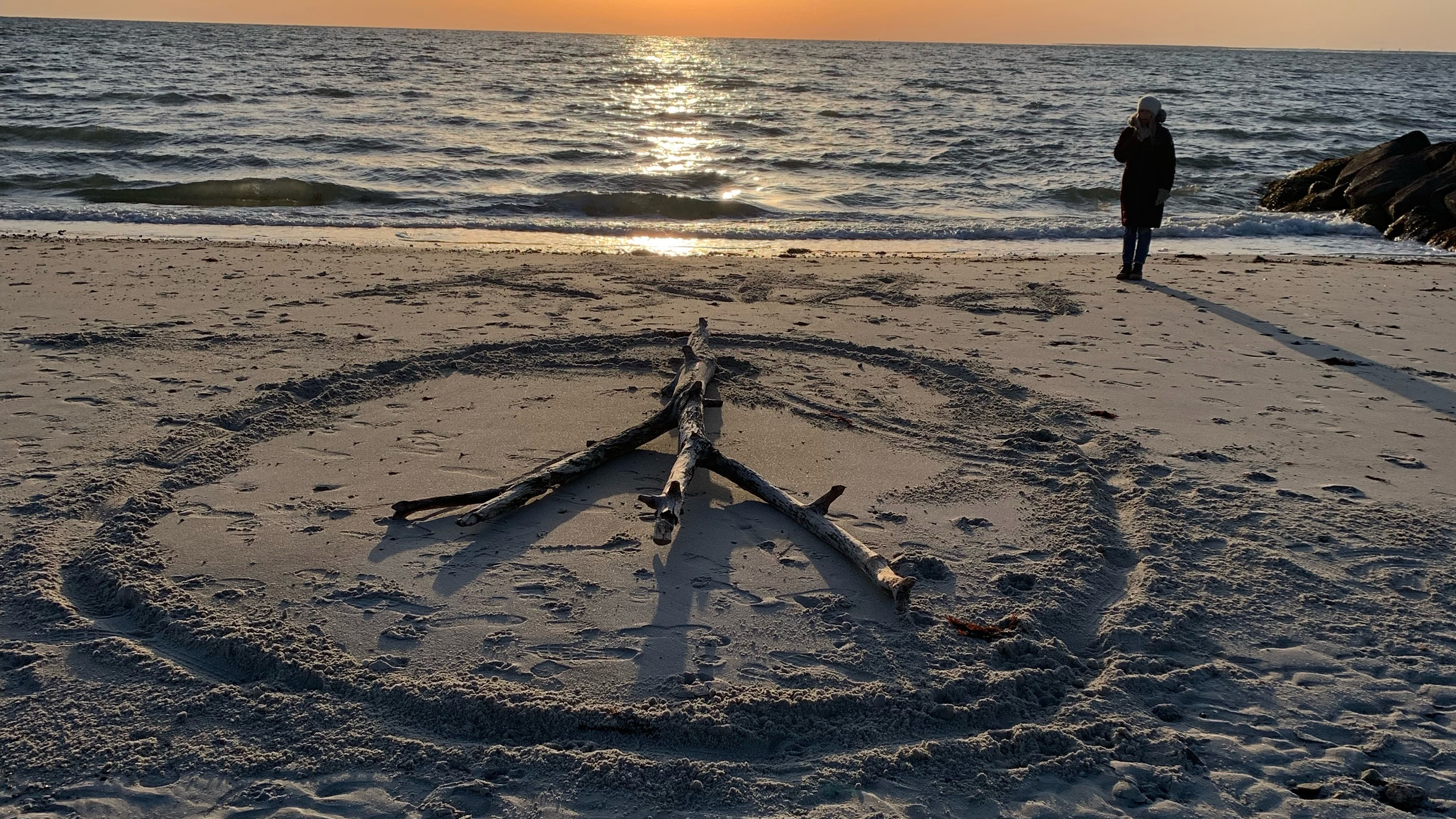
I hope and pray every day for things to come right, for healing, for the right outcomes, for people and planet to find balance, acceptance, equanimity, and well-being. May we all have a hand in creating peace and presence where and when we can, remembering to be. Not to be this or that. But just to be.
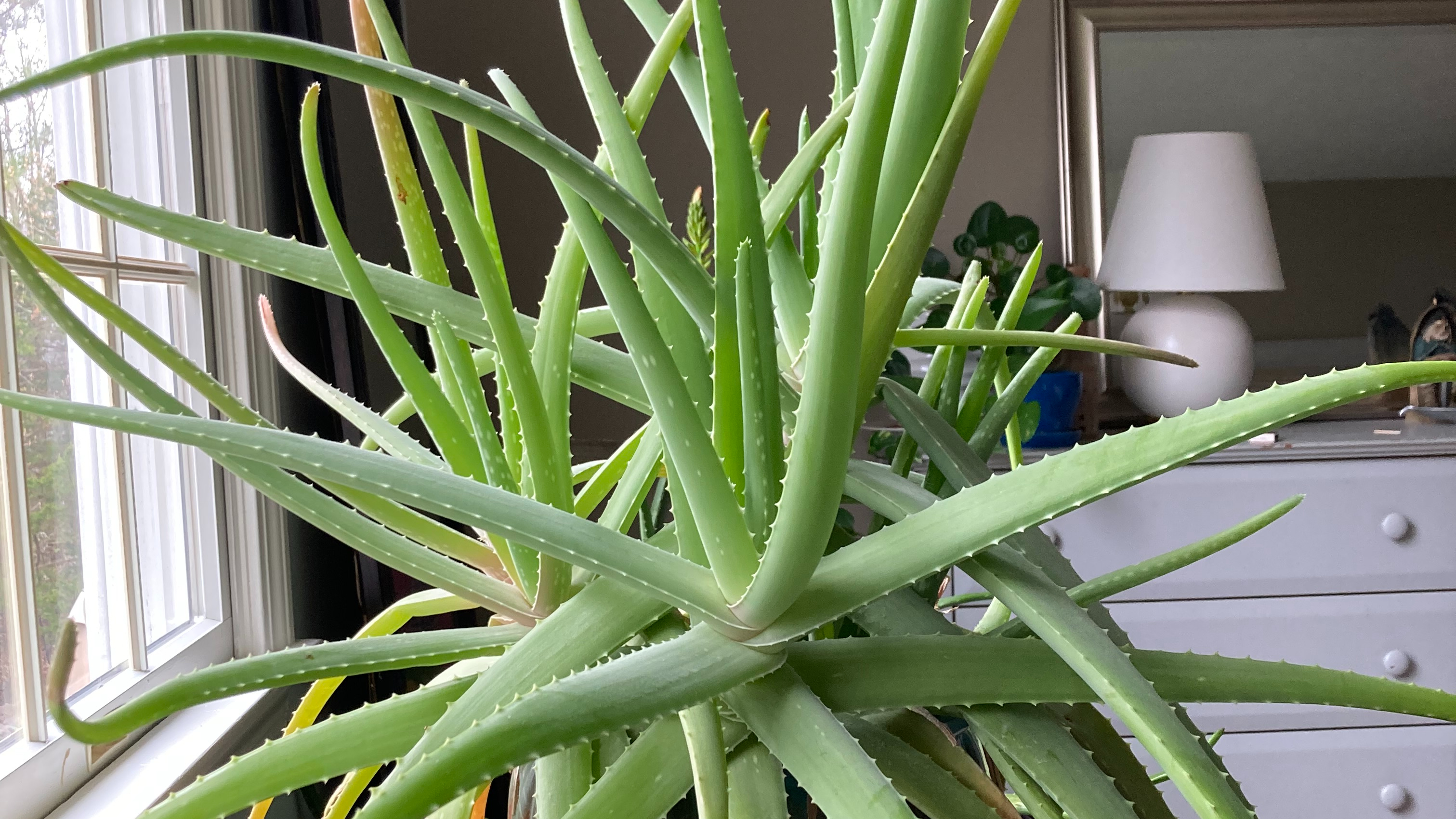
Aloe is popular. You can buy it in most garden shops, I’ve even seen it for sale at the grocery store! It’s beautiful, easy to grow, and it’s medicine! Most folks know it’s great pain relief for a sunburn, and promotes rapid healing and tissue repair. It also has the same pH as our skin, and is a natural sunscreen.
You can make aloe vera gel at home very easily:
cut a firm leaf from your plant
slice it open (on a plate is best).
Use a tablespoon to scoop out the gel.
optionally, but this is really much nicer, puree it in a blender.
Goldenseal root, Hydrastis Canadensis, is an herb endangered in North America from over harvesting, seen here emerging from the forest floor in spring
The beauty you see pictured here is Goldenseal Root. It’s the medicinal herb you often see in the herbal remedies aisle combined with echinacea in cold care formulas. Incredibly valuable medicine, it was popular with Native Americans on the East Coast of the US, and they taught us a lot of what we know about it.
My first experience with Goldenseal Root was when I was a young professional living in South Boston. I left work one Wednesday evening just before Christmas, trudged through the cold, damp winter air of Cambridge, and boarded the T to head back to my apartment – and specifically my bed – in South Boston, knowing I was getting sick. I could feel it coming on – chills, body aches, sore throat. An acquaintance at work, seeing my pasty pallor, instructed me to stop on my way home to buy echinacea and goldenseal root capsules. She swore by them and was sure it would be worth my time and money to stop at the coop for them. I took her advice, in part because I had a date the Friday following for a holiday party that I did not want to miss, and in part because I was willing to take anything that might help.
No sooner had I arrived home, herbs in hand, than the fever and chills overwhelmed me. I crawled into bed with my bottle of echinacea and goldenseal, only half believing they would help at all. I think I took between 8 and 10 of the capsules with water before falling asleep – more than the recommended dose.
All night long the fever and body aches raged, I alternated between sweats and chills. But, when I awoke the next morning, I felt miraculously better. The fever was gone.
I’d never recovered from a flu-type virus so quickly and I was convinced I was better because of the herbs.
Goldenseal contains infection-fighting alkaloids and bitters, and can be used internally or externally to fight infection. I use it in cold care capsules to fight bronchial congestion. It can be used in salves to fight skin infections, fungal infections, and athlete’s foot, in eye washes for conjunctivitis and eye infections, and as a remedy for poison ivy or poison oak.
The most potent medicine is in Goldenseal’s roots. Because this beautiful plant has so much healing power it’s been harvested in the wild to the point of becoming threatened.
Last year, I bought some of the roots from United Plant Savers, a group that is committed to preserving native North American medicinal plants, and planted them in a forested section of our backyard. No care, other than not trampeling over them or letting the chickens scratch them up (which, god bless them, they would) was taken with them. They emerged after spring rains quite independently.
Aside from wonder, the site of these baby healing plants unfurling their lovely glossy leaves evoked gratitude and deep relief. There’s hope for us, yet!
There’s a lot of talk lately in marketing circles about a person’s “why.” It’s about excavating a value statement – mainly to one’s self – for the work, sweat-equity, and energy we offer out in the world.
I’ve been meaning to get to this exercise – It was a part of my herbal course, they provided a worksheet meant to guide an exploration of one’s personal why. Why be a herbalist? Why create herbal remedies? For me, why garden, why plant seeds, why make formulas?
To connect. To heal.
I recently heard Jon Kabat Zinn say that his working definition of healing is acceptance of things as they are. I pondered. This is complicated. Sometimes we can heal by deciding to make things better: to take better care of ourselves, to find the ways and remedies that will bring healing. But, I suppose, we have to accept where we are first in order to do that. So his definition stands. At least from that perspective.
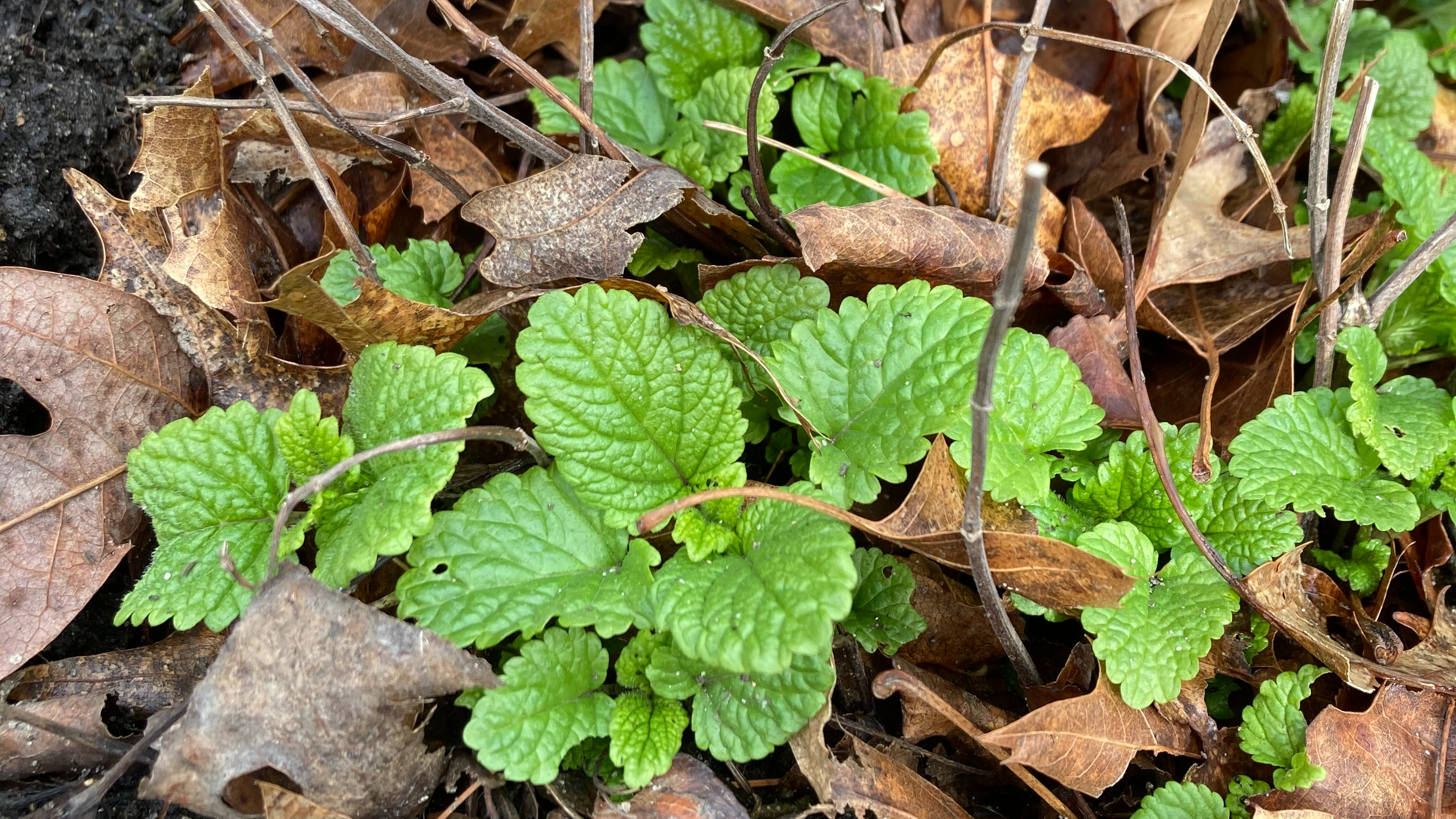
lemon balm emerging
Lemon balm (above) is a nervine. It’s not as powerful, in my experience, as chamomile, but it has a very lovely calming effect and I know people that drink it as a evening tisane. Lemon balm, peppermint, chive, echinacea, oregano, sage, raspberry and violet seem to have followed me everywhere I’ve gone. I’ve dragged other friends – rosemary, thyme, basil, parsley, tulsi, borage, calendula, chamomile, lavender, hyssop, feverfew, savory, and a host of others with me, and I’m making friends with some other quiet classmates that I haven’t connected with before. Like Dandelion, plantain, and nettle. And there is a whole new class I’m joining of friends like motherwort, all heal, elecampagne, and others…
My why is us. Us and the plants. And our other sentient friends, the animals. Wild and companion. And bringing us together.
Today I received an invitation to attend an event at Harvard Divinity School – The Path to Happiness: Ancient Wisdom for Modern Times with Swami Sadyojathah. It got me to thinking about meaning, success, and happiness.
During my time at Harvard I learned some meditation skills and a whole lot about the practices and beliefs that animate different spiritual and religious traditions. After graduating I applied some of them, especially in my work with teams all around the world. What I learned in my MA of Religion – which for me was a survey of the world’s religions culminating in a thesis that compared 2nd century Buddhist and Christian mystical texts – changed me, and was a key to my success in corporate settings.
I worked days in offices in Cambridge Massachusetts as a quality assurance engineer and spent nights and weekends in the graduate program for Religion during those years. My manager at the time, a PhD of Physics, thought that Religion was a laughable choice. Why not pursue studies that would further my career? The company would pay for that! He was the most compassionate, supportive, and empathetic of people, and I learned a lot from him. But I persisted. I was sure that if I understood the people I worked with better, that I’d be happier. My colleagues then, including my then-manager, hailed from all over the world: Turkey, England, Barbados, Russia, India, Argentina, France, Jordan, China, Japan, Sri Lanka, Scotland, Greece, Ukraine, even Florida. ;-). Just kidding. But even folks from Canada and Colorado brought a slightly different set of assumptions and work habits to our projects. And in the years that followed that remained true; like so many people I worked at a global company. What would facilitate my success and well-being more effectively than understanding the traditions and beliefs that my colleagues were raised with?
Some years later, after 9/11, he told me he thought my decision had been a good one.
Which brings me back to Swami Sadyojathah. The ancient practice of meditation remains, I believe, the single most effective practice for achieving happiness. It’s better, even, than wine, which I have been known to leverage toward blissful forgetfulness on more than one occasion.
Meditation and self reflection yield more than happiness, too. Self understanding and forgiveness – by-products of meditation – put us in touch with our selves in a way that deepens empathy, compassion, and ultimately understanding. And THAT is a key skill in any collaborative work environment.
Happiness may be the grail many of us seek, but the skills that help us cultivate happiness benefit the people around us. Anyone who has meditated likely knows that it is not a silver bullet, it’s more like a workout; It’s an investment in ourselves. And it builds capacity for leadership, teamwork, and being in community– all skills that evolve from self understanding and insight, which meditation helps cultivate.
I won’t make it to Cambridge for the talk this time. But I appreciate the reminder and the important work that Swami Sadyojathah is doing in the world, for everyone.













 Bespoke Herbals @ Backyard Botanics