Tag Archives: #natural healing

Anxiety and Tension Busting Skullcap

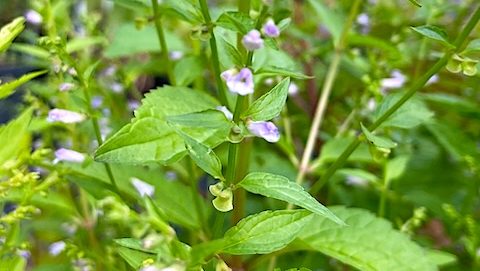
Mint family plant in bloom with blue-purple flowers.
Skullcap is effective for relieving anxiety, calming anger, clearing the head.

Likely the most common request I’ve had for herbal support has been for the relief of anxiety and stress. Speaking for myself, stress, tension, and anxiety have been a condition for which I’ve sought an antidote over the years.

Enter Skullcap.

Skullcap is well known in herbalism as an effective relief for anxiety, stress and muscle tension, especially in the neck, shoulders, and head. Herbal Reality, an excellent source for all things herbal, also notes it is used for the relief of angry hot states and as a support in addiction withdrawl. It’s beneficial for those dealing with tension headaches or TMJ.

Taken as a tea or in tincture form, it’s a reliable way to calm the mind during the day because it does not bring on drowsiness. And combined with Passionflower, Hops, or Wild Lettuce it becomes a sleep formula, lending it’s calming and relaxing effects to the hypnotic effects of these other herbs.

In a tea it has a mild flavor, so it’s easy to add to any loose tea you are drinking or to have on its own. Native to North America, it grows readily in moist places.

It’s a good friend to have along in a dosing bottle of tincture to take the edge off on stressful days… I can personally vouch for it’s effectiveness!

Skullcap is safe for folks of all ages, is gentle, and benefits teenagers who are often anxious. The dose is 5-30 drops of tincture a day or 3-6 grams of dried leaves and flowers in a tea. You can find this delightful herb at Mountain Rose herbs or you can easily grow it in your backyard in a sunny moist spot. Take care to get the right variety – Scutellaria lateriflora – if you choose to grow it yourself!
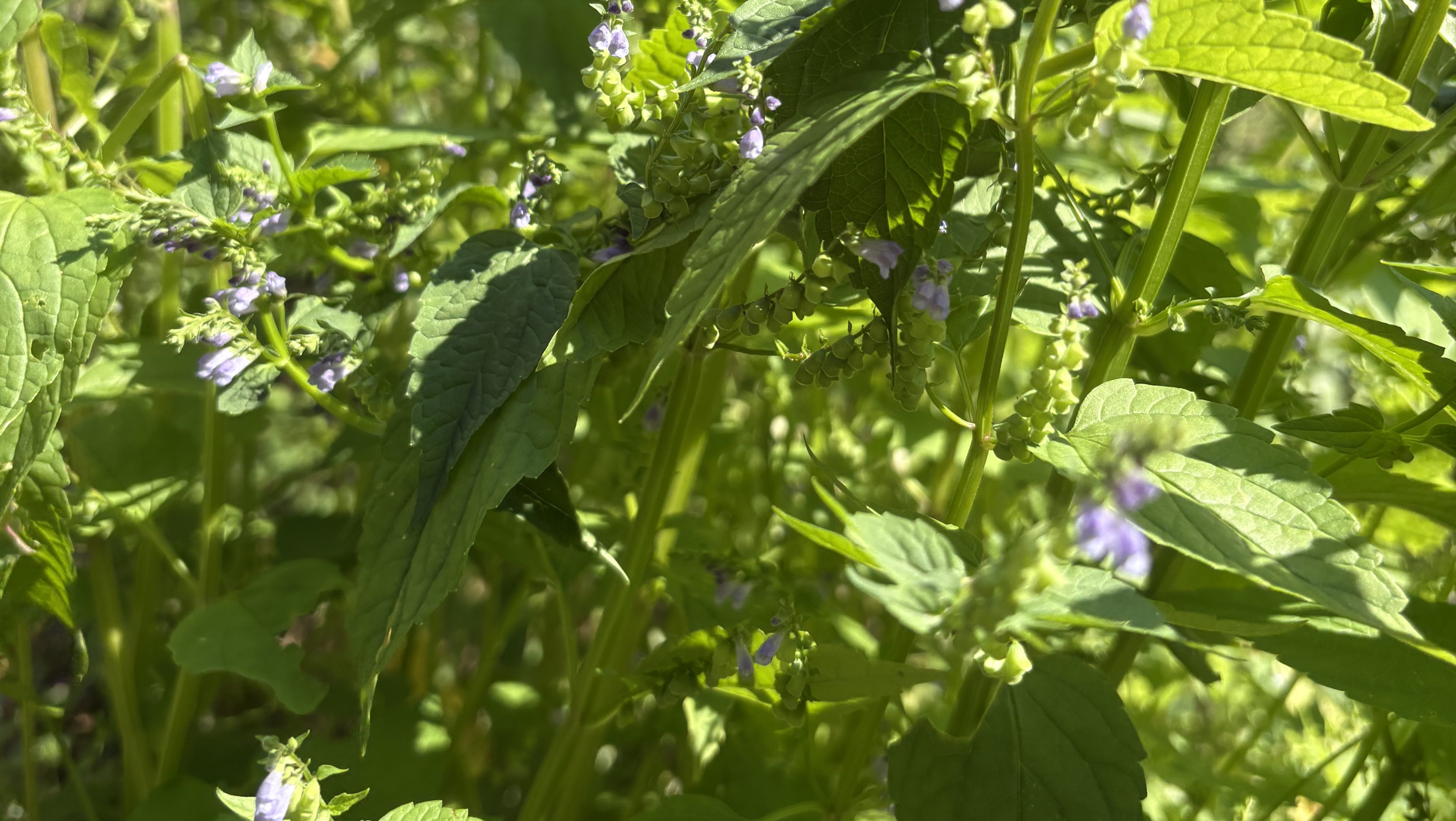
Mint family plant in bloom with blue-purple flowers.
Skullcap, Scutellaria lateriflora and also called Mad Dog skullcap growing happily in my backyard.

Leave a comment

Filed under Uncategorized

Gut Tea For a Happier Gut and a Happier You

Gut health influences so much beyond digestion – energy, mood, immunity, brain function …. I’d go as far as saying it affects and feeds our vital force. We’ve all heard this, but so often we don’t really know how to support our gut outside of taking a supplement for our microbiome and digestive health.

Some days our gut just isn’t feeling its best. Despite that, we go on with our day, our work, school … meeting our responsibilities. In this blog I’d like to suggest gut healing tea as an opportunity to care for ourselves while continuing to soldier on, if that’s what we choose to do.

A tea that’s formulated for gut health can taste great. Ginger, fennel, peppermint … all delicious and easy to find. You can add honey, too, if you like your tea sweet. These herbs, along with others, can also be healing to the gut, support digestion, reduce inflammatory states, stimulate digestive secretion, relax and ease anxiety, support the lymphatic system, soothe and protect irritated or inflamed tissue in the stomach and gut, and even tone and strenthen the stomach. It’s a long list of benefits, isn’t it?

Some of my favorite herbs for a gut health tea follow below, with notes about their benefits. This is not an exhaustive list, the idea is that you can blend your own tea if you want to. Or just buy a fabulous blend from an organic tea maker with some of these herbs in it!

Chamomile –(Matricaria recutita) flower–warming and relaxing (nervous system and lower part of the digestive track), discourages nausea.

Catnip (Nepata cataria) warming and relaxing (nervous system  and upper digestive track; also antacid (helps with heartburn)

Ginger root – (Zingiber officinale) –antispasmodic, discourages nausea, warming and relaxing

Plantain leaf – (Plantago major) healing to the gut

Calendula (Calendula officinalis)- healing, also supports the lymphatic system

Peppermint (Mentha piperita) leaf, carminative, discourages nausea

Fennel (Foeniculum vulgare) seed, supports digestions, helps dispel gas, antispasmodic, antacid, anti-inflammatory. 

Meadowsweet (Filipendula ulmaria) Anti-infammatory, supports digestions, helps dispel gas, antacid, astringent. 

Marshmallow Root (Althaea officinalis) – soothing to the gut, anti-inflammatory. 

or Licorice (Glycyrrhizza glabra), soothing to the gut, tones the stomach, sweetening, harmonizes your tea blend. Helps with digestive dryness, irritation, ulcers.  [Can use up to ¼-⅓ part Licorice root in your tea.  Note Licorice increases aldosterone,which can raise blood pressure, so not recommended for those with hypertension.]

Leave a comment

Filed under herbal medicine, Herbs and Healing, Uncategorized

Embracing New Beginnings in the New Year

snow covers a front yard
New Years Day snowfall on Cape Cod

I’ve heard many people say that they don’t set a New Years resolution because they view New Years as somewhat arbitrary. For me, the new solar year, begun on the solstice and beginning to evidence itself in a growing length of day by New Year’s Eve, is a moment in time for setting a new intention (or even a couple of new intentions).

The idea of seasonal medicine – that every season has its medicine – supports the idea that a new solar year is a good time for a new beginning. A time to consider what we’ll grow and nurture in ourselves and in our lives and relationships during the coming sun cycle. After all, the seed catalogs have begun to arrive!

Happy New Year to all who choose to celebrate, to those who claim a fresh beginning, and to those who just enjoy a quiet day, perhaps recovering from a night of revelry.

snow on trees
Snow covers tree tops at Killington Vermont

Leave a comment

Filed under Uncategorized

Fall Brew: Mighty, Warming Fire Cider

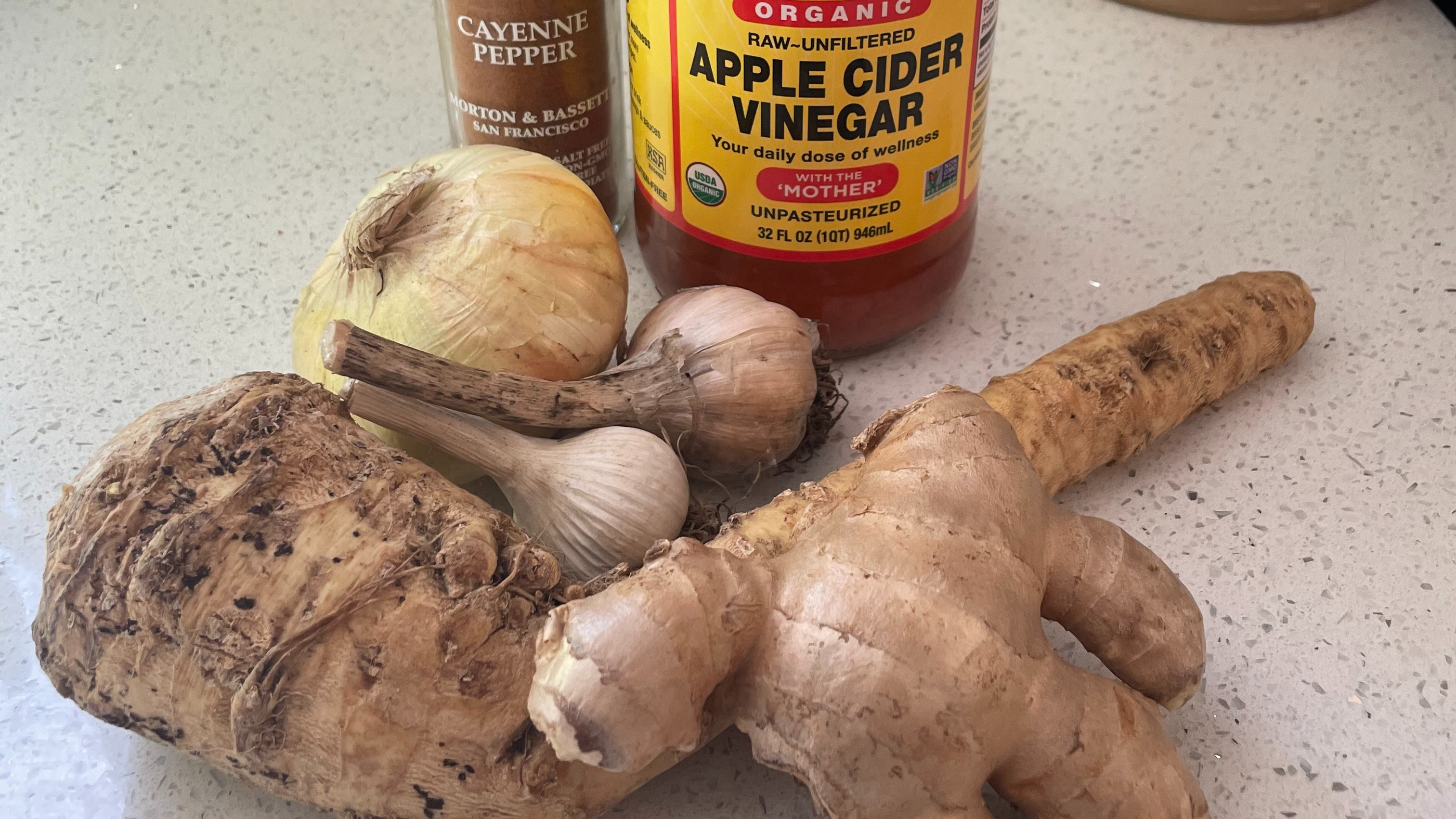
apple cider vinegar with onion, garlic, ginger, horseradish and cayenne
Fire cider is great for your immune system, leveraging garlic, onions, ginger, horseradish, cayenne, honey, and apple cider vinegar.

Healthful tonics like this one have been around and in use since ancient times — our ancestors knew what was good! In the 1970s, Rosemary Gladstar, a wonderful herbalist, coined the term “Fire Cider” and it stuck. The recipe is below – feel free to scroll down directly.

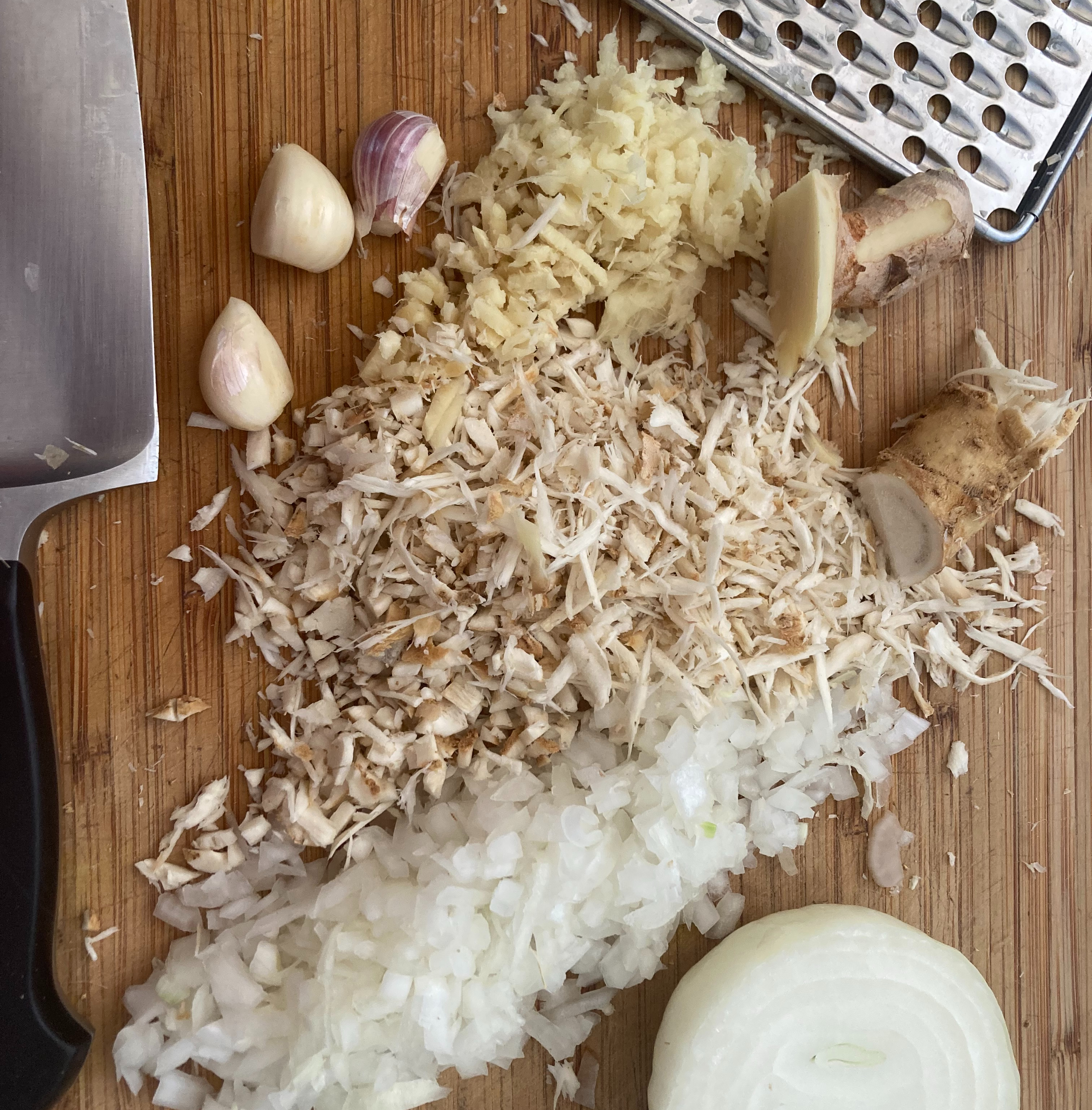
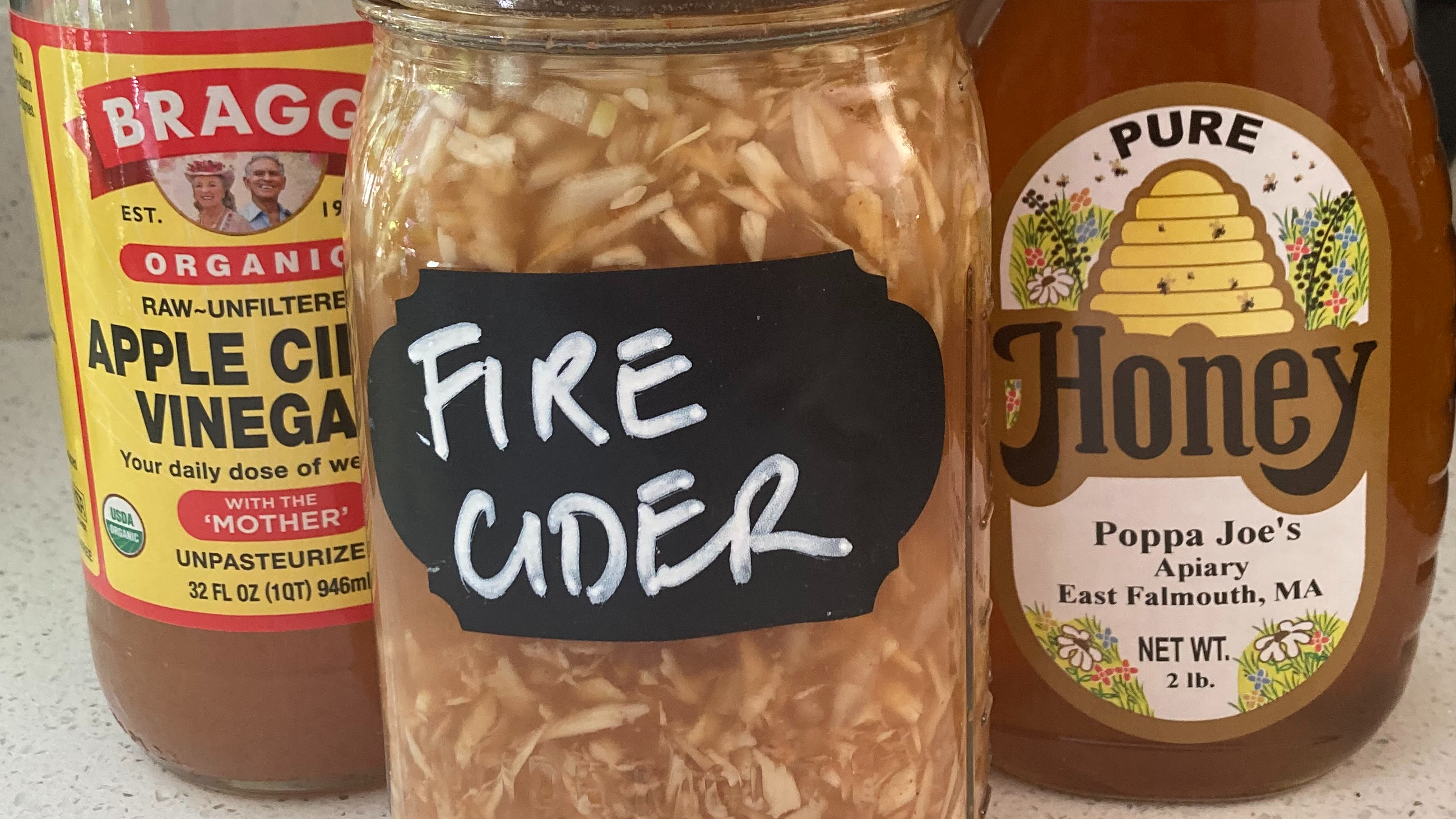
Fire ciders are popular; there are many recipes out there. A simple one: chop onions and garlic and grate horseradish and ginger, and add it all to apple cider vinegar, ensuring the roots are submerged. Let them stew, shaking daily for 3-4 weeks, and add cayenne and honey to taste (this basic recipe comes from Rosemary Gladstar’s herbalism certificate through ecoversity).

Whipping up a healthful potion is always fun, and It would be hard to overstate the value of Garlic, ginger, onion, and horseradish roots combined with apple cider vinegar, for good health:

Garlic: An ally against colds and flu, support for immune function, healthy cholesterol, and a vermifuge/in treating intestinal worms.

Ginger: Reduction of inflammation, joint pain, cramps, nausea, and morning sickness.

Horseradish: traditionally known for its power to clear your sinuses, horseradish is full of antioxidants and nutrients, antibacterial properties, and is good support for healthy metabolism, digestive health, healthy cholesterol and, of course, as a decongestant.

Onions: Rich in antioxidants and packed with flavor, WebMD says “They’re rich in chemicals that can help protect your heart, lower your risk of some cancers, and make it easier for your body to make insulin. Onions are also one of the greatest vegetable sources of quercetin, a plant compound with many health benefits.”

I think fire cider is fun to make. I’ve been cooking with garlic, ginger, onion, and cayenne for years–all are aromatic and lend food an irresistible flavor profile … but horseradish was a new acquaintance when I first made fire cider. Grating it releases volatile compounds and a pungent, strong aroma that was unmistakably familiar as an ingredient in winter and fall sauces.

I had to hunt around to find fresh horseradish; if you see it at the grocery grab it! It’s a cold hardy perennial that you can also consider growing.

I love having a remedy on hand for days when I or a family member feel a cold coming on – and fire cider does the trick. Tough love in a jar, you can take a teaspoon every day to support your immune system or use it on salads.

And keep it on hand! You’ll want to take 1-2 tablespoons at the first sign of a cold and repeat every 3-4 hours until symptoms subside.

Basic Recipe:

  • 1/2 cup grated fresh horseradish root
  • 1/2 cup (or more) chopped onions
  • 1/4 cup (or more) grated ginger
  • 1/4 cup or more chopped garlic
  • Apple Cider Vinegar (raw and organic if you can get it)
  • Cayenne pepper (fresh chopped or powder or flaked – whatever you have/can get)
  • honey to taste

Directions – add the horseradish, onions, ginger, and garlic to a jar and pour the apple cider over it to immerse the ingredients by a couple of inches. Seal and store in a warm spot. Let it macerate for 3-6 weeks and shake it

Leave a comment

Filed under Uncategorized

Banishing Overwhelm

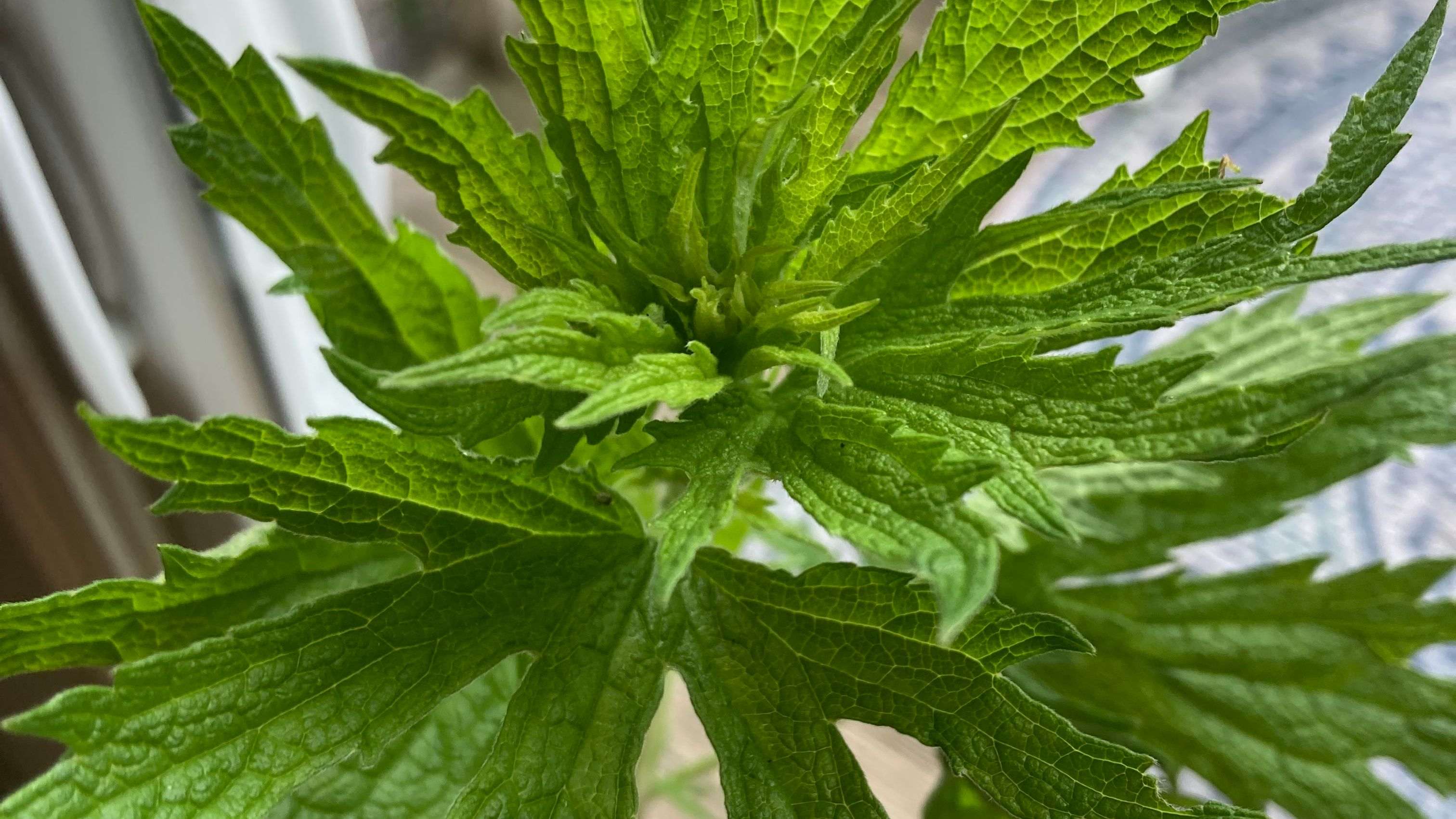
serated green leaves
motherwort leaves cut before flowering

This is no ordinary plant. You might say “well, Kirsti you think all plants are special,” and that’s true. But I have a real love affair going with this one.

Overwhelm is a real thing in our society. We all know the feeling of a too-long to-do list. And the overly full chest, overly heavy feeling that accompanies difficulty focusing in the face of a long list of tasks. And the anxiety that accompanies that has a way of setting in and staying.

Motherwort, pictured here, is widely used to truly calm that kind of anxiety in just such moments. A few drops of the tincture under the tongue definitely chases the feeling of overwhelm away. It’s legendary, used also in blood pressure remedies, to strengthen the cardiovascular system, and as support for premenstrual and menopause symptoms. If I had only known about it years ago, I could have eased many years of intense premenstrual cramps.

Just the other day I was out walking with a clinical herbalist, Stephan Brown, in his garden here on the cape. I’ve been taking motherwort tincture for months, originally to help with my blood pressure, I soon learned it benefits my mental state, as well.

But I have never seen the plant growing and I could not have identified it if it jumped up and slapped me in the head.

Knowing nothing about me or the remedies I favor, Stephan plucked a stem of motherwort from a nearby plant and presented it with a flourish. Herbalists and plants are both naturally psychic. There’s no getting around it.

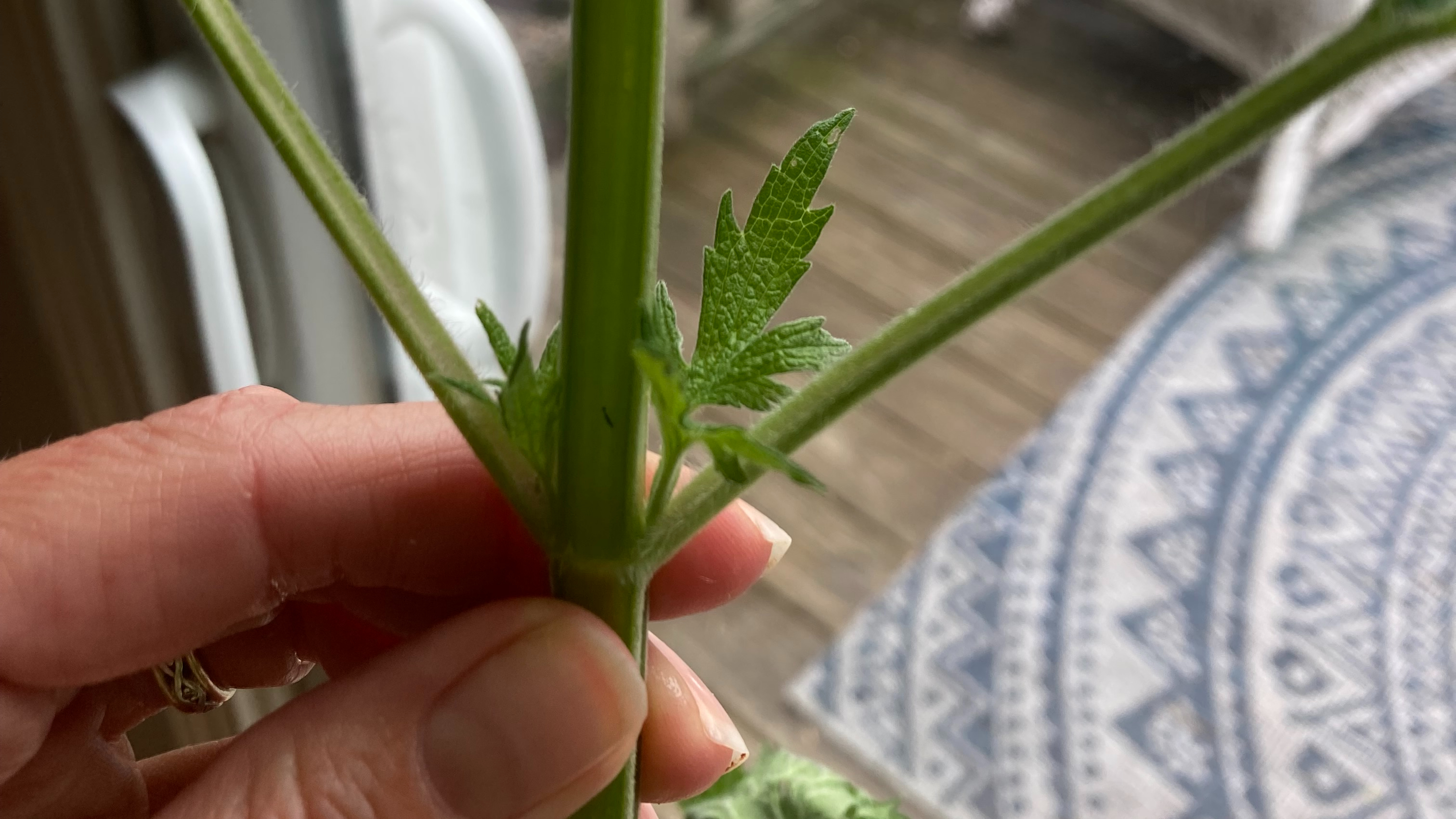
square stems of the lamiaceae; motherwort has an especially strong stem

I went back today to gather some with his permission. A member of the mint family with the characteristic square stem of that species, you can see the shape in the picture above, making it easy to identify.

The lovely leaves are drying now, which means I can make my own bottle of tincture. Pure magic.

Leave a comment

Filed under Uncategorized

Easy Aloe Vera Gel

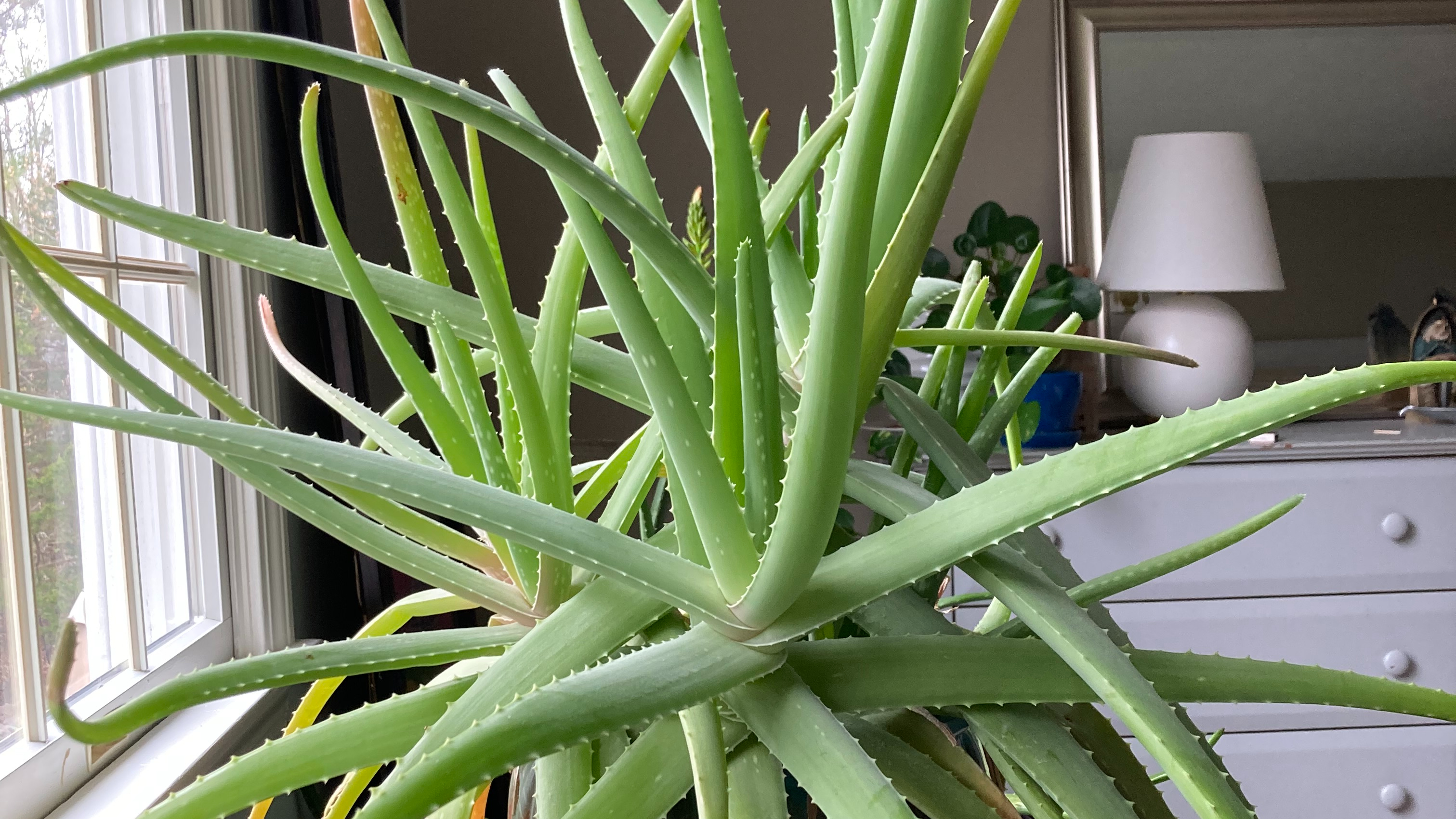
aloe vera plant in a south window

Aloe is popular. You can buy it in most garden shops, I’ve even seen it for sale at the grocery store! It’s beautiful, easy to grow, and it’s medicine! Most folks know it’s great pain relief for a sunburn, and promotes rapid healing and tissue repair. It also has the same pH as our skin, and is a natural sunscreen.

You can make aloe vera gel at home very easily:

  • cut a firm leaf from your plant
  • slice it open (on a plate is best).
  • Use a tablespoon to scoop out the gel.
  • optionally, but this is really much nicer, puree it in a blender.
  • you can store it for a few weeks.

et voila! Ready for the sun!

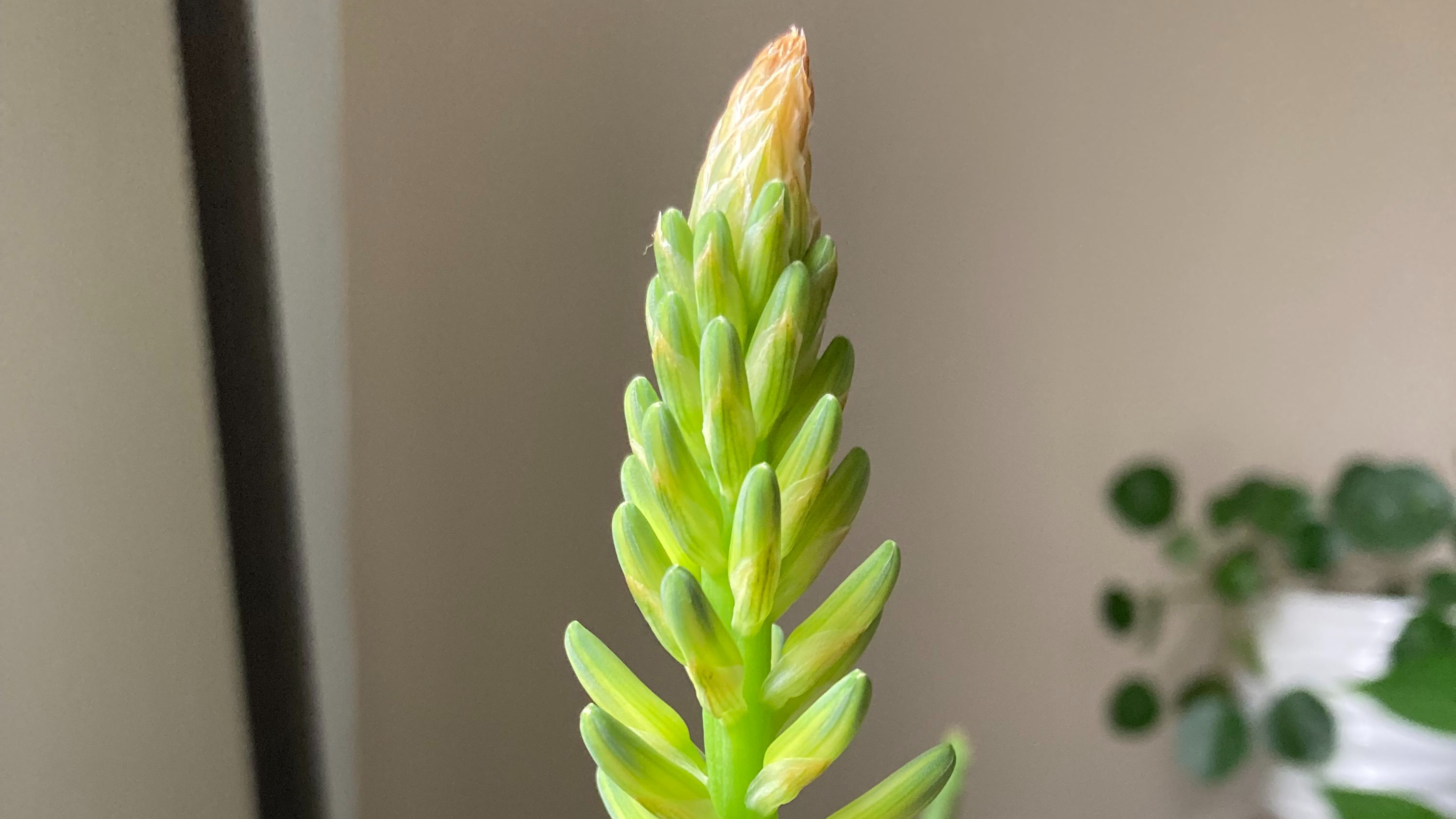
aloe vera flower

Leave a comment

Filed under Uncategorized